Sign In


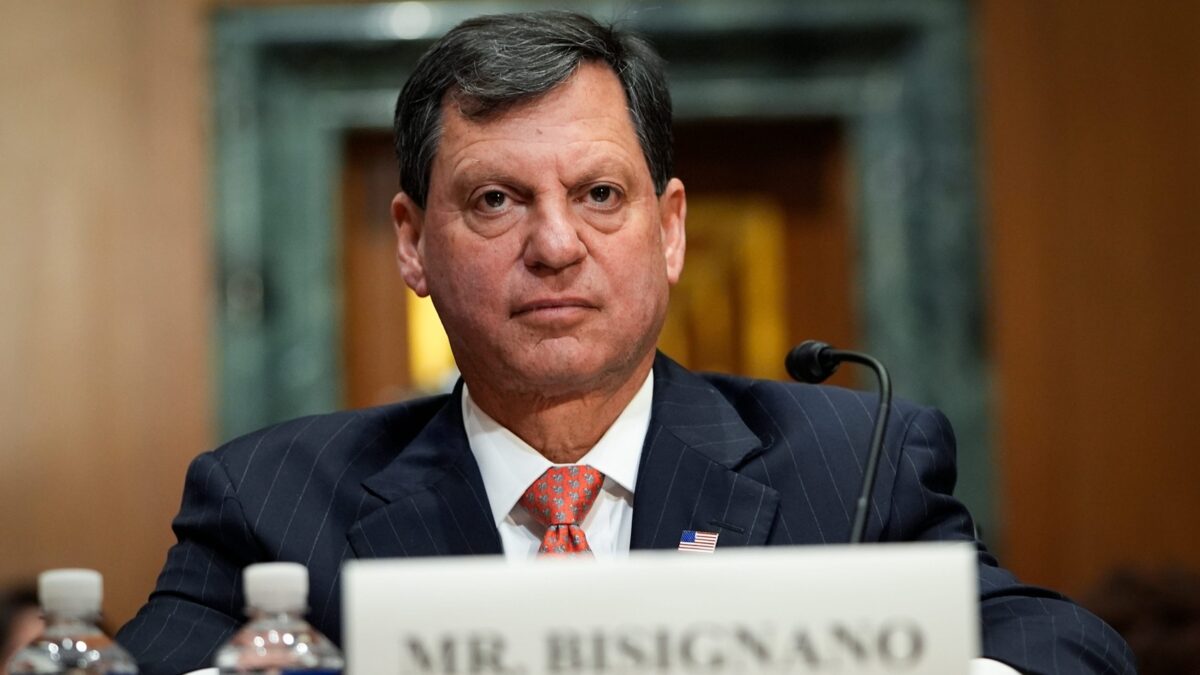
Frank Bisignano, now the Social Security Administration commissioner, appears at a Senate Committee on Finance confirmation hearing on March 25, 2025, in Washington, D.C. (USA TODAY Network)
Social Security shortfall expected to accelerate, with funds at critical low in 2032


 Listen to this article
Social Security’s trust fund is now due to run low on money beginning in 2032. And in announcing that new date Tuesday, the government acknowledged that the Trump administration‘s immigration policies and tax cuts are expected to contribute to the insolvency.
The trust fund that pays retiree and survivor benefits is expected to reach depletion by the fourth quarter of 2032, one quarter earlier than projected in last year’s annual report. Social Security‘s trustees said notable changes over the past year included a decline in the country’s fertility rate, a drop in immigration and the “substantial effect” of President Donald Trump’s signature tax legislation last year, which extended tax cuts from Trump’s first term and provided a deduction for seniors. At the same time, the trustees noted that average real earnings are assumed to grow, which would have a positive effect on the trust fund.
The long-standing expected shortfall comes as demographic shifts – driven by a large generation of retiring baby boomers and declining birth rates – mean there are fewer workers paying into the system for every beneficiary drawing from it. An increase in retirement benefits for government and public sector workers that took effect last year has also been expected to hasten the trust fund’s depletion.
There is a common misnomer that when the trust fund is depleted, it will be completely bankrupt and have no money left to pay retirees. Money will continue to come into the fund on a regular basis via payroll taxes but at a lower threshold than current benefits, which would result in retirees receiving smaller checks from the government. The report released Tuesday predicted that the government would need to cut monthly Social Security benefits by 22 percent beginning in 2032.
More than 56 million Americans rely on Social Security for retirement and survivor benefits. Advocates for the nation’s seniors have said Social Security has helped generations of Americans stay out of poverty and provided most of the income that many elderly people rely on. “Americans have worked hard and paid into Social Security their entire lives, and they deserve to count on it when they retire,” AARP CEO Myechia Minter-Jordan said in a statement. “No family should see any cuts to what they’ve earned in Social Security.”
Ahead of the report’s release, Richard Johnson, AARP’s senior vice president of financial security, also noted the temporary deduction for seniors in Trump’s tax bill last year, which is expected to deplete the fund slightly faster.
“The challenge is manageable,” Johnson said. “Congress doesn’t have to abandon Social Security. It doesn’t have to rebuild the program from scratch. … The trustees’ report is not a panic button. It is a warning light.”
The government also released a report on Medicare‘s solvency on Tuesday. It projected that the hospital trust fund – typically referred to as Part A – will have enough revenue to pay all its bills only until 2033, after which it would also need to reduce benefits.
In their report, the Social Security trustees – Social Security Commissioner Frank Bisignano, Treasury Secretary Scott Bessent, Health Secretary Robert F. Kennedy Jr. and acting labor secretary Keith Sonderling – urged lawmakers to address the shortfalls “sooner rather than later.”
Lawmakers could increase taxes or reduce payments, or they could reach a compromise.
The looming insolvency year has come more into focus for current lawmakers who could still be in office when retirees’ benefits are expected to be cut.
Michael Peterson, CEO of the debt-focused think tank Peter G. Peterson Foundation, called for a bipartisan focus on Social Security’s finances, especially during this year’s consequential elections.
“It’s important to recognize that the Senators we elect this year will be in office when Social Security becomes unable to pay out full benefits, so this must be a central campaign issue,” Peterson said in a statement.
House Speaker Mike Johnson (R-Louisiana) suggested Monday that he would release a plan next year to address ballooning entitlement spending, leading to Democratic attacks.
“The reason we are in trouble is because over 74 percent of federal spending is on autopilot, mandatory spending,” Johnson told a Louisiana radio station. “That’s your entitlement programs like Medicare, Medicaid and then things like Social Security. They have to be adjusted and fixed.”
Meryl Kornfield is a staff writer on the Politics desk of The Washington Post. Julie Z. Weil is a business reporter covering the costs of everyday life. She has worked at The Post since 2013 and has covered tax policy, religion, D.C.’s local government and more.