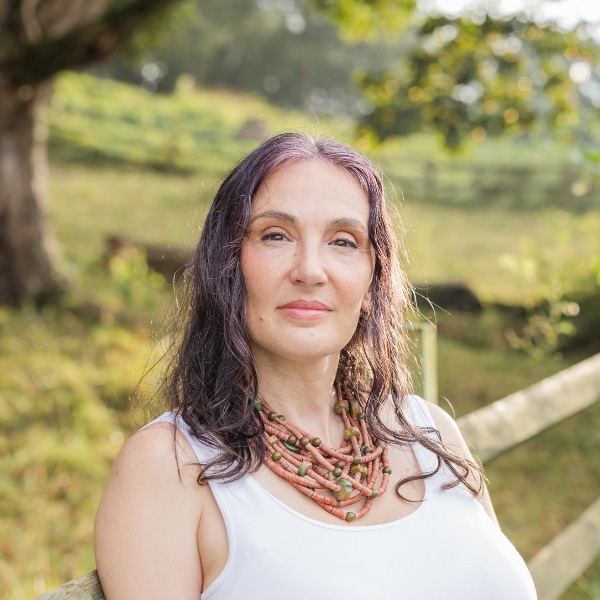
Chiara D’Amore is executive director of The Community Ecology Institute, an educational nonprofit focused on nature, gardening and farming. She holds a Ph.D. in Sustainability Education from Prescott College (2015), a Master of Science in Environmental Science and Engineering, a Graduate Certificate in International Development from the University of North Carolina at Chapel Hill’s School of Public Health (2003), and dual bachelor’s degrees in International Studies and Biology from UNC Chapel Hill (2001). D’Amore has received the Howard County Rise to the Challenge Award (2022) and the Association of Community Services of Howard County Humanitarian Award (2021). She has served on the Maryland Outdoor Learning Partnership (2024).
What is the biggest challenge facing your industry today?
One of the biggest challenges facing the environmental and community resilience sectors today is the growing gap between the scale of environmental and social need and the stability of the resources available to address it. On one hand, communities are experiencing increasingly complex and interconnected challenges — climate change impacts, stormwater and water quality issues, loss of biodiversity and growing inequities in access to green space and environmental education. On the other hand, funding streams for nonprofit and mission-driven work are often short-term, highly competitive and constrained, making it difficult to plan and sustain long-term, place-based solutions. At the same time, there is a need for deeper public understanding of the connection between environmental health and community well-being. Building that awareness — and translating it into sustained engagement, policy support and investment — remains an ongoing challenge. Ultimately, the field is being asked to deliver long-term systems change with short-term resources, while also strengthening trust, collaboration and participation across increasingly diverse communities.
What is the best advice you’ve ever received?
Some of the best advice I’ve received is to focus on what you can meaningfully influence and let that guide both decision-making and leadership. It’s easy, especially in mission-driven work, to feel pulled in many directions by urgency, complexity and competing needs. This advice has helped me stay grounded in clarity of purpose, prioritize long-term impact over short-term reaction and invest in the relationships, systems and work that truly move things forward.
How do you define success?
I define success as creating meaningful, lasting impact in the communities and places I serve with impact that continues to grow even when I’m not in the room. For me, success is not just about achieving programmatic or organizational goals but about whether the work strengthens relationships, builds trust and expands people’s sense of what’s possible. It’s seeing communities more connected to one another and to the natural world and knowing that those connections are resilient over time.