


2026
MD500
Economic Development
Individuals attracting investment, supporting business growth and strengthening communities through strategic planning and workforce and infrastructure initiatives.
Featured Honorees
2026 Honorees in
Economic Development
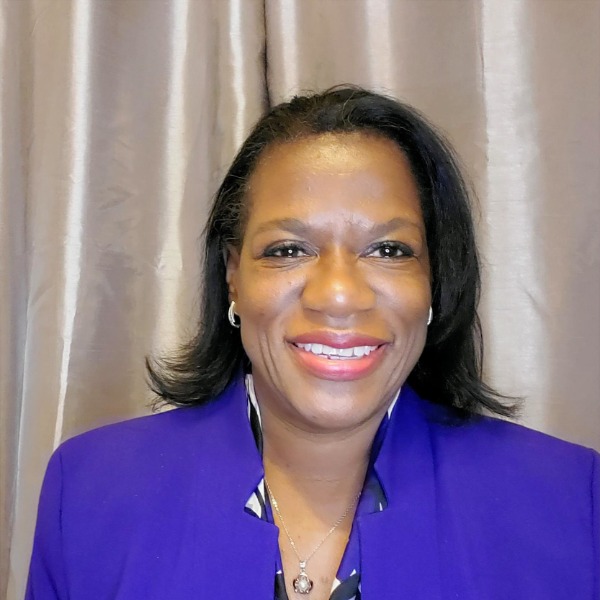
As executive director of Maryland Small Business Development Center programs, Lora Brown leads a statewide network of more than 22 locations. She joined the Maryland SBDC in 1998 as a program coordinator and was later promoted to deputy director, a role she held for 20 years.
She previously practiced law at Community Legal Services in Philadelphia and served as an investment analyst at Syndicated Communications and Media Communications Group. Brown serves on America’s SBDC Accreditation Committee, conducting peer reviews of programs nationwide.
What is the biggest challenge facing your industry today?
Small businesses in Maryland face significant challenges, including limited access to capital, limited funding opportunities in rural Maryland, high costs of securing space in urban areas, challenges with export readiness, challenges with licensing and permitting processes that vary across the state and a fragmented ecosystem that complicates coordinated support. I applaud the efforts of recent administrations to use technology to guide small businesses to where to find help. I am also encouraged by opportunities, like those listed above, to partner with other entities, such as TEDCO and the Smith School of Business at the University of Maryland, to provide practical solutions to small business owners.
What is the best advice you’ve ever received?
I read “The Four Agreements” by Don Miguel Ruiz, and it changed my life. The four agreements, in a nutshell, are as follows.
-Be Impeccable with Your Word: Speak with integrity, saying only what you mean and avoid using words to gossip or belittle yourself and others.
-Don’t Take Anything Personally: What others say and do is a projection of their own reality, not yours. This protects you from unnecessary suffering.
-Don’t Make Assumptions: Find the courage to ask questions and express what you really want, rather than assuming, which prevents misunderstandings and drama.
-Always Do Your Best: Your best changes from moment to moment, but striving to do your best avoids self-judgment, guilt and regret.
How do you define success?
Success is creating opportunities for Maryland-based entrepreneurs to start, grow and sustain impactful small businesses that create generational wealth for Maryland families and strengthen local communities. That is measured by the number of businesses started and the number of businesses assisted in gaining access to capital. Success is also living with integrity and always being ready to use my talent to lift others.

As president and CEO of the Greater Salisbury Committee, Mike Dunn helped launch the Transformation Community Leadership program for next-generation Salisbury and Wicomico residents.
Dunn channeled grief over his mother’s death from cancer into community involvement, joining Relay for Life, the American Cancer Society’s signature event. That decision led him to meet his wife, become Relay for Life chair and win a seat on the Salisbury City Council before taking over the Greater Salisbury Committee.
Dunn also sits on the Salisbury Area Chamber of Commerce At-Large Council, the Salisbury University Perdue Business School Executive Advisory Council, the Wicomico County Education Foundation Board and the Wyatt Warrior’s Foundation.
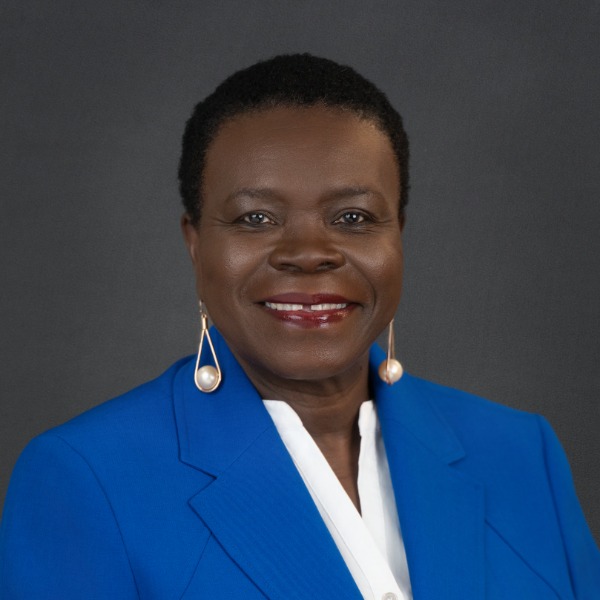
Watchen Harris Bruce has more than 35 years of experience in banking, development finance, small business lending, economic development, international development, affordable housing and leadership.
Before joining Baltimore Community Lending, Bruce served as chief of party/country director for the USAID-funded Investing for Business Expansion project in Liberia and previously held vice president roles at PNC Bank, Fleet Bank and JPMorgan Chase.
She serves on the boards of the Maryland Community Development Network and the African American Alliance of CDFI CEOs. Bruce holds a master’s degree in business management from Cambridge College and two bachelor’s degrees.
What is the biggest challenge facing your industry today?
Lack of investment and lending capital.
What is the best advice you’ve ever received?
Diversify revenue sources.
How do you define success?
Moving first-time home buyers into their homes at closing and closing small business loans to start-up entrepreneurs.

With more than two decades of community engagement and consulting experience, Keith Holt has built a nationally recognized practice connecting diverse organizations with vulnerable populations. The independent consultant has been featured in prominent national media outlets and is the subject of the award-winning short film “Into the Light.”
Holt previously served as director of community engagement for Baltimore City Council. He currently serves as community engagement coordinator for Sage USA, overseeing development of an LGBTQ+ elder-affirming housing project slated to open in 2026.
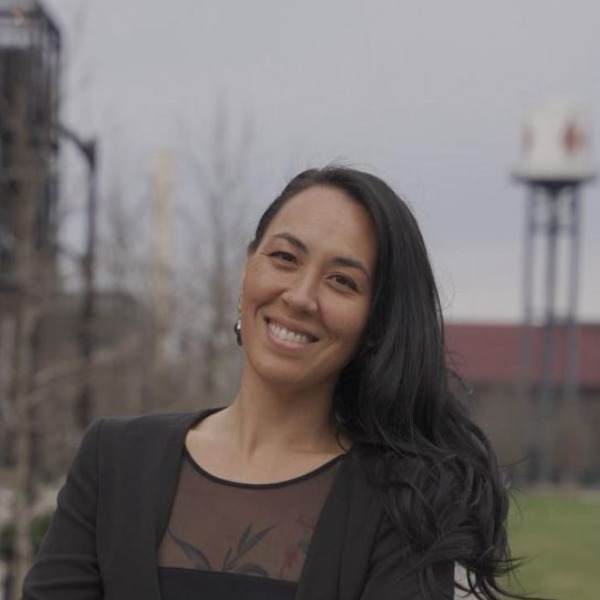
Claudia Jolin serves as the first executive director since the organization’s establishment, stepping into the position in April 2024. Jolin oversees all aspects of operating, activating and securing the public realm of Baltimore Peninsula, leading the Business Improvement District’s efforts to ensure the neighborhood remains a clean, safe place to live, work and visit.
She manages the organization’s resources and annual budget while maintaining a disciplined, focused approach centered on foundational priorities complemented by high-quality events and programming that aims to establish the area as a vibrant, mixed-income residential neighborhood and thriving business district.
What is the biggest challenge facing your industry today?
The central challenge facing business improvement districts today is that their original operating model no longer aligns with how cities function in a post-2020 environment. Economically, BIDs are under structural strain: They rely heavily on property assessments and sponsorships, both of which are becoming less stable due to commercial vacancies, reduced office demand and tightened corporate spending, while at the same time being expected to deliver more services as costs for safety, sanitation and programming rise. This pressure is compounded by a fundamental shift in their role. BIDs are no longer simply supporting existing patterns of commerce driven by office workers; instead, they are now responsible for actively creating demand by producing compelling “third spaces” and experiences that draw people in. Foot traffic is no longer guaranteed, which means programming, cultural activation and placemaking have become the core product rather than a supplemental feature.
At the same time, the concept of neighborhood identity has become far less stable and more contested. BIDs must now balance the needs of residents, visitors, remote workers, small businesses and large property owners, all of whom may have conflicting priorities. The question of “who the district is for” is no longer straightforward, and success can paradoxically erode identity by driving up costs and displacing the very businesses and communities that made the area distinctive.
Layered onto this is a growing mismatch between responsibility and authority. BIDs are increasingly expected to address complex issues like public safety, homelessness and public realm management, yet they lack direct control over policy, enforcement or broader city systems, placing them in a position where they are accountable for outcomes they cannot fully dictate.
Finally, they face a more fragmented competitive landscape: Instead of competing solely with other centralized districts, they are now competing with decentralized neighborhood corridors and the growing tendency for people to stay closer to home. Taken together, these dynamics point to a single underlying issue: BIDs are being pushed to evolve from service providers into full-scale place-makers, but their funding structures, governance models and stakeholder expectations have not yet caught up to that reality.
What is the best advice you’ve ever received?
Give yourself the grace to change your mind and be open to new paths. Early on, I was very focused on a specific career trajectory, and it took time to realize that the most meaningful opportunities aren’t always the ones you plan for.
Being willing to step back, reassess and pivot when something feels more aligned has made a significant difference in my career. It’s not always easy to let go of something you’ve been working toward, but staying flexible and open-minded allows you to find work that is both impactful and fulfilling.
How do you define success?
I define success in terms of what persists without constant financial input. If people continue to show up, form relationships and take ownership of a place because it adds value to their lives, not because they are being incentivized, then the system is working. In that frame, success is measured by durability of connection, density of relationships and the extent to which a neighborhood can sustain identity and activity independent of continuous spending or top-down activation. Revenue, growth and foot traffic still matter, but they function as constraints or indicators, not the objective. The objective is whether the place produces ongoing social cohesion and relevance and whether people choose it, return to it and invest in it with their time and presence.
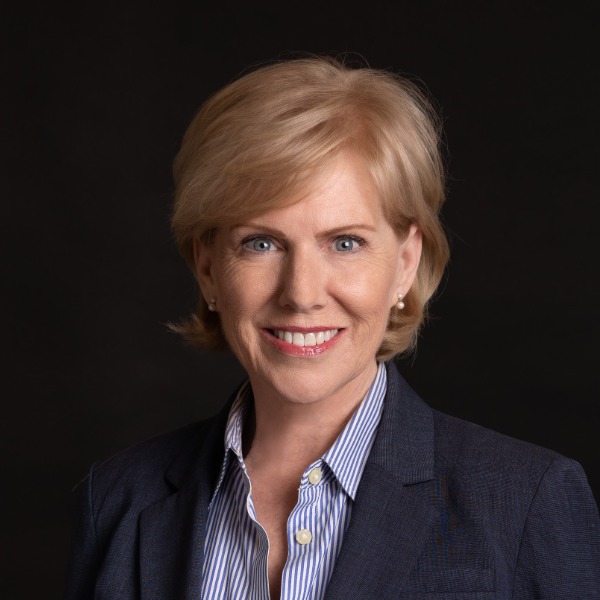
In a role she assumed in 2021, Mary D. Kane serves as the leading voice for business in the state. An attorney, Kane most recently directed the National Museum of American Diplomacy at the U.S. State Department, where she revived fundraising efforts and lobbied Congress to rename and rebrand the museum.
She previously served as Maryland’s Secretary of State from 2003 to 2007, executive director of the U.S. Chamber of Commerce from 2008 to 2011 and president and CEO of Sister Cities International from 2011 to 2017. Kane also chaired the board of trustees of Mount St. Mary’s University from 2016 to 2021.
What is the biggest challenge facing your industry today?
Maryland’s business community faces persistent challenges related to the high cost of doing business and declining regional competitiveness, both of which are closely intertwined and increasingly shaping decisions about growth, investment and location. Employers across the state contend with a combination of elevated taxes, complex regulatory requirements and rising operational expenses that make it more difficult to sustain profitability compared to neighboring states. Energy costs, commercial real estate prices and healthcare expenses continue to climb, placing particular strain on small and mid-sized businesses that lack the scale to absorb these increases. At the same time, compliance with state regulations, while often well-intentioned, can create administrative burdens that slow down hiring, expansion and innovation.
These cost pressures are amplified by Maryland’s geographic position in a highly competitive region. Businesses can easily relocate or expand just across state lines into areas with lower taxes, fewer regulatory hurdles or more aggressive economic incentives, particularly in nearby jurisdictions that actively market themselves as more business-friendly. This dynamic creates a constant risk of business migration and makes it harder for Maryland to attract new employers, especially in industries that have flexibility in choosing where to operate. Additionally, high costs can limit a company’s ability to offer competitive wages, which in turn affects talent retention and recruitment, further weakening the state’s economic position.
For many business leaders, the issue is not any single policy but rather the cumulative effect of multiple cost drivers that, together, erode Maryland’s competitive edge. While the state benefits from a highly educated workforce, strategic location and strong infrastructure, these advantages can be offset if the overall business climate is perceived as too expensive or restrictive. As a result, improving competitiveness will likely require a coordinated effort to streamline regulations, evaluate tax structures and reduce key cost burdens while maintaining the qualities that make Maryland an attractive place to live and work. Without such adjustments, businesses may continue to face difficult trade-offs between staying in Maryland and seeking more cost-effective opportunities elsewhere.
What is the best advice you’ve ever received?
My long-time mentor, the late Tom Donohue, former president and CEO of the U.S. Chamber of Commerce, emphasized the importance of relationships and to “never burn bridges.” Whether it’s former colleagues, people that you have run campaigns against or people who have completely opposing positions on issues, maintaining positive relationships fosters a network that can open doors to opportunities, collaborations and insights.
Even in challenging situations, approaching conflicts with diplomacy and empathy rather than hostility has consistently proven to be a successful choice. Each interaction contributes to the trajectory of my career, and preserving bridges ensures a foundation of goodwill that can endure and yield benefits long into the future. This lesson has become a guiding principle for me, reminding me of the enduring power of positive relationships in the ever-evolving landscape of politics.
How do you define success?
Driving meaningful change, elevating the business community’s voice and leaving a lasting positive mark on Maryland’s economic trajectory.

Sarah King has served as executive director of the Kent County Chamber of Commerce since May 2022, leading the organization’s outreach to members and sponsors across Kent County’s business community. A realtor and entrepreneur, King served on the chamber’s board of directors beginning in January 2020 and co-chaired its Business Development Events Committee before assuming her current role. She is a native of Kent County and holds a Bachelor of Science in management information systems from Salisbury University’s Perdue School of Business.
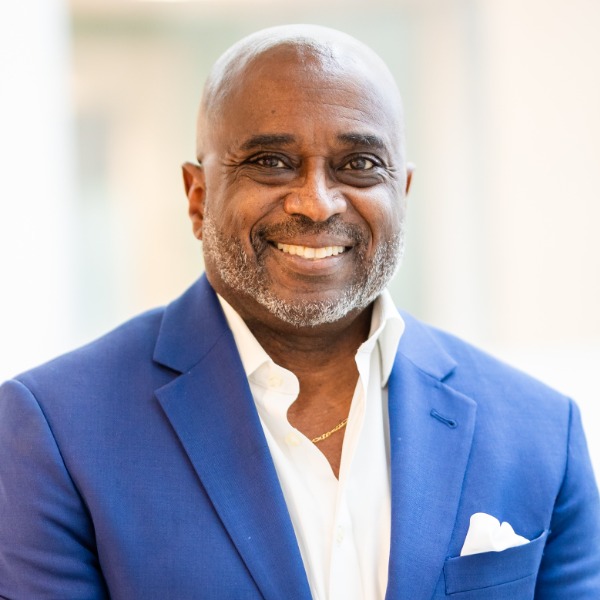
LeMaile-Stovall leads the Maryland-based TEDCO’s mission to support economic empowerment through the cultivation of a diverse and inclusive entrepreneurial innovation ecosystem. TEDCO manages more than $200 million in assets under management, operates on a $60 million-plus budget and has generated $2.7 billion in economic impact.
LeMaile-Stovall also serves as a strategic adviser for Hunter Lewis LLC. An entrepreneur, he founded LeMaile-Stovall LLC and co-founded GulfSouth Capital, where he served as the firm’s first president and CEO. He holds a Bachelor of Science in electrical engineering, cum laude, from Southern Methodist University; a Master of Science in computer science from Stanford University; and an MBA from Harvard University.
What is the biggest challenge facing your industry today?
Providing the appropriate level of resources, fiscal and nonfiscal, to early stage innovators and entrepreneurs
What is the best advice you’ve ever received?
Mom told me that the good Lord has me here to impact one person, but I don’t know who that person is or when they will come into my life; therefore, I have to make a difference in everyone’s life I come into contact with.
How do you define success?
Based on the above, I know my cup overflows and success means not allowing a drop of that overflow to fall onto the floor and making sure 100% of that overflow falls into the cup of others.
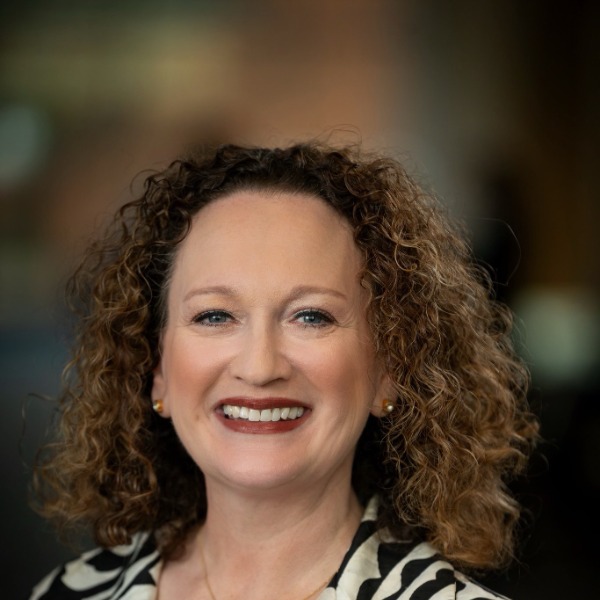
Beth Rheingold has spent nearly two decades in the classroom and a career building communities — work that now defines her leadership of one of Maryland’s most expansive regional business organizations. Since September 2025, the Greater Baltimore Chamber of Commerce, where Rheingold serves as president and CEO, has represented all of Baltimore County.
She chairs the Workforce Development Board for Baltimore County Government and in 2025 received the Institute for Organization Management certificate from the U.S. Chamber of Commerce, which appointed her an IOM summer staff adviser in 2026. Rheingold earned her Ph.D. from SUNY-Buffalo and serves on the Pikesville Armory Foundation, having previously served the Jewish Community Center.
What is the biggest challenge facing your industry today?
Membership recruitment and retention — the whole chamber industry.
What is the best advice you’ve ever received?
Follow through and follow up.
How do you define success?
Success is measured not only by what is achieved but by who is strengthened, what is improved and how lasting the impact becomes. More specifically, it is the lasting advancement of people, businesses and community, driven by integrity, built through relationships and sustained by leadership that elevates others.

Pamela Ruff’s career in economic development spans more than four decades, beginning in 1981 at the Baltimore Briefing Center, where she advanced through several roles before serving as deputy director of its successor organization, the Maryland Communications Center. Since 2000, Ruff has led the Maryland Economic Development Association, a statewide membership organization of more than 500 public and private professionals, and oversees the affiliated MEDA Foundation.
Her civic engagement includes past service as president of Habitat for Humanity Susquehanna, director of the Havre de Grace Economic Development Advisory Board and board member of the Homeless Persons Representation Project. She holds a Bachelor of Science in mass communications from Towson University and a Master of Liberal Arts from the Johns Hopkins University.
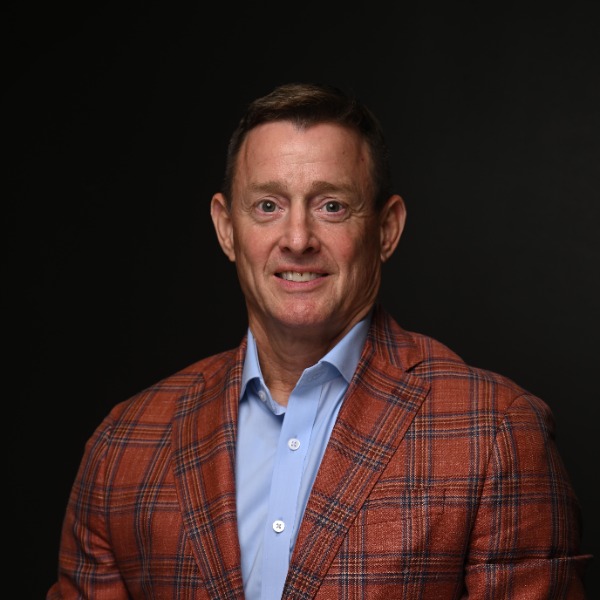
Tom Sadowski led the economic development organization’s 2025 issuance of more than $1 billion in Economic Development Project Revenue Bond Financing — the first in MEDCO’s 40-year history — and the April 2026 launch of the Maryland Center for Public Private Partnerships at MEDCO.
Sadowski serves on seven civic and advisory boards and has been recognized as the 2016 UMBC Alumni of the Year for Distinguished Service, the 2014 Baltimore Museum of Industry Industrialist of the Year, a 2011 Maryland Daily Record Influential Marylander and a Maryland Daily Record Most Admired CEO in 2013 and 2015
A 1989 University of Maryland, Baltimore County graduate, Sadowski earned a Bachelor of Arts in political science and a certificate in public administration and policy.
What is the biggest challenge facing your industry today?
Competition with neighboring states with well-funded incentive programs and favorable tax structures.
What is the best advice you’ve ever received?
Always look for the opportunity amidst the challenges.
How do you define success?
Achieving the “win-win” solution. Talk is cheap; outcomes are key.
See the full list of honorees in each category

© BridgeTower Media
The MD500 recognizes the state’s most powerful and impactful leaders in business, nonprofits, law, higher education and more.
About BridgeTower Media
BridgeTower Media is the authoritative voice for insights and marketing solutions across 40+ brands in five key sectors across the US.
Categories
Connect

© 2026 BridgeTower Media. All rights reserved.
Use of this website is subject to its Terms of Use | Privacy Policy | Your California Privacy Rights/Privacy Policy | Do Not Sell My Info/Cookie Policy


