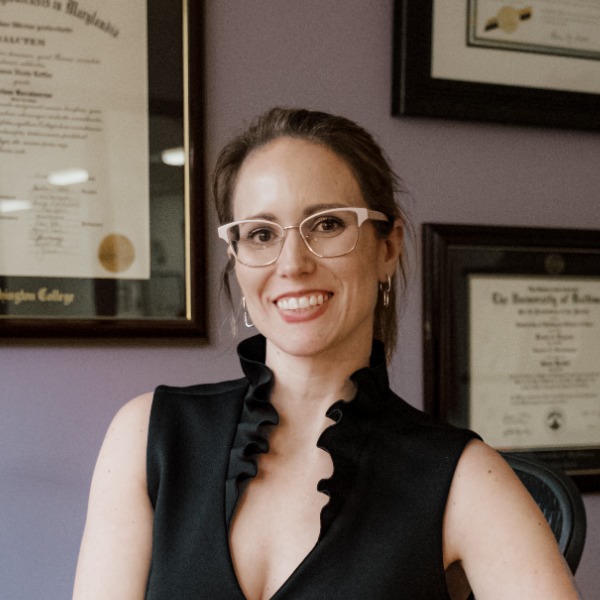




A family law attorney at Stein Sperling, Julie Christopher concentrates her practice on the full spectrum of domestic matters, including separation and divorce, complex custody suits, child support and alimony, property distribution and valuations, modifications to existing agreements, contempt and enforcement, and pre- and post-nuptial and separation agreements. Christopher approaches each client as a partner, listening carefully, communicating regularly and advising at every stage of the process. Trained to represent children in court, she is frequently appointed as counsel for disabled persons or as a guardian of property, reflecting her standing among colleagues and the judiciary alike.
What is the biggest challenge facing your industry today?
In my observation, the biggest challenge facing the legal profession is the responsible use of artificial intelligence. AI tools are revolutionizing the practice of law, but AI will not eliminate the need for critical thinking by lawyers. Human judgment must continue to overlay AI technology.
AI is creating ways for attorneys and support staff to enhance efficiency surrounding time-intensive tasks such as drafting documents and reviewing discovery. These innovations in machine learning result in cost-saving measures for clients. At the same time, legal professionals are navigating unknown territory as we grapple with issues of confidentiality, privacy, bias and disclosure of the use of AI tools.
Responsible AI use will continue to demand detailed and careful review by the user to ensure the ethical use of AI tools. Meticulous oversight of work product is more important than ever to prevent reliance on information that has not been properly vetted. Machine learning is evolving at a rapid pace, and the legal industry must strive to become competent with the use of AI tools to maximize obligations of zealous representation while avoiding running afoul of legal ethics and duties of confidentiality.
What is the best advice you’ve ever received?
The best advice I ever received was in my driver’s ed class taught by my high school’s football coach: “When in doubt, yield.” For my 16th birthday, I went to the DMV to take the road test. I executed all tasks successfully, sans one. To reenter the DMV parking lot, I had to make a left-hand turn. While waiting to make the turn, the stoplight turned red. I wondered whether I could make the turn. Unsure, I proceeded. This resulted in an automatic failure of the test, and at the time, my humiliation telling friends and family I failed my driver’s test. Almost immediately, I remembered what coach had said, “When in doubt, yield.”
Since that day, I have incorporated that advice in my personal and professional life. I do not simply react. I develop a plan with my clients to achieve their goals. When I don’t know the answer, I figure out the answer and seek guidance from those that do.
In today’s culture of polarizing extremes, too often opposing parties and attorneys engage in high conflict communications. It can be especially hard not to react when an opposing party seems to engage in unnecessarily difficult and unproductive communications. In those moments, I refrain from sending a snarky missive. I wait and send the measured response that the legal profession requires and my clients deserve.
How do you define success?
Success is making a positive and measurable difference for my clients. It is mentoring younger attorneys. It is making sure my actions reflect positively on my profession, my law firm and my partners. It is giving back to the legal community and assisting underserved populations. It is being able to articulate how my contribution has impacted my community with a positive and long-term influence.