Sign In
Upcoming Event
 Free Newsletter

Eastern Shore gun maker fires back at Texas rival
Eastern Shore gun maker fires back at Texas rival


 Listen to this article
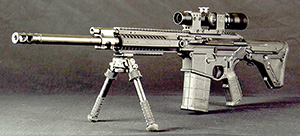
The Rapid Engagement Precision Rifle leads a double life: It can be quickly converted from an assault rifle to a sniper rifle, according to the website of its Eastern Shore-based manufacturer. Not surprisingly, it also has a double dose of litigation over its origins.
In the latest round, Cambridge-based LWRC International LLC is suing a Texas competitor for patent infringement.
LWRC alleges the rifle, known as the R.E.P.R., has been copied by F&D Defense LLC and its FD308 rifle. The lawsuit, filed Thursday in U.S. District Court in Baltimore, seeks unspecified damages.
The switch from assault to sniper mode is made possible by a “side-mounting charging handle,” patented technology that allows shooters to reload without removing their eyes from the target, according to LWRC’s website and court documents.
Jesus S. Gomez of LWRC was issued the patent in January 2013 as the sole inventor, according to the company’s lawsuit.
But Corby V. Hall, the owner of New Braunfels, Texas-based F&D, claims he worked with Gomez between 2005 and 2008 and created the predecessor to what is now the R.E.P.R.
In February, Hall filed suit in federal court in San Antonio to have his name included on the patent for making “independent conceptual contributions to the inventions claimed.”
Jason R. Miller, F&D’s in-house counsel, said he would seek to transfer the suit filed Thursday in Baltimore to the federal court in San Antonio.
“This is the exact same patent there is litigation over here,” he said. “I don’t know why they are filing in Maryland.”
Richard J. Oparil, a partner with Patton Boggs LLP in Washington, D.C., and a lawyer for LWRC, did not return a call seeking comment. The patent suits are not the only litigation between the gun makers.
Hall filed a defamation lawsuit against LWRC last July in Texas state court, according to documents posted on F&D’s website. Hall alleges Gomez posted on a forum on LWRC’s website that he only “briefly knew” Hall when Gomez was in Texas and that Hall contacted him occasionally afterward about job opportunities.
“I can say with 100% certainty that he had zip, zero, nada to do with the REPR design and development,” Gomez wrote, according to Hall’s lawsuit.
LWRC has denied defaming Hall and sought to have that case dismissed. The state judge denied LWRC’s motion last month, according to documents posted on F&D’s website. Miller, the F&D lawyer, said the case is in the discovery phase.
On the same day Hall filed his patent lawsuit, LWRC filed its own defamation lawsuit in federal court in San Antonio, alleging F&D posted on its website that LWRC was planning to sell the company “on the heels of revelations that F&D is the actual inventor of its flagship Intellectual Property/Patent.”
LWRC denied a sale was pending and said that “no … evidence exists” to show Hall or F&D were behind the invention. The statements were designed to cause LWRC to lose business, according to the lawsuit.
“This evidences not only defendants’ negligence and reckless disregard for the truth, but also actual malice intended to cause harm and injury to LWRC,” the lawsuit states.
Both Hall’s patent lawsuit and LWRC’s defamation lawsuit are pending in the federal court in San Antonio, according to court records.