Sign In
Upcoming Event
 Free Newsletter

Despite rumors, election-year retirement at the Supreme Court unlikely
Despite rumors, election-year retirement at the Supreme Court unlikely


 Listen to this article
WASHINGTON — The last time a Supreme Court justice announced his retirement in a presidential election year, most of the current justices were too young to vote.
It was 1968, and things didn’t work out as planned. The nomination to replace Chief Justice Earl Warren failed in that turbulent year, and no justice has retired in an election year since.
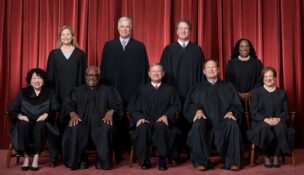
The pattern is not likely to be broken in 2020, despite persistent chatter that Justice Clarence Thomas could give President Donald Trump a seat to fill before the election.
Retirements have tended to be announced in June, as Justice Anthony Kennedy did in 2018. But the conservative Thomas has made clear to anyone who has asked, including an interviewer last year, that he has no plans to retire.
“Let’s fast forward to 20 years from now. Twenty years from now, at your retirement party,” his interviewer, Pepperdine University law professor James Gash, began.
“I’m not retiring,” Thomas broke in to say.
“Twenty years?” Gash said.
“No,” Thomas said.
“Thirty years?” Gash followed.
“No,” Thomas said.
The 72-year-old Georgia native is the longest-serving justice on the current court. If he serves another eight years, he would eclipse the service of record-holding Justice William O. Douglas, whose tenure lasted 36 years and nearly 8 months.
If Thomas does stay that long, he’ll only be 80 — younger than Justices Ruth Bader Ginsburg and Stephen Breyer are today.
In 1968, Warren announced his retirement, but it didn’t take effect until the Senate confirmed his successor. President Lyndon Johnson quickly named Justice Abe Fortas for the job. The president also nominated a federal judge and friend from Texas, Homer Thornberry, for Fortas’ seat.
It didn’t go well for Fortas, whose nomination was blocked by Republicans and conservative Democrats in the Senate. Thornberry never got a vote either, once it became clear Fortas wasn’t moving up.
When Richard Nixon won the 1968 election, he got a bonus, the opportunity to select a chief justice who would be nothing like the liberal Warren. The outgoing chief justice served another year, until Warren Burger took the oath of office in June 1969.
The only other vacancy that has occurred in an election year since was in 2016, when Justice Antonin Scalia died. President Barack Obama named Merrick Garland to fill the seat and Senate Republicans refused to act on the nomination.
When Trump shocked the nation by winning the presidency, he too had a seat to fill and quickly named Justice Neil Gorsuch.