Sign In
 Free Newsletter

American Physical Society designates Morgan State as a new historic site


 Listen to this article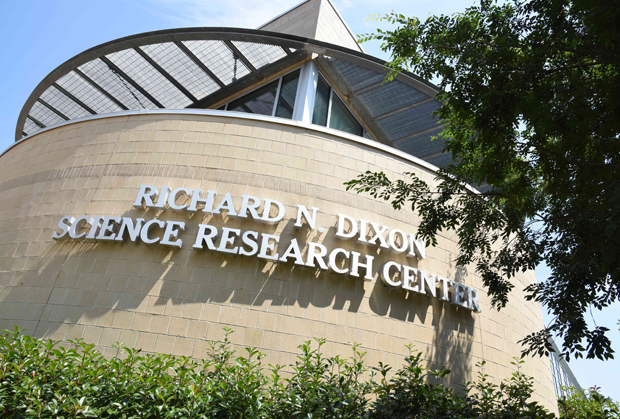
The American Physical Society (APS) has designated Morgan State University and the Sanford Underground Research Facility in Lead, South Dakota as historic sites, Morgan officials announced Monday.
Each site will receive a plaque acknowledging its exemplary contributions to physics.
On April 28, 1977, Morgan State University became the birthplace of the National Society of Black Physicists (NSBP). Its founders sought to promote the professional well-being of African American physicists within society at large and within the international scientific community. They have successfully mentored young Black students to increase their representation in physics and technology. Their persistent professional devotion to inclusion has produced the largest national organization that actively supports African American physicists.
The organizers selected Morgan State University as the site of the following year’s event because of its large physics department and its proximity to other Historically Black Colleges and Universities and national research facilities, according to Mickens. The Society of Black Physicists was inaugurated there on April 28, 1977. The organization was later renamed the National Society of Black Physicists (NSBP) and has become the largest and most recognizable organization devoted to African American physicists.
The American Physical Society is a nonprofit membership organization working to advance and diffuse the knowledge of physics through its outstanding research journals, scientific meetings, and education, outreach, advocacy, and international activities. APS represents over 55,000 members, including physicists in academia, national laboratories, and industry in the United States and throughout the world. The society’s headquarters are in College Park with offices in Ridge, New York and the District of Columbia.