Sign In
 Free Newsletter

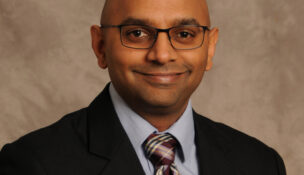
Dr. William F. Regine | UM School of Medicine


 Listen to this article
 William F. Regine, MD, has been appointed to the executive role of senior associate dean for clinical affairs at the University of Maryland School of Medicine (UMSOM).
An internationally renowned physician-scientist known for his work in the use of stereotactic radiosurgery, as well as for his research efforts with gastrointestinal and central nervous system malignancies, Regine currently is the Isadore & Fannie Schneider Foxman Chair of Radiation Oncology and executive director of the Maryland Proton Treatment Center (MPTC).
In his new role, Regine will serve as UMSOM’s chief physician, overseeing clinical care, business, and other matters related to the school’s clinical faculty. In conjunction with UMSOM Dean Mark Gladwin, MD, he will lead school-wide clinical initiatives, while developing business and delivery strategies for the clinical mission involving in-patient and out-patient practices.
He also will meet regularly with senior leadership at the University of Maryland Medical Center (UMMC) and the University of Maryland Medical System (UMMS) to solve problems, review opportunities, and strengthen relationships, while serving as a senior liaison between UMSOM and the Veterans Administration Medical Center on clinical initiatives.
Concurrently, in his appointment as the new President of University of Maryland Faculty Physicians, Inc. (FPI), Regine will lead strategic efforts in financial growth and success for this organization, made up of more than 1,200 UMSOM faculty members, who provide care to more than 1.5 million outpatients and inpatients every year. FPI treats patients at more than 60 offices located across Maryland, as well as delivering all clinical care at UMMC and several other UMMS hospitals.
Regine will retain his position as executive director of the MPTC, where he leads the first and most advanced facility of its kind in the Baltimore-Washington region, providing nearly 2,000 cancer patients a year with precise, “pencil-beam” technology to treat solid tumors. He also will remain chair of the department of radiation oncology, a post he has held since 2003. The department, which has pioneered radiation treatment in cancer, has achieved a Top 5 national ranking in National Institutes of Health research funding.