Sign In
 Free Newsletter

Baltimore City register of wills race: Audit, legal attacks hang over campaign


 Listen to this article
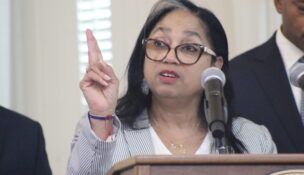
A former top official at Baltimore City’s probate office hopes to shake up her ex-boss’s political family dynasty at the circuit courthouse.
But in the background of the register of wills election, a 2025 audit of the office raised questions about the current leadership’s handling of taxpayer dollars. And along the campaign trail, both candidates have been hit with unusual accusations in court by adversaries.
As far as fundraising goes, Shanai Dunmore, the office’s former chief deputy, is proving to be a formidable challenger in the Democratic primary. She outraised her ex-boss, incumbent Register of Wills Belinda Conaway, by almost $13,000 in the last campaign finance reporting period. In an interview, she said her message is resonating on the ground.
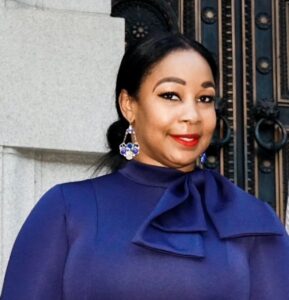
“When I door-knock, a lot of people are saying that they want new leadership,” said Dunmore, 41, a real estate agent. “They’re tired of the Conaways thinking they have this dynasty family, and it’s time to break the dynasty up.”
Conaway, meanwhile, said her tenure speaks for itself, noting how her administration has made improvements to deliver better service in an office that “touches so many people,” a lot of them grieving loved ones. She said people know who she is because she’s “in the community all the time.” And she said that despite running against a former employee and facing scrutiny over the audit, the campaign cycle hasn’t been much different than before.
“I keep moving forward,” Conaway, 58, said.
Maryland’s gubernatorial primary election is June 23. The weeklong early voting period started Thursday. The winner of the Democratic primary will face social worker Andy Zipay, who is running unopposed in the Republican primary.
Candidates tout outreach, but efforts led to troubling audit
Appearing on ballots throughout the state but often overlooked in election coverage, registers of wills appoint representatives to administer the estates of people who have died and oversee the administration of probate proceedings. Both Democratic candidates emphasized the importance of conducting outreach, noting that having a will prepared makes the process much smoother in an office where visitors are often handling awkward family matters while under emotional duress from their relative’s death.
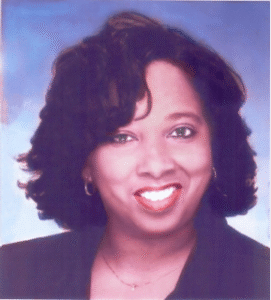
People “don’t like to talk about death; they don’t even want to think about death,” said Conaway, 58, a former educator and city councilwoman who assumed the position in 2014.
Conaway stressed that it’s personal to her: Her father, longtime city politician Frank M. Conaway Sr., died months after her swearing-in. Then, she fell seriously ill herself. The experience highlighted the importance of estate planning to her and pushed her to get the message out.
“When you take care of what you’re supposed to, things are a lot easier,” she said.
But the office’s outreach efforts have not come without controversy. The legislative audit last year concluded that Conaway’s office failed to justify its spending of over $1 million on media and promotional materials. It also referred findings about an employee’s hiring to the state’s ethics commission.
Conaway said that the publicity spending was simply about finding ways to educate residents about probate matters so they’re prepared when the time comes — and there’s no marketing playbook for that, she said.
“You throw a lot of things at the wall and see what sticks,” she said.
In 2019, Dunmore resigned from her position as chief deputy, where she oversaw probate matters and managed supervisors across the office, after five years. Her resignation came after she lost a bid in a packed 2018 Democratic primary race for clerk of the circuit court. She said that the race drew a “wedge” between her and her boss.”
She said she hopes to institute checks and balances to prevent fraud, errors and abuse, saying the audit showed “we don’t know what’s going on with the taxpayers’ dollars.”
A local political dynasty
The Conaway name has long been synonymous with Baltimore politics, especially in elected courthouse positions. Belinda Conaway, a former city councilwoman, has served as register of wills since 2014. Her mother, Mary W. Conaway, had served in the same position for three decades before retiring in 2012, and her father was the clerk of the circuit court for 17 years. Xavier Conaway, Belinda Conaway’s son, now holds that position.
Belinda Conaway said the family’s “signature” has always been providing quality service — they’re always listening around the courthouse for ways to improve.
“For us, it’s all about the work,” she said.
The incumbent said she’s proud of the job her son, who is running unopposed this year, has done with the clerk’s office. She’s also proud of the changes she’s overseen at the register of wills, such as major physical upgrades — she said the office looked and functioned like a “cave” when she was sworn in; she worked with city leaders to get it renovated — as well as better service options, both in person and over the phone. She said it goes down to the smallest details, like having candy ready to offer visitors who might be uncomfortable because of the difficult, “awkward” probate process.
“A lot of times, people forget there is a standard to serving the public,” she said. “We have people that go above and beyond.”
Although her daughter has been her inspiration to run for public office, Dunmore said she was encouraged to run by former colleagues at the register of wills office who had been fired by Conaway.
“I’m running because citizens of Baltimore deserve more,” Dunmore said. Some processes for opening an estate require a visit to the office that could be eliminated with new technology, she said. And with the office based in a courthouse that’s nearly a century old, she also noted the importance of ensuring wills are kept safe.
Both candidates accused in legal filings
Both Conaway and Dunmore were the targets of unusual peace order applications in recent months. A peace order application filed by Conaway’s chief of staff, Kenneth Lorick, in May accuses Dunmore of making threats and “accusations about my job at the Register of Wills” at Baltimore Unity Hall before a candidate forum. He also claimed, without evidence, that Dunmore is a member of the Black Guerilla Family.
Another man sought protection from Conaway in a March application alleging that she threatened him on air during her father’s talk show on WOLB, an AM radio station, when he asked about the legislative audit.
Judges rejected both applications.
Dunmore said Lorick had been the aggressor in the verbal encounter at a forum, adding that although she’s heard of the prison and street gang, she doesn’t know anything about any of the members.
“I wouldn’t know how to get in contact with anybody,” she joked. Her campaign later said that the claims by Lorick are “without merit” and that she intends to “address them through the appropriate legal process.”
“A full review of the circumstances will demonstrate that these allegations are unfounded and baseless,”
Lorick did not return a request for comment. At the bottom of his peace order petition, he raised a federal money laundering charge against Dunmore that was dropped more than two decades ago.
In 2003, federal prosecutors named Dunmore and 31 others as defendants in a sprawling indictment of one of her then-associate’s $50 million cannabis ring. It said she assisted Tyree “Black” Stewart in concealing the proceeds of his criminal activities. Prosecutors ultimately moved to dismiss the charges against Dunmore; she noted that Jason Weinstein, who became the deputy assistant attorney general of the DOJ’s Criminal Division, also wrote a character letter on her behalf.
She said that “everybody makes mistakes” — and this one was 20 years ago. She called the matter a “learning experience.”
“It actually made me stronger; it made me more resilient and made me work harder,” she said.