Sign In
 Free Newsletter

Use of AI tools raises concerns about potential for employment discrimination


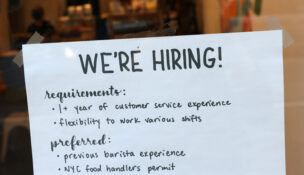
With expanded access to and usage of artificial intelligence tools for recruiting and hiring processes, officials are warning of the possibility of employment discrimination that may inadvertently emerge from the utilization of these tools.
The U.S. Equal Employment Opportunity Commission (EEOC) has become increasingly aware of the dangers of these tools, releasing guidance earlier this year regarding the potential for algorithmic decision-making tools to violate Title VII. Title VII applies to all employment practices, and businesses violate the provision when their selection procedures have a disproportionately large negative impact on a particular group.
Employers and businesses are increasingly relying on and using tools that incorporate algorithmic decision-making, including resume scanners, video interviewing software and employee monitoring software.
Title VII prevents businesses from using selection processes and tests that have a disproportionate effect on certain groups, including selection procedures, which applies to algorithmic decision-making tools utilized for decisions about hiring, promotions, and firings.
Even if the algorithmic decision-making tools are created or operated by a third-party software vendor, the EEOC said employers may still be liable and held responsible for these tools and their potential for a disparate impact on certain groups. Thus, it becomes essential for employers to assess the impact of these tools and if their use causes the selection rate of one group to be substantially less than that of others.
Brown, Goldstein & Levy lawyer Anthony May said that AI can be a useful and helpful tool that makes the hiring process more efficient, but that this clashes with the potential for the tool to be used in a way that has a disparate impact on certain groups.
“It has become a priority to look into how artificial intelligence is being used by employers,” May said. “Whether intentionally or not, how do these tools end up having the impact of weeding out individuals or excluding certain individuals in the process?”

Garrett Wozniak, a lawyer who focuses on labor and employment law, said the usage of artificial intelligence and potential discrimination concerns have become a hot topic in employment law.
Wozniak explained that these tools learn what a good job candidate is based on the data that has been inputted, which often means that it attempts to define the best-qualified candidate for a job without considering other factors, creating the potential for certain individuals to be screened out in the hiring process and leaving gaps for the exclusion of certain groups.
Employers that want to use these tools need to mitigate against risk by complying with applicable laws and conducting necessary audits to continuously evaluate these tools. Wozniak said that New York City has implemented legislation that prohibits employers from using certain technologies for employment decisions without first auditing for bias. Other jurisdictions are now proposing similar legislation to require audits to capture safeguards and mitigate against behavior that violates Title VII, and Wozniak said Maryland is likely to follow as algorithmic decision-making tools become more widespread.
“I think we’re still at the tip of the iceberg with state, local and federal regulation on the topic,” Wozniak said. “How do we implement safeguards, mitigate against risks and comply with applicable laws?”
Wozniak said that a good number of employers are currently using some sort of algorithmic technology with the Society for Human Resource Management reporting that nearly 25% of companies were using automation in their hiring process. However, Wozniak also said he imagines that some companies might be wary and avoid using AI technologies as they attempt to avoid a disparate impact claim and legal issues that may emerge from utilizing these tools in hiring.
May has represented individuals with disabilities in a number of employment law cases, and said that they might be at risk because the algorithmic decision-making tools often fail to take into account gaps in resumes or the lack of certain attributes that the AI tool deems important for employment.
“There’s a prophylactic component, be prepared, get ahead of the curve to make sure we’re doing things the right way on the employer side,” Wozniak said. “But there’s also monitoring the lawsuits that are out there as we’re gonna continue to see more and more cases addressing this very topic.”
The emergence of these algorithmic decision-making tools has created a new application for laws such as Title VII or the Americans with Disabilities Act, leading to a number of cases that bring the issue of AI and employment of discrimination into the forefront, according to May.
May said it is essential for employers to be familiar with the expanding guidance on the use of AI in employment. Employers must keep up with administrative guidance and ensure they are conducting the necessary audits to avoid legal issues, while continuously attempting to figure out what biases may be at play and attempt to ameliorate and change their technology.
“This is not so much just an issue of avoiding a violation,” Wozniak said. “This is about doing the right thing in promotion and hiring decisions, and it’s not a safeguard to just focus on if the computer works.”