Sign In
Upcoming Event
 Free Newsletter

MD officials project slight revenue boost, but ‘not a dramatic’ revision
MD officials project slight revenue boost, but ‘not a dramatic’ revision


 Listen to this article
Maryland has increased its revenue projection for the current fiscal year, and state officials said Thursday that they continue to be “cautiously optimistic” about the state’s economic growth.
The state has recently seen moderate growth and, for at least the last six months, there haven’t been signs of an imminent recession, officials said during a Board of Revenue Estimates meeting Thursday.
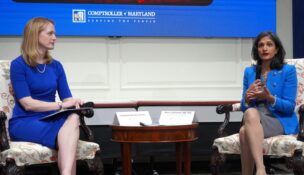
“This is a slight and positive adjustment of the revenue forecast — my first upward adjustment, so exciting times,” Comptroller Brooke Lierman, who has been the state’s top tax collector since January 2023, said during the meeting. “But it’s not a dramatic revision, and our economic performance has been in line with our previous estimates.”
The revenue estimates presented Thursday represent an increase of about $88 million, or less than 1 percentage point, over projections from March, when the Board of Revenue Estimates last met. Increases in corporate income tax and interest income largely drove the upward revision.
The board forecasts revenues for Maryland’s general fund, which makes up roughly 40% of the state’s total revenue and includes money from taxes on personal income, corporate income and sales and use.
Another 40% comes from federal funding, and a combination of money from transportation, higher education and other state government funds make up the remaining 20%.
The somewhat positive forecast is dependent on tax and spending decisions from a federal government that has shown an inability to consistently and predictably approve funding to pay for regular operations and services.
The November presidential and congressional elections will determine the government’s functionality for the foreseeable future, and several significant funding decisions await Congress in 2025, including on the U.S.’s debt limit and the potential for personal income tax policy changes.
The state is expected to bring in 0.8% more revenue in fiscal year 2025 than in the last fiscal year, which ended in June.
Revenue experts projected that the trend will continue the next fiscal year, too, with a year-over-year revenue growth of 0.9% in fiscal year 2026.
Lierman said that it will be important for budget and revenue officials to keep an eye on Maryland’s increasing reliance on the highest income earners for personal and income tax revenue for its general fund. She said the highest earners are the “the most volatile” sources of revenue.
The state’s sales tax growth has also slowed and continues to underperform, which Lierman warned “may not be temporary.”
The latest revenue estimates are expected to have little impact on decisions that officials in the Gov. Wes Moore administration will be making for their fiscal year 2026 budget. The roughly $63 billion proposal is due to the legislature in January.
Maryland has for years faced projections of budget deficits reaching several billion dollars, largely driven by an expensive education reform plan called the Blueprint for Maryland’s Future.
“The really, very modest positive adjustment today obviously is helpful,” Budget Secretary Helene Grady said during the meeting. “But it doesn’t materially alter in any way the challenges that we face with the general fund budget.”
Correction: A previous version of this story included an incorrect date for when Comptroller Brooke Lierman assumed her role. She took office in January 2023.