Sign In
 Free Newsletter

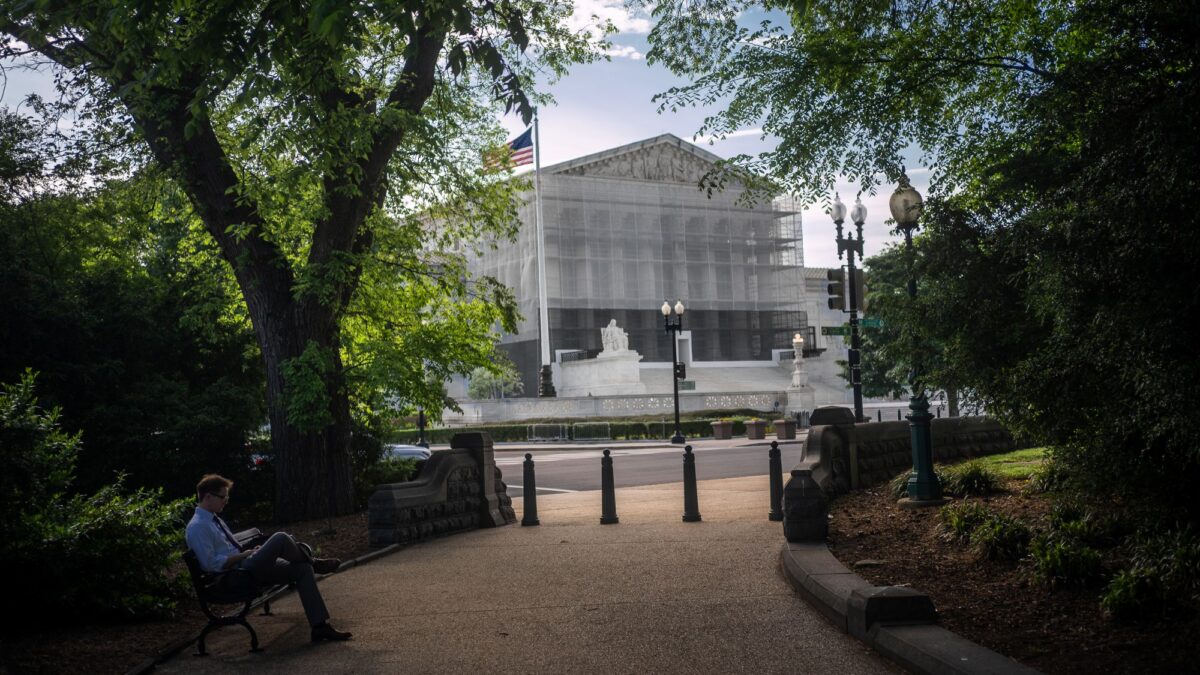
The Supreme Court in April 2025. (Shedrick Pelt/For The Washington Post)
SCOTUS allows soldier to sue contractor over suicide bombing


The Supreme Court on Wednesday cleared the way for a soldier seriously wounded while attempting to thwart a suicide bombing in Afghanistan to sue a contractor that the military found was negligent in the incident.
The 6-3 ruling will make it easier for soldiers hurt in combat zones to win damages if they allege that contractors are responsible for their injuries. Contractors have become a larger part of military operations around the world in recent years. Justices Samuel A. Alito Jr., John G. Roberts Jr. and Brett M. Kavanaugh dissented.
The case revolved around the Federal Tort Claims Act (FTCA), which waives the federal government’s sovereign immunity from lawsuits in certain instances but exempts “combatant activities” during “times of war.”
In a decision in the late 1980s, the Supreme Court held that the act barred suits against military contractors when the claims involve a “uniquely federal interest.” The justices found that decision did not apply in the case brought by U.S. Army Spec. Winston T. Hencely, overturning a ruling by an appeals court that blocked the suit.
“The Fourth Circuit’s decision held Hencely’s claims preempted even though the conduct complained of was neither ordered nor authorized by the Federal Government,” Justice Clarence Thomas wrote for the majority.
In 2016, Hencely attempted to grab a bomber wearing a suicide vest as the man made his way toward a Veterans Day 5K at Bagram air base in Afghanistan. The attacker detonated the explosives, injuring Hencely and killing six others.
Hencely was lauded for saving lives. The military later concluded that a contractor, Fluor Corp., which employed the suicide bomber, failed to properly supervise him before he carried out the attack.
Hencely sued Fluor in federal court in South Carolina, where the contractor is based. A federal judge and the U.S. Court of Appeals for the 4th Circuit ruled against him, finding the FTCA preempted his suit. Hencely then made a last-ditch appeal to the Supreme Court.
Alito, who wrote a dissent joined by Roberts and Kavanaugh, argued it did not make sense for state courts to take actions in overseas military operations. Alito wrote that war is the exclusive domain of the federal government.
“May a State regulate security arrangements on a military base in an active warzone?” Alito asked in his opinion. “May state judges and juries pass judgment on questions that are inextricably tied to military decisions that balance war-related risks against long-term strategic objectives? In my judgment, the answer to these questions must be ‘no.’”
Frank Chang, an attorney for Hencely, told the justices during arguments in November that Hencely should be allowed to bring a lawsuit because Fluor allegedly violated the terms of its contract by not doing more to supervise the suicide bomber.
“After the Army found that Fluor’s disregard of key contractual requirements led to the bombing at Bagram, Specialist Hencely tried to seek some measure of justice, but the 4th Circuit blocked his efforts,” Chang told the justices.
Mark Mosier, an attorney for Fluor, told the justices the readiness of the U.S. military to fight a war could be undermined by suits like Hencely’s because trust between the military and contractors is paramount. He faulted the military for failures in the suicide bombing.
“The purpose of tort law is to discourage risk-taking, but waging war often requires contractors to take risks, putting their lives and the lives of others in danger,” Mosier said.
“Petitioner’s claims also weaken the military’s control over combat operations. Contractors are part of the total force, and the military cannot successfully wage war without them.”
___
Justin Jouvenal covers the Supreme Court.