Sign In
 Free Newsletter

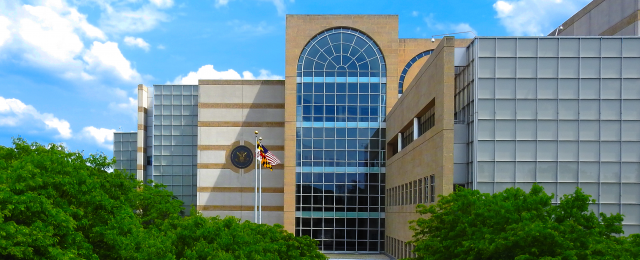
The U.S. District Court for the District of Maryland located at 6500 Cherrywood Lane in Greenbelt. (District Court of Maryland)
MD judge orders Trump administration to process dozens of immigration applications


Key takeaways:
- Judge George Russell III ordered USCIS to process 83 permanent residency applications.
- Applications were paused under the Trump administration‘s “Countries of Identified Concern” list.
- Russell did not mandate a 30-day timeline.
A Maryland federal judge on Friday ordered U.S. Citizenship and Immigration Services to process dozens of immigrants’ applications for permanent residency that had been postponed indefinitely.
George Russell III, chief judge of the Maryland U.S. District Court, ordered USCIS to process the applications of 83 immigrants, issuing a preliminary injunction preventing the Trump administration from pausing the processing of those applications.
President Donald Trump last year issued executive orders on “Countries of Identified Concern.” A December order expanded the list from 19 countries to 39. USCIS then indefinitely halted the final decisions on all applications for permanent residency filed by immigrants from those countries.
The 83 Maryland plaintiffs sued in January and asked for a preliminary injunction against the hold on applications by people from those countries. They alleged the indefinite pause would cause irreparable harm to their careers, businesses and families.
All but three of the plaintiffs are citizens of Afghanistan, Eritrea, Iran, Syria or Venezuela, which are all on the list; the other three are married to citizens of those countries. Twenty-five are spouses or children of the other 58.
Russell noted that many are scientists and researchers who are unable to attend international conferences while their residency applications are pending. Others alleged in the complaint that they have had to postpone decisions about having children due to the uncertainty.
Russell granted their request for a preliminary injunction, deciding to preserve the status quo before the indefinite pause. He ruled that the USCIS policy memorandum counts as a “final agency action” eligible for court review.
The order only applies to the 83 plaintiffs.
Russell ruled that they were likely to succeed on the merits of their claims, that they were likely to suffer irreparable harm without final decisions on their applications and that a preliminary injunction would serve the public interest.
He declined, however, to order the agency to process the applications within 30 days, as the plaintiffs requested, because they are in different stages. Some of them have provided the required biometrics data — including fingerprints, photos and signatures — and are awaiting final approval, while others only submitted their applications shortly before the complaint was filed.
Russell is not the first judge to rule in favor of plaintiffs challenging the USCIS rule. He cited, for example, a Massachusetts judge who wrote that “the length of this hold is unclear at best.”
Russell wrote that in that case, USCIS provided “no reasoned explanation, beyond conclusory statements, why such a broad hold is necessary for applicants for immigration benefits.”
USCIS argued in the Maryland case that a pause on final decisions is warranted because “national security is at stake” and that the plaintiffs would suffer a “minimal delay.”
Russell wrote that the agency provided no proof that the applicants posed a threat to the nation.
“On the contrary,” he wrote, “many Plaintiffs have contributed significantly to scientific and medical research that serves the interests of the U.S. and its citizens.”