Sign In
 Free Newsletter

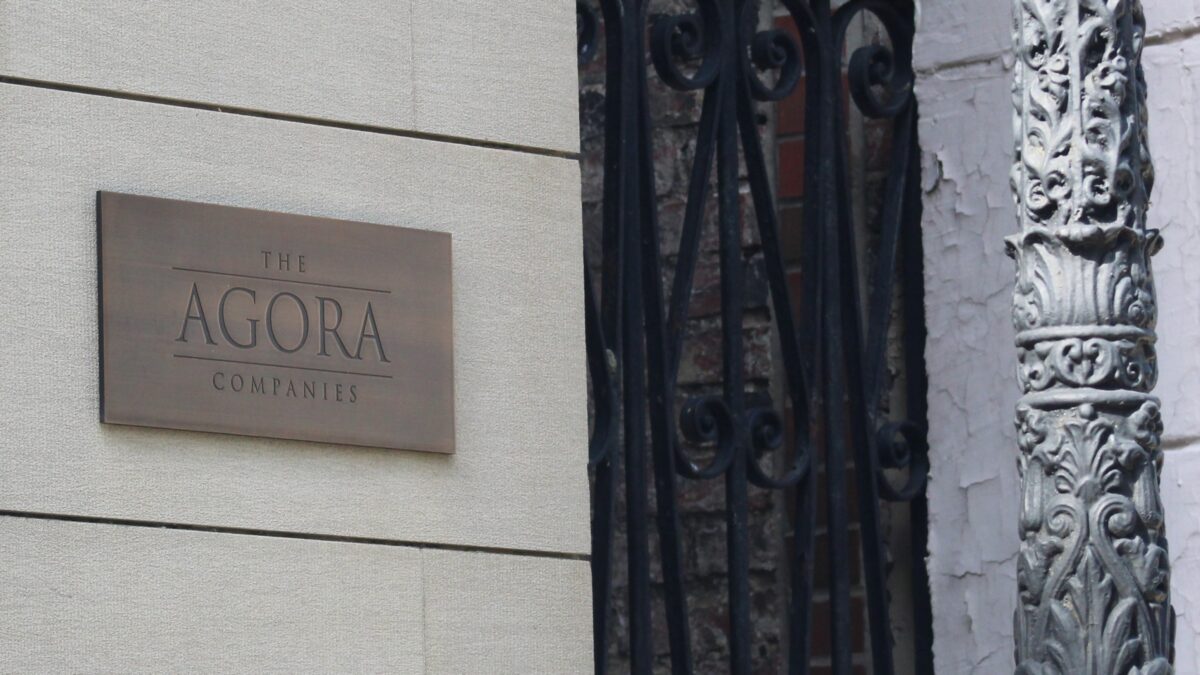
The Agora Cos. is headquartered in Baltimore's Mount Vernon neighborhood. (Dan Belson/The Daily Record)
Baltimore publishing firm ‘stunned’ by city lawsuit alleging misleading marketing
City alleges Agora uses 'scare and sell' tactics to target seniors


Baltimore City accused the Agora Cos., a locally headquartered publishing giant, and its web of connected companies of targeting older adults with misleading online marketing and unfair subscription terms in a civil conspiracy lawsuit filed Tuesday morning.
In the complaint filed in Baltimore Circuit Court, city attorneys alleged that the firm “bombards” its target audience with dubious information on health supplements and investments using flashy online marketing to sell newsletter subscriptions. The network’s “scare and sell” tactics, the city claims, are part of a uniform playbook that they chalked up as a more sophisticated way of “selling snake oil” that has had financially devastating results.
The lawsuit accuses Agora of violating the city’s consumer protection ordinance, a 2023 law that has also allowed City Solicitor Ebony Thompson‘s office to sue companies for harm to consumers. Though the city has leveraged that power against national and international gambling, financial and tobacco companies, Agora is the first major Baltimore-based company that the city has targeted.
“Agora is stunned by the filing of this lawsuit, having learned of it for the first time in the news media this morning,” Jules Bonner, president of the Agora Companies, said in a statement late Tuesday afternoon. Bonner, who is a defendant in the lawsuit, said that “as a 47-year Baltimore company, we would have expected to have heard about any concerns from the City earlier than the filing of a lawsuit, given our long history as a Baltimore business and employer.”
The lawsuit seeks the maximum civil penalties under the consumer protection ordinance — up to $1,000 per violation per day — as well as consumer redress paid by the defendants and injunctive relief barring Agora from continuing certain advertising practices.
Founded in 1978 by Bonner’s father, Bill Bonner, Agora found success in publishing “insider” financial newsletters and has expanded internationally, with other brands focusing on health and travel. It moved in the 1990s to Baltimore and is now headquartered at the historic Marburg Mansion in the Mount Vernon neighborhood.
As the firm and its subsidiaries grew, they started facing scrutiny for misrepresenting facts. In the digital era, the firm may be best recognized for a certain type of online ads that make claims such as: “The health implications of this shocking video will leave you speechless,” “Kills more cancer cells than a dose of radiation,” or “URGENT: Funds Have Already Been Filed for Approval With the SEC… It’ll Be the Biggest Dividend in History.” The firm also frequently uses promotional “advertorial” headlines alongside news content, making it difficult to tell the difference between ads and non-sponsored content.
The complaint relies at several points on Agora’s “Big Black Book” of marketing and copywriting tactics, which is distributed to employees. In their complaint, city attorneys noted that the companies routinely use phrases like “everyone over age 65 needs to hear about…” in ads to target seniors, as well as using fake “countdown clocks” on ads to create urgency. Once clicked on, the ads often lead to advertorials and longform video sales presentations offering Agora newsletters or products such as health supplements. Those who subscribe are then hit with constant email advertisements and encouraged to pay more for “special” newsletters and “clubs,” according to the complaint.
The city’s lawyers wrote that one older consumer’s family had reported that their relative had paid over $30,000 on Agora subscriptions and products and took out home loans to pay for Agora products. He had been charged by Agora 60 times over the course of two years, with individual charges as high as $4,000.
They called Agora a “recidivist” violator of consumer protection laws, pointing to prior lawsuits where its companies were either found civilly liable or settled with officials. In 2003, the Securities and Exchange Commission sued the company after one of its subsidiaries, Pirate Investor LLC, published “purported insider information” about a publicly traded company in a newsletter (the tip was false). The judge ultimately found the company liable for securities fraud.
The complaint also names companies tied to Agora brands NewMarket Health, MarketWise, Oxford Financial Publishing and Paradigm Press as defendants, as well as company executives and six editors of various Agora newsletters. The city’s law department is being assisted by outside counsel from Farra & Wang PLLC and Relman Colfax PLLC.
The legal team has reviewed around 1,000 consumer complaints against Agora “and its constantly-morphing corporate entities,” Yiyang Wu, a partner at Relman Colfax, said in a statement. Baltimore Mayor Brandon Scott said in a statement that the city “is taking a stand today, making it clear that we will enforce the rule of law to safeguard our residents from the alleged harms deployed by Agora.”
Agora’s president said in an email that the firm was “still digesting the complaint” but saw “significant constitutional problems” with the allegations, including on First Amendment grounds.
“We are prepared to defend this case vigorously,” Bonner said.