Sign In
Upcoming Event
 Free Newsletter

Best Week, Worst Week: Baltimore brothers released from prison; Opioid death numbers still rising
Best Week, Worst Week: Baltimore brothers released from prison; Opioid death numbers still rising


 Listen to this article
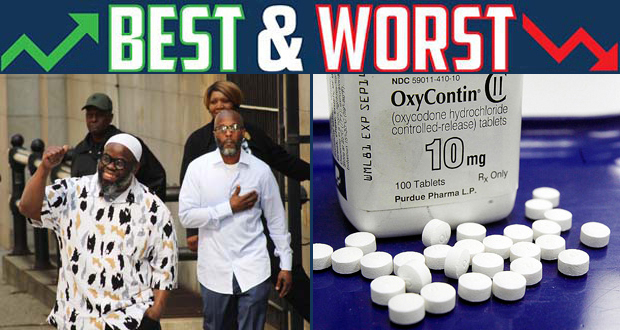 Two Baltimore brothers are having their best week in about 25 years this week, while those on the front lines in the battle against Maryland’s opioid epidemic received another blow.
After serving nearly a quarter-century in prison, the Baltimore brothers were released after an investigation by prosecutors and defense counsel concluded they were actually innocent of conspiracy to commit murder, for which they were convicted and sentenced to life in 1995.
Legal affairs writer Steve Lash reported Monday that Kenneth “JR” McPherson and Eric Simmons’ writ of actual innocence was granted May 3 by Baltimore City Circuit Judge Charles Peters at the request of their attorneys and the city’s top prosecutor, Marilyn J. Mosby.
Peters granted the writ based largely on the prosecution’s in-court presentation that the state did not share with defense counsel before or during trial statements that witnesses had made to investigators exculpating McPherson and Simmons. The judge concluded that this unshared information constituted “new evidence” that, if presented at trial, likely would have led to a not-guilty verdict for both men.
The writ left open the possibility for a new trial. But Mosby’s office dismissed the charges against McPherson and Simmons related to the shooting death of Anthony Wooden just after midnight on Aug. 31, 1994, on North Washington Street in east Baltimore.
The brothers’ release follows the exonerations last year of Clarence Shipley and Jerome Johnson after joint investigations conducted by the Mid-Atlantic Innocence Project, the University of Baltimore Innocence Project Clinic and Mosby’s Conviction Integrity Unit. Those groups also worked on the brothers’ case.
Meanwhile, opioid deaths continue to rise and a report released this week showed that 2,114 people died in Maryland as a result of opioids last year.
Heath care writer Tim Curtis reported Thursday that most of the increase in opioid-related deaths can be attributed to the powerful synthetic opioid fentanyl, while deaths related to heroin have fallen.
Fentanyl has become an especially difficult problem for the state and local jurisdictions to corral. The synthetic drug is about 10 times more potent than heroin and also much cheaper. Drug dealers can use fentanyl to cut their product. Some people who misuse opioids turn to fentanyl to chase a high greater than what they are used to with heroin.
But the drug’s potency also leads to more overdoses — and more overdose deaths.
Meanwhile, state and local officials have been successful in reducing deaths and finding help for people who misuse prescription opioids.
Prescription opioid-related deaths fell 10 percent from 2017, to 371 deaths last year. The number of opioid prescriptions written is falling, as more doctors and hospitals work to ensure that they are not prescribing more of the drugs than necessary.
Last year, the number of opioid prescriptions in Maryland fell to slightly more than 3 million, down from more than 3.5 million in 2017.
At the same time, efforts to get people into treatment have ramped up. The number of prescriptions written for the drug buprenorphine, a long-lasting opioid used to help treat opioid misuse disorder, rose 20 percent last year as more people got treatment.
While the number of deaths has continued to rise, it rose at the slowest rate since 2011 — 5.2%. That is a cause for optimism, said Steve Schuh, executive director of the state’s Opioid Operational Command Center.