Sign In
 Free Newsletter


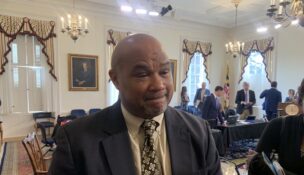
Maryland Comptroller Brooke Lierman speaks during a meeting of the Maryland Board of Revenue Estimates on March 7, 2024, in Annapolis. Treasurer Dereck Davis is seated right. (AP Photo/Brian Witte)
MD officials scold prison care bidders while approving new provider


 Listen to this article
ANNAPOLIS — Top state officials on Wednesday chided the companies seeking to provide medical and mental health care in pretrial detention facilities, saying that they lost focus of the people they’d been serving and that a losing bidder launched “frivolous” appeals.
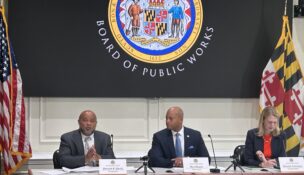
The three Democrats comprising the Board of Public Works on Wednesday approved a $724 million, five-to-seven-year contract for Centurion, a Virginia-based company with an office in Baltimore County, to provide care in pretrial detention facilities in Baltimore.
In May, the board voted for the same company to also deliver care in state prisons.
With the new contracts beginning Thursday, the state will part ways with YesCare, a troubled correctional health care provider that has overseen care in Maryland in recent years but that Comptroller Brooke Lierman has called “uniquely terrible.”
The company formed after Corizon Health — facing medical malpractice lawsuits across the country, including in Maryland — disbanded, establishing YesCare to continue providing correctional health care and launching another offshoot, Tehum Care Services, to absorb tens of millions in debt, according to a 2023 report from the nonprofit criminal justice news organization The Marshall Project.
Tehum eventually declared bankruptcy, though the move has been challenged in a Texas court.
YesCare’s representatives have repeatedly contested the state’s decision to contract with Centurion, and multiple short-term contract extensions and award appeals have muddied the process for approving a new care contract for detention facilities.
The drawn-out process prompted Lierman on Wednesday to admonish members of government agencies — which recommend contract awardees to the board — and potential vendors “not to test this Board of Public Works.”
She said that agencies shouldn’t look to the board to resolve contract award protests, unless there are extenuating circumstances, and that vendors shouldn’t file “frivolous” appeals to contract decisions.
“As elected officials we should respect, not railroad, our administrative and judicial processes. The Maryland State Board of Contract Appeals exists to resolve those procurement issues, not the Board of Public Works,” Lierman said. “However, we will not allow the state to be taken advantage of and for Marylanders to suffer when vendors bring forward frivolous appeals.”
YesCare challenged the state’s decision until the end, and a representative reiterated the company’s case Wednesday, pointing out that its proposal was about $144 million less than Centurion’s.
Treasurer Dereck Davis, though, said the two companies focused their pitches to the board too much on money, minority business enterprise participation and other financial factors that detracted from the people for whom they’d be providing care.
“It seems that care for the inmates is secondary,” Davis said during the meeting. “You would think that would be the selling point.”
A representative for the Maryland Department of Public Safety and Correctional Services has contended that the agency based its recommendation on both technical and financial merits.
Among other measures to boost correctional health care in Maryland, Centurion has committed to increasing hourly pay rates for health care providers at the state’s jails and prisons with hopes of attracting more qualified workers, filling vacancies and improving the overall quality of care, according to meeting documents.
“We felt that Centurion technical — the people, the program, the system of providing care — was so superior,” Joseph Sedtal, deputy secretary for the department, said during Wednesday’s meeting. “That’s why we’re recommending award to someone who is more expensive.”