Sign In
 Free Newsletter

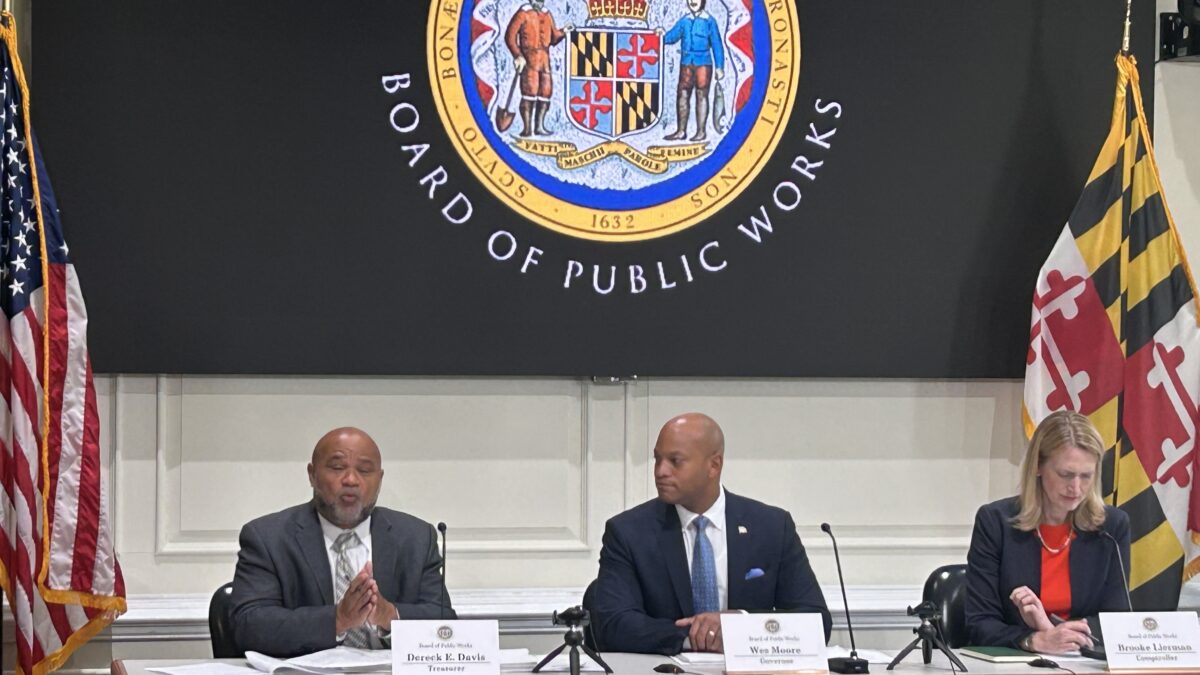
State Treasurer Dereck E. Davis, Gov. Wes Moore and Comptroller Brooke Lierman approve Maryland's annual bond sale on June 3, 2026. (Hannah Gaskill/The Daily Record)
MD Board of Public Works approves $800M bond sale


 Listen to this article
ANNAPOLIS — The Maryland Board of Public Works approved the sale Wednesday of $800 million of the state’s general obligation bonds.
“It couldn’t have gone any better, and it’s just through the hard work and, more importantly, the good reputation of the state,” Maryland Treasurer Dereck E. Davis, a Democrat, said at the Annapolis meeting.
The State and Local Facilities Loan of 2026, First Series, consisted of $307,205,000 in tax-exempt bonds awarded to Morgan Stanley & Co. LLC with a net premium of $35,999.36 and a true interest cost of 2.714757%. Morgan Stanley & Co. LLC was additionally awarded $231,925,000 in tax-exempt bonds with a net premium of $31,080904.40 and a true interest cost of 3.758675%.
Jeffries LLC was awarded $260,870,000 in tax-exempt bonds with a net premium of $41,706,371.72 and a true interest cost of 3.195387%.
By borrowing money through selling bonds, states can pay for capital projects, spreading costs across an extended period of time rather than immediately paying for them through available revenue.
Davis said there were seven bidders for each bidding group, “which is the most that we’ve had,” adding that Maryland’s net premium for 2026 made $15 million over the previous year “despite having half the sale.”
Before fees, the state raised $108 million in 2026, compared to $93 million last year.
“Maryland bonds are just good business,” Davis said. “It’s good business.”
According to the treasurer’s office website, Maryland’s general obligation bonds receive high credit ratings from three major agencies, a good indicator that the state has the ability to pay back its lenders. Maryland holds AAA ratings with S&P Global Ratings, Fitch Ratings, Inc and Kroll Bond Rating Agency, LLC.
In its rating agency report, Fitch said Maryland’s AAA rating and stable outlook is reflective of “its broad, diverse and wealthy economy, strong fiscal management, broad budgetary flexibility, medium-term expenditure pressure, and somewhat elevated, though carefully managed, liabilities.”
Last week, Maryland backed out of its decadeslong relationship with Moody’s — one year after the credit rating agency downgraded the state’s AAA rating to Aa1.
“The State of Maryland’s (Aa1, stable) credit features notable strengths, including the state’s systematic revenue forecast adjustments, strong ability to impose midyear spending reductions, and a wealthy tax base,” Moody’s fiscal year 2025 rating agency report reads. “It also encompasses vulnerability to federal job cuts and evolving US government policies that, by many measures, is greater than all other states. This will extend a period of economic underperformance.”
Upon the announcement that the state had dropped Moody’s, Maryland Senate Republicans alleged that Democrats were looking for a friendlier credit rating agency.
“If you don’t like your doctor’s diagnosis, finding a new doctor doesn’t cure the disease,” Senate Minority Leader Steve Hershey Jr., R-Upper Eastern Shore, and Minority Whip Justin Ready, R-Carroll and Frederick, said in a joint statement. “Maryland’s financial challenges are real, and no amount of political spin will change that.”