Sign In
 Free Newsletter


David Lorenz, Maryland director of the Survivor's Network of those Abused by Priests (SNAP), says he was glad the high court agreed the 2017 law wasn’t a “statute of repose,” a term in construction law intended to limit product liability for builders. (The Daily Record/File Photo)
Stalled lawsuits resume after MD high court upholds Child Victims Act


 Listen to this article
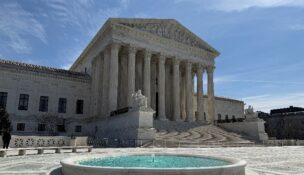
The Maryland Supreme Court’s narrow decision Monday afternoon to uphold the 2023 Child Victims Act means that thousands of plaintiffs whose cases had been on hold can now proceed.
Victims — many of whom decided to come forward after struggling for decades to come to terms with what happened to them — were forced to wait for almost a year after the state’s high court agreed to hear the institutions’ constitutional challenge to the law.
Lawyers say they will be filing status reports and motions to lift the stays on the dormant cases. Lawsuits will proceed as normal, with discovery, settlement talks and trials to determine liability.
“It was one of the most emotional afternoons of my career,” said Michael Belsky, a partner at SBWD Law, “having the great benefit of telling these clients that there is an avenue for them to seek justice.”
Belsky represents dozens of clients who were able to bring claims because of the CVA, including Tom Finnerty, who sued St. Mary’s Seminary and University in Baltimore, the nation’s oldest Catholic seminary, in August.
Belsky, who also teaches sexual abuse law at the University of Baltimore, said he called all of his clients immediately, and they were “overwhelmingly ecstatic.”
Gov. Wes Moore signed the Child Victims Act days after Maryland Attorney General Anthony Brown released a report detailing decades of abuse in the Archdiocese of Baltimore. The law ended the statute of limitations for child sexual abuse claims against “non-perpetrator” defendants.
The Maryland Supreme Court ruled Monday that the CVA was not preempted by the 2017 law, because the 2017 law was an “ordinary statute of limitations,” not a “statute of repose,” which would grant permanent immunity against such claims.
Institutions accused of enabling abuse — such as the state of Maryland, the Roman Catholic Archdiocese of Washington, and numerous religious and nonreligious private schools — will discuss how to limit the amount they pay in damages.
The state, which is facing claims by about 3,500 people alleging abuse in juvenile detention centers, could end up owing billions; the Archdiocese of Los Angeles, for example, agreed last fall to an $880 million settlement with about 1,300 victims. The court’s ruling comes as Maryland is already facing a $3 billion budget shortfall this year.
David Lorenz, head of the Maryland chapter of SNAP, the Survivors’ Network of those Abused by Priests, said at a Tuesday press conference that he anticipates the archdioceses of Washington and Wilmington, Delaware, which each cover big portions of Maryland, will file for bankruptcy. (Neither had done so as of Tuesday afternoon.)
Anticipating a flood of claims it couldn’t afford, the Archdiocese of Baltimore filed for bankruptcy days before the CVA took effect in 2023.
“This fight is not about money,” Steve Kelly, of Grant & Eisenhofer, said at the press conference. Instead, it’s about “justice, truth and accountability.”
“In order to move forward and heal, there has to be some accounting,” Kelly said.
The Archdiocese of Washington “is in the process of reviewing the decision issued by the Supreme Court of Maryland.”
“We remain committed to our longstanding efforts to bring healing to survivors through pastoral care and other forms of assistance,” a spokesperson wrote in an email. “We are also committed to maintaining our robust safe environment protocols that have been in place for decades to ensure the protection of all those who are entrusted to our care.”
Sorting out who pays may be complicated.
Kathleen Hoke, a professor at the University of Maryland School of Law, said the insurance companies that covered the institutions at the time of the abuse — not necessarily the ones that currently insure them — would be on the hook for damages.
Hoke, who advocated for the Child Victims Act and offered analysis to the legislature on statutes of repose, said she was pleased with the decision.
“Some defendants will, appropriately, seek to negotiate settlements,” Hoke told The Daily Record. “And many survivors will be willing to do so particularly if the settlements are not confidential. A huge part of the campaign for the CVA was about exposing organizations that harbor abusers. Survivors are far more motivated by bringing that to light and protecting today’s children than by money.”
Jonathan Schochor, who is representing plaintiffs against the archdiocese, also used the word “ecstatic.”
“We have 80-plus-year-old clients … who have found the ability to come forward,” Schochor said.
Brown, whose office may have to negotiate settlements with thousands of plaintiffs with claims against the state, defended the law and celebrated the decision.
“Today’s decision by the Supreme Court of Maryland confirms that the passage of time will not prevent survivors from seeking justice for sexual abuse they suffered as children,” he said in a statement.
Del. C.T. Wilson, D-Charles, who sponsored both the 2017 law and the Child Victims Act, did not respond to a request for comment. A spokesperson for the Key School did not respond to a request for comment either.
Lorenz said he was glad the court agreed the 2017 law wasn’t a “statute of repose,” a term in construction law intended to limit product liability for builders. He said Tuesday that the term had been “killing us” for years.
“We are not a product liability,” he said. “We are not some defective piece of plywood from Lowe’s or Home Depot.”