Sign In
 Free Newsletter

Professor’s suit accuses UMES of inflating enrollment, asks Trump administration to step in


 Listen to this article
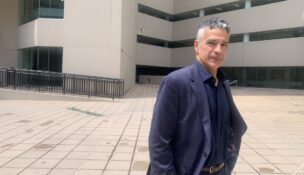
A University of Maryland Eastern Shore professor embroiled in a messy legal fight with his employer filed a new lawsuit last week on behalf of the federal government, accusing the school of systematically inflating enrollment numbers.
The lawsuit under the federal False Claims Act alleges that the historically Black university’s leadership used fake students, nonexistent classes and bogus grades to receive federal funding. Professor Sandeep Gopalan, the university’s former interim vice president for research and vice provost for academic affairs, said in the complaint that the school defrauded the federal government of an estimated $196 million dollars.
The complaint alleges that UMES President Heidi Anderson and her administration “designed and implemented a highly sophisticated enrollment scam to defraud the US government of tens of millions of dollars for their personal gain” and that the university sought to terminate a $4.6 million grant in retaliation for Gopalan reporting allegations of illegal activities.
The university declined to comment on pending litigation, and the University System of Maryland acknowledged a request for comment Monday but did not respond further.
The complaint filed Friday in U.S. District Court for Maryland was another escalation of a flurry of legal action initiated last summer by current and former employees of the university against its administrators. Gopalan and other faculty members had levied various allegations against Anderson in state and federal court, though several of those cases were voluntarily dismissed. Anderson has also filed a $1 million defamation suit against Gopalan and ex-professor Donna Satterlee, alleging that they spread false allegations to the media that she had plagiarized sections of her 1986 dissertation.
After various lawsuits against Anderson were filed last year, the chair of the university’s board of visitors and other allies of Anderson’s decried “unfounded and deeply troubling” accusations in a joint statement, saying the allegations were “not only baseless but also appear to follow a calculated pattern aimed at discrediting Dr. Anderson’s leadership and legacy.”
The latest complaint was filed as a qui tam action, also known as a whistleblower lawsuit. Such actions allow private parties called relators, who have insider information, to sue on behalf of the government and receive a portion of any funds recovered. They are most common in False Claims Act lawsuits.
The complaint says it was filed under seal, as is required in whistleblower suits under the False Claims Act, but it remained available in public court records several days after being filed, until after The Daily Record notified Gopalan’s attorney, Arinderjit Dhali of Washington, D.C.-based Dhali P.C., on Monday. Asked about the complaint, Dhali declined to comment because the case had since been sealed.
It was unclear how involved the Department of Justice was, if at all, as of Monday. Typically, the government has 60 days after such qui tam actions are filed to decide whether to intervene and proceed.
The complaint alleges that in 2023, Gopalan discovered the university had been “inflating student enrollment numbers, engaging in organized, systematic civil rights violations, and falsely certifying compliance under the Higher Education Act” to receive federal funds.
The school has reported enrollment climbing from just over 1,800 undergraduate students in 2021 to nearly 2,700 in 2025, according to University System of Maryland data.
The lawsuit alleges that the federal government paid out millions in financial aid, land grant appropriations, institutional grants and other funds based on false enrollment numbers. It claims that some federal grants were then used to pay Anderson’s friends as “consultants” and “to bribe her cronies with foreign travel under the guise of study tours.” It says that after Gopalan reported irregularities, the university’s administration conspired to terminate a $4.6 million federal grant for Gopalan’s “Futures Institute,” an initiative focused on studying artificial intelligence, climate change and sustainability.
The latest complaint contains similar allegations as another filed by Gopalan last year that he voluntarily dismissed in January. It comes as Gopalan litigates various cases in state court with Anderson and others at the university.
In April, Anderson added Gopalan as a defendant in her defamation lawsuit against former professor Satterlee, alleging that Gopalan said during a court hearing that he initiated the plagiarism claims against the university’s president.
A hearing in that matter is set for next week in Somerset County Circuit Court.