Sign In
Upcoming Event
 Free Newsletter

Is the Potomac River safe? What to know as DC, VA begin lifting advisories.

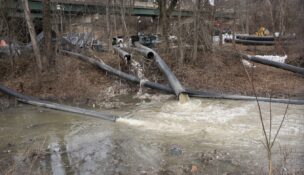
Water flows into the C&O Canal from the enhanced bypass pumping system on Feb. 21, 2026. (Louie Palu/ Agence VU — For The Washington Post)
Is the Potomac River safe? What to know as DC, VA begin lifting advisories.


 Listen to this article
Key takeaways:
- D.C. lifted its Potomac River advisory on March 2 after three weeks of safe water quality data.
- Over 240 million gallons of sewage spilled due to a pipe collapse near D.C.
- Maryland plans to lift shellfish-harvesting closures on March 10 following testing.
- Virginia partially lifted its advisory for Potomac River recreational activities in some areas.
Officials in the Washington, D.C., area have lifted some advisories steering residents away from the Potomac River, nearly two months after a pipe collapsed near the Clara Barton Parkway in Montgomery County and spilled more than 240 million gallons of sewage into the waterway.
The spill, which was largely contained by a fix installed in the week after it began, temporarily spiked levels of E. coli and other disease-causing pathogens near the spill site and downstream in D.C. waters, according to testing by local authorities and University of Maryland scientists. But water quality levels in D.C. have since returned within limits for safe recreation, aside from typical and expected bumps in bacteria levels following rain and snow, according to the D.C. government’s health and environmental agencies.
Officials with D.C. Water, which operates the pipe, say they still do not know exactly what caused the pipe to collapse. D.C. Water CEO David Gadis said at a Feb. 26 community meeting in Bethesda that he thinks that the weight of large rocks and boulders used as backfill on top of the pipe when it was constructed may have put too much pressure on it. The pipe’s thinning walls may have also contributed, he said.
As D.C. Water continues its costly repair and environmental remediation process – for which the federal government recently said it would contribute funds – D.C. officials say it is once again safe to fish and boat in the Potomac.
“After careful review of the last three weeks of water quality data, we are confident that conditions in the District’s portion of the Potomac River no longer pose an elevated public health risk,” said D.C. Health Director Ayanna Bennett. She said residents in neighboring areas should follow guidance from those jurisdictions.
Is drinking water safe?
Yes, the region’s drinking water is safe. In D.C., the drinking water system is separate from the wastewater and sewage pipelines.
The primary intake facility for the Washington Aqueduct, which supplies drinking water from the Potomac to the region, is at Great Falls – upstream from the sewage spill. An intake facility downstream from the break, at Little Falls, was not in operation at the time of the spill and has remained closed since the incident.
Officials with the D.C. Department of Energy and Environment have said that any sewage that entered the Potomac because of the pipeline break “flowed away from the water intake and not toward it.”
Why is D.C. lifting the water advisory?
D.C. health officials say D.C. Water has contained the sewage spill and the city’s water quality has remained at typical levels for three weeks.
“In the D.C. waters, we consider it safe for you to have contact with the Potomac,” said Bennett, the city’s health director.
There have been no overflows into the river since Feb. 8, when a glut of non-disposable wipes overwhelmed the bypass system D.C. Water set up to divert sewage from the spill site, the independent utility said. The latest testing data from D.C. Water shows E. coli below safe recreational limits at all D.C. locations – and at Minnie’s Island, which is about a half-mile downstream of the spill site.
“As we get away from the event with time and with increasing river flow especially, we’re seeing all those bacteria levels come down significantly,” Amanda Zander, who is leading environmental remediation efforts for D.C. Water, said at the community meeting in Bethesda.
The bacteria levels do fluctuate and were above safe recreational limits in D.C. sporadically over the past week – but officials say those elevated levels were unlikely to be spill-related. Even without a massive pipe collapse, sewage overflows after rainstorms periodically elevate E. coli levels in the Potomac River.
I live in Virginia or Maryland. Can I go in the water?
Yes, in some areas. The Maryland Department of the Environment on March 10 lifted a precautionary shellfish harvesting closure in part of the Potomac after testing in areas nearly 60 miles from the sewage spill site in recent weeks showed “bacteria levels below the laboratory detection limit.”
The public can “confidently enjoy seafood” from the Potomac River and the Chesapeake Bay, state Environment Secretary Serena McIlwain said in a statement.
Officials in Maryland said advisories limiting recreational contact with the water have been lifted in Prince George’s and Charles counties, and for part of Montgomery County.
The Virginia Department of Health on March 5 lifted part of its advisory against recreational activities on the Potomac from Route 120 Chain Bridge to the Gov. Harry W. Nice Memorial Bridge (Route 301) in King George County. The advisory remains in place in other areas for now.
At community meetings in February, residents also expressed concern about sewage contamination in the sediment near the spill site and asked for additional testing of that sediment – not just the water – to ensure that it is safe for people to walk around in. Officials said they are taking those concerns into consideration.
Rachel Rosenberg Goldstein, a University of Maryland public health professor whose team has been sampling the water and sediment near the spill site, said in early March that her team is still consistently finding E. coli, along with the pathogen that causes staph infections, in both the water and the sediment there.
“Because the environment is so dynamic and we see sediment move into water during precipitation events, it’s important to understand not just what’s in the water itself but what’s also in the sediment,” she said.
D.C. Water officials are hosting community meetings in Maryland and Virginia to answer the public’s questions about the spill and its aftermath.
Can I swim in the Potomac?
No, you should not swim in the river. Swimming is already prohibited in D.C. waters without special permission.
Is the water safe for wildlife?
The impact to wildlife is unclear, but regional governments have said they will conduct surveys to examine it.
Untreated wastewater carries toxic chemicals, microplastics, pharmaceuticals, excess nutrients, viruses and bacteria – materials that can harm fish and wildlife. Nutrients can drain oxygen quickly, killing fish and causing harmful algae blooms. In the days after the spill, residents saw dead fish in the water near the spill site – a sign that fish could have been affected, at least in the short term. The pathogen that causes staph infections can also harm aquatic life, Rosenberg Goldstein said.
How often are officials testing the water?
D.C. Water has been doing daily water-quality sampling at eight sites along the river. D.C.’s Department of Energy and Environment also upped its water-quality testing cadence from weekly to daily starting Monday.
When will the repairs be complete?
D.C. Water said on March 15 that after 55 days of round-the-clock work, crews completed emergency repairs of the pipeline and environmental rehab of the canal is underway. That section of the pipe will also undergo additional rehab that will take nine to 10 months, officials said.
It’ll get warmer soon. What impact will that have?
“Most bacteria prefer warmer temperatures,” said Rosenberg Goldstein, who encouraged residents to look at all available water-quality testing data before getting back to their activities on the Potomac.
She added that warmer weather has been melting snow and tends to come with more rain events – and “all of these things can actually add more contaminants into the water.”
The warmer weather will bring other concerns. Every summer, algal blooms caused by higher nutrient levels harm the river’s health. This year, authorities will watch for any additional impacts.
“It’s something that we’re going to be vigilant about,” Adam Ortiz, deputy secretary at the Maryland Department of the Environment, said at Thursday’s meeting.
Dana Hedgpeth is a Native American journalist who has been at The Post for 25 years. She is an enrolled member of the Haliwa-Saponi Tribe of North Carolina. At The Post, she has covered topics including Native Americans and their history, Pentagon spending, the U.S. defense industry, and the local rail and bus systems, governments and courts.
Jenny Gathright covers the D.C. government and city politics on The Post’s Metro desk. Before coming to The Post in 2024, she reported on the District for WAMU 88.5 and DCist.com, mostly about criminal justice and public safety.
This article was updated March 18.