Sign In
Upcoming Event
 Free Newsletter

MD joins lawsuit against EPA over rules on airborne ‘fine particulate matter’
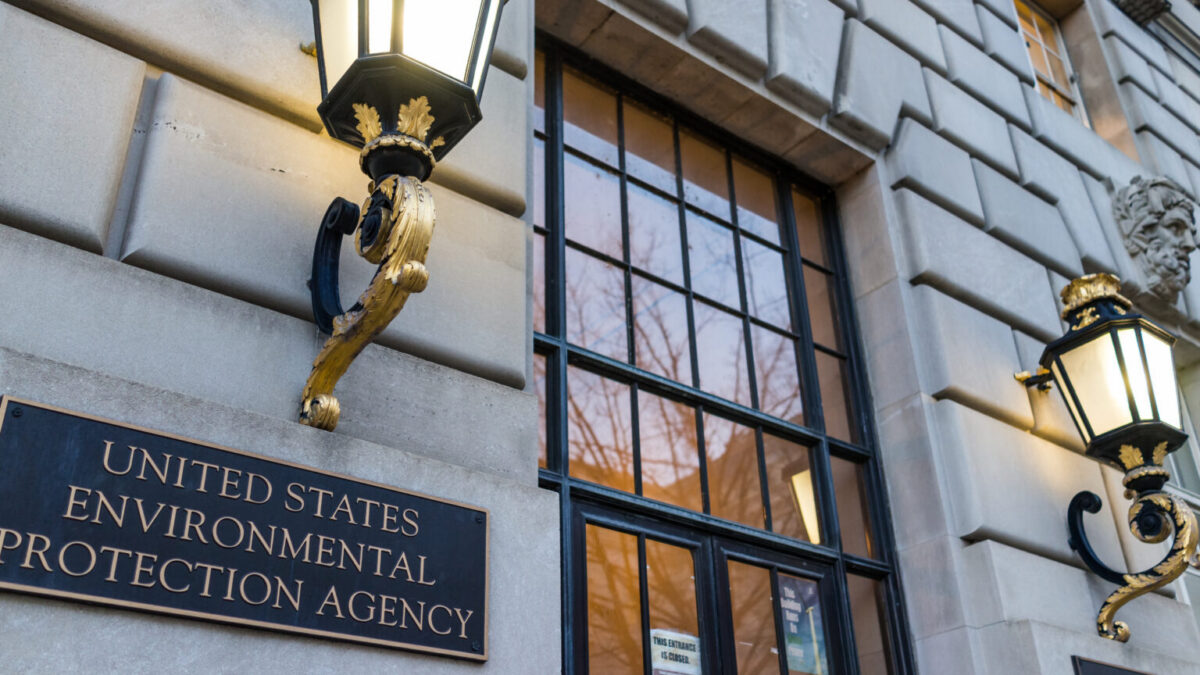
Maryland and 13 other jurisdictions are suing the U.S. Environmental Protection Agency, saying it has failed to live up to revised standards in the Clean Air Act for airborne fine particulate matter, putting public health at risk. (Photo by Kristina Blokhin/Stock.adobe.com)
MD joins lawsuit against EPA over rules on airborne ‘fine particulate matter’


 Listen to this article
Maryland joined 13 other jurisdictions that sued the Environmental Protection Agency Friday for its failure to meet a February deadline to determine which parts of the country are in compliance with a 2024 standard for “fine particulate matter.”
That lack of federal guidance affects the states’ ability to set local plans that would address unhealthy air in “nonattainment” areas, or those not meeting the air quality standards, the lawsuit says.
“Marylanders deserve clean air, and federal law requires EPA to protect it,” Maryland Attorney General Anthony Brown (D) said in a statement Friday. “We will not stand by while the Trump Administration abandons standards that would save thousands of lives each year.”
A representative with the Environmental Protection Agency declined to comment Friday evening.
The lawsuit, filed in the U.S. District Court for Northern California against EPA Administrator Lee Zeldin, claims the agency missed a February deadline imposed two years earlier, during the Biden administration, to identify which parts of the country met new standards for fine particulate matter — airborne particles that are 2.5 microns or smaller, invisible to the naked eye.
For sake of comparison, the EPA says the average human hair is 70 microns in diameter. Because of their size, fine particles, of 2.5 microns or less, can “travel deep into the lungs and even into the bloodstream” causing sometimes severe health problems, or premature death, to those already suffering from heart or lung disease, irregular heartbeat and other respiratory problems.
“The size of the particulate matter is directly linked to its potential for causing health problems, with smaller particles posing the greatest risks,” according to the suit.
EPA’s failure to identify nonattainment areas “seriously endangers public health,” the suit says. But it also prevents state and local governments, which have primary responsibility under the Clean Air Act for air pollution control at the source, from implementing plans to fix the problem, the states charge.
Failure to designate nonattainment areas “strips states and local governments … of regulatory tools and incentives that Congress provided to them to control air pollution. Promulgation of the designations will equip State and Local Government Plaintiffs with the full suite of Clean Air Act mechanisms to reduce fine particulate matter pollution within their borders,” according to the lawsuit.
When the fine particulate matter standards were updated in 2024, several Republican-led states and various chambers of commerce sued to block the new rules. Maryland and about a dozen other states joined that case in support of EPA and the new standards, but the case is still pending.
The EPA under President Donald Trump, meanwhile, reversed course and asked a court last June to vacate the 2024 standards, but that case is also pending. Because neither case has been acted on, the 2024 standards are still in effect and must be enforced. Friday’s suit argues.
Besides Maryland, jurisdictions on Friday’s suit include the states of California, Connecticut, Hawaii, Massachusetts, Minnesota, New York, Oregon, Rhode Island, Vermont and Wisconsin, the District of Columbia, New York City and Harris County, Texas.
Those same jurisdictions and about two dozen other states, counties and cities joined in a legal document, or petition for review, against Zeldin and the agency last month for EPA’s “unlawful” attempt to rescind its 2009 “endangerment finding” that classified greenhouse gas emission a threat to public health.
The agency said in its decision in February that the “EPA lacks statutory authority under Section 202(a) of the Clean Air Act to prescribe standards for GHG (greenhouse gas) emissions for various vehicles and engines.” The agency claims this would save more than $1.3 trillion.
Meanwhile, Brown’s office is leading on the filing of an amicus brief Friday in U.S. District Court in Maryland that supports a lawsuit against the U.S. Department of Education and its secretary, Linda McMahon, over the department’s waiver of the Randolph Sheppard Act as it applies to the Army. The Education Department oversees the 1936 Randolph-Sheppard Vending Facility program, which gives priority to blind vendors for contracts to operate food service and vending facilities on military bases.
In December, the department published a notice in the Federal Register that the Randolph-Sheppard program on Army installations “adversely affects the interests of the United States.”
In Maryland, the program is administered by the Business Enterprise Program for the Blind within the state Department of Education’s Division of Rehabilitation Services.
According to the brief, the Business Enterprise program is operated at 60 locations with 47 licensed blind vendors. The program has contracts at two dining halls at Fort Meade.
“This program exists to give blind Marylanders the tools, training and access to build thriving businesses. Dismantling it doesn’t just close doors, it tears down the whole doorway,” Brown said. “We will not stand by while the federal government attempts to strip those opportunities away.”
Maryland is joined by attorneys general from California, Colorado, Connecticut, Delaware, Illinois, Maine, Massachusetts, Michigan, Minnesota, Nevada, New Mexico, New York, North Carolina, Oregon, Virginia and the District of Columbia.
William J. Ford reports for Maryland Matters.
Maryland Matters is part of States Newsroom, a network of news bureaus supported by grants and a coalition of donors as a 501(c)(3) public charity. Maryland Matters maintains editorial independence. Contact Editor Steve Crane for questions: [email protected]. Follow Maryland Matters on Facebook and Twitter.