Sign In
Upcoming Event
 Free Newsletter

Lawyer didn’t commit ‘obvious error’ on cell tower testimony, MD court rules
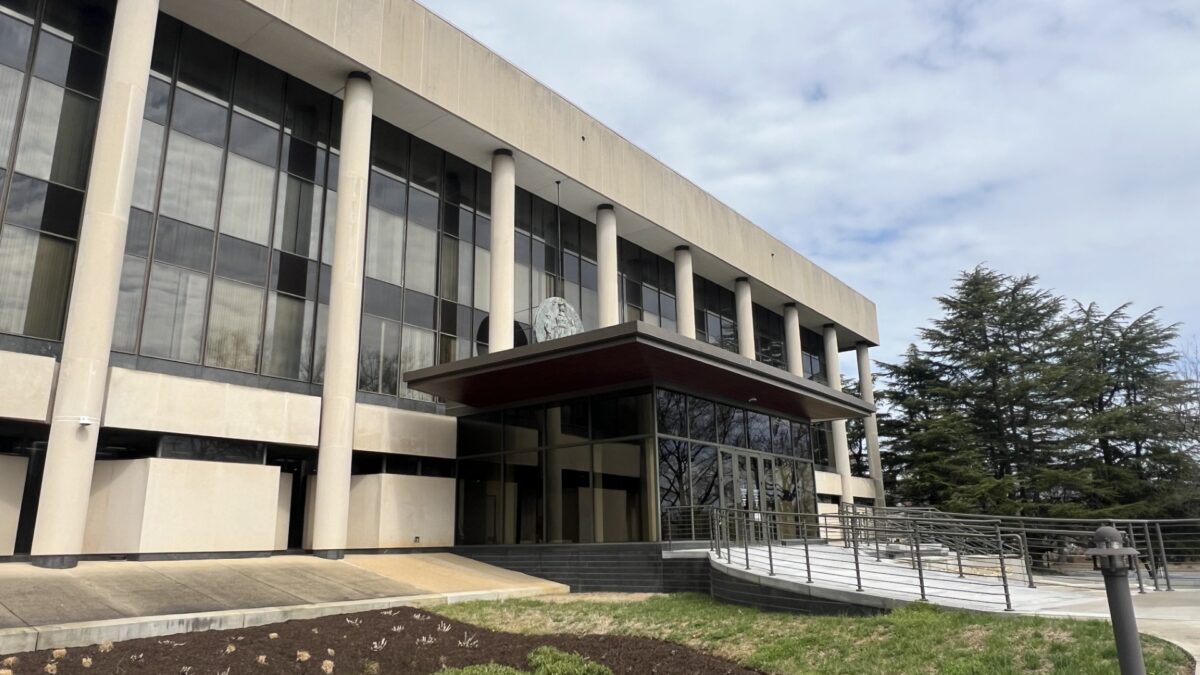
The Robert C. Murphy Courts of Appeal Building, which houses Maryland's two appellate courts, is seen on March 30. (Ian Round/The Daily Record)
Lawyer didn’t commit ‘obvious error’ on cell tower testimony, MD court rules


 Listen to this article
Key takeaways:
- The Appellate Court of Maryland ruled to uphold Lionel Lee Prince’s 2018 convictions.
- Prince was convicted of first-degree assault and robbery-related charges in Howard County.
- The court found no obvious error in the lawyer’s decision not to object to admissible cell tower data testimony.
- The postconviction court’s ruling that all cell tower testimony was inadmissible was overturned.
The Appellate Court of Maryland ruled this month that a lower court was wrong to give a man a new trial after he claimed ineffective assistance of counsel.
The court upheld convictions of Lionel Lee Prince for his alleged involvement in a 2016 robbery in Howard County, ruling that his lawyer didn’t commit an “obvious error” in declining to object to all of a detective’s testimony about cell tower data.
A Howard County jury in February 2018 found Prince guilty of first-degree assault, conspiracy to commit robbery with a dangerous weapon, robbery with a dangerous weapon and firearm possession with a disqualifying conviction. The jury found him not guilty of firearm use during a felony or crime of violence. He was sentenced to 20 years and is now incarcerated in Cumberland.
Prince alleged that he might not have been convicted if his lawyer had objected to all of the cell phone records that allegedly linked him to another person involved in the robbery.
Columbia attorney Oluwole Falodun objected — successfully — to the detective’s interpretation of the cell data, and the judge struck from the record the detective’s conclusions that the two suspects were near each other and travelling in the same direction.
The judge told the jury to disregard the detective’s interpretation of the data but to take the information about phones “pinging” cell towers “and do with it what you will.”
The postconviction court found that the attorney should have objected to all of the testimony related to cell tower data, finding that such testimony “must be given by qualified experts,” which the detective wasn’t.
The Appellate Court ruled April 7 that the material to which the lawyer did not object was admissible lay testimony — meaning it didn’t require an expert.
“The postconviction court’s determination that the entirety of Detective Kim’s cell site data testimony was inadmissible was incorrect legally,” Appellate Judge Douglas Nazarian wrote.
“Because the parts of that testimony to which trial counsel didn’t object were admissible, he didn’t commit any ‘obvious error’ by deciding not to object to them, and his decision not to object was reasonable ‘considering prevailing professional norms.’”
Nazarian was joined by Judge Stephen Kehoe and Senior Judge Irma Raker, who was specially assigned.
Falodun declined to comment. The Maryland Office of the Public Defender, which represented Prince on appeal and after the trial, declined to comment. The Office of the Maryland Attorney General also declined to comment.
The state argued that the testimony about the cell tower data did not require an expert. The detective, the state argued, didn’t have to “parse the pertinent information from the impertinent data,” “transform the data” or “extrapolate from the data.”
“The State is right,” Nazarian wrote, noting that precedent holds that cell site data testimony needs to be given by a qualified expert only if it involves interpretation of the data that would be beyond the knowledge of an average juror.
“(C)ounsel’s failure to object to opposing testimony can be unreasonable if it involves some obvious legal error,” Nazarian wrote. “But because a failure to object to admissible testimony wouldn’t be erroneous at all, that failure to object wouldn’t be unreasonable and thus wouldn’t be ineffective assistance.”
Prince appealed his conviction on different grounds, and in 2020, the Appellate Court upheld it in an unreported opinion.