Sign In
Upcoming Event
 Free Newsletter

UMES vet school: Where does accreditation stand?
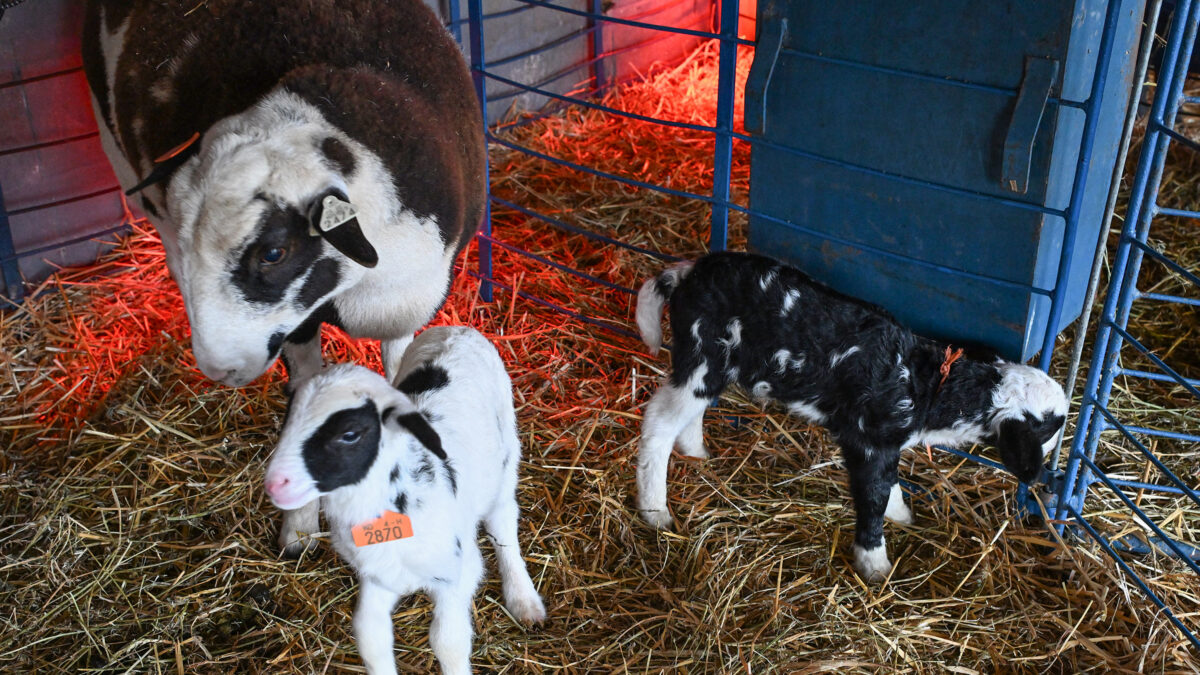
Newborns explore their pen during lambing and kidding season at UMES Extension's Small Ruminant Farm in April 2025. (Todd Dudek/UMES Extension)
UMES vet school: Where does accreditation stand?


 Listen to this article
Key takeaways:
- UMES‘ proposed veterinary school received University System of Maryland Board of Regents approval in December 2023.
- The Maryland Higher Education Commission approved the veterinary program in January 2024.
- The AVMA accrediting body conducted a successful initial consultative site visit in July 2024.
- A comprehensive AVMA site visit is scheduled for June 21 to 26 to assess accreditation readiness.
In its quest to make history in the state and among public historically Black colleges and universities, the University of Maryland, Eastern Shore’s planned school of veterinary medicine is preparing to complete its next major step toward accreditation.
“I feel optimistic. I feel we are progressing very well,” said Stanley Robertson, dean of the proposed program.
The veterinary school has already cleared significant hurdles, but some still remain. In December 2023, University System of Maryland Board of Regents approved its creation. The following month, the Maryland Higher Education Commission, which signs off on all of Maryland’s degree programs, followed suit.
Members of the American Veterinary Medical Association Council on Education administered what turned out to be a successful initial consultative site visit in July 2024.
Next, the AVMA council – the accrediting body for doctor of veterinary medicine or equivalent programs – is scheduled to conduct a more comprehensive site visit between June 21 and 26.
To meet AVMA standards, Robertson and his colleagues have worked on facility plans, acquiring clinical education partners for student training, hiring faculty, developing pathways and pipelines for non-UMES students to participate, and cultivating relationships with stakeholders.
“I feel like we got a good plan. I feel like our curriculum for training veterinarians [is] very solid. But you don’t know until the visit happens and until the council reviews the report,” said Robertson, who’s been head of the school since July 2024, with more than 40 years of experience in the veterinary industry
According to Samantha Morello, AVMA’s associate director for education and research, the accreditation process is thorough and involves rigorous adherence to the education council’s standards.
The findings gathered from the upcoming site visit will determine whether the veterinary school gets what is called a letter of reasonable assurance, which would allow the program to advertise, recruit and admit its first class of students, according to Morello.
However, she told The Daily Record, “reasonable assurance does not confer accreditation of any kind in a developing college.” It’s just one more step forward.
After students begin classes, the school gets placed on provisional accreditation, which could last for years, Morello said.
Accredited status is finally granted after review of the program once students are in their final year — if the program demonstrates they are in compliance with all the standards. Everything from faculty and curriculum to finance, research and admissions are assessed.

UMES officials said the school of veterinary medicine plans to admit its inaugural class, contingent upon AVMA approval, as early as summer 2027.
“I would say we are on track for obtaining” a letter of reasonable assurance, Robertson said, adding that “we should know something in October.”
Presuming the Princess Anne program admits students and achieves accreditation, it plans to support Maryland’s companion animal, poultry, equine and large animal production medicine industries, Robertson said.
“There’s definitely a need for more veterinarians. Maryland doesn’t have a standalone veterinary school,” Robertson said.
This veterinary program would be the first of its kind in Maryland and among public HBCUs.
“Our veterinary school – I see it as a veterinary school for the state of Maryland and for the region.”