Sign In
Upcoming Event
 Free Newsletter

MD House speaker calls for permanent ban on forecast-based energy rate hikes
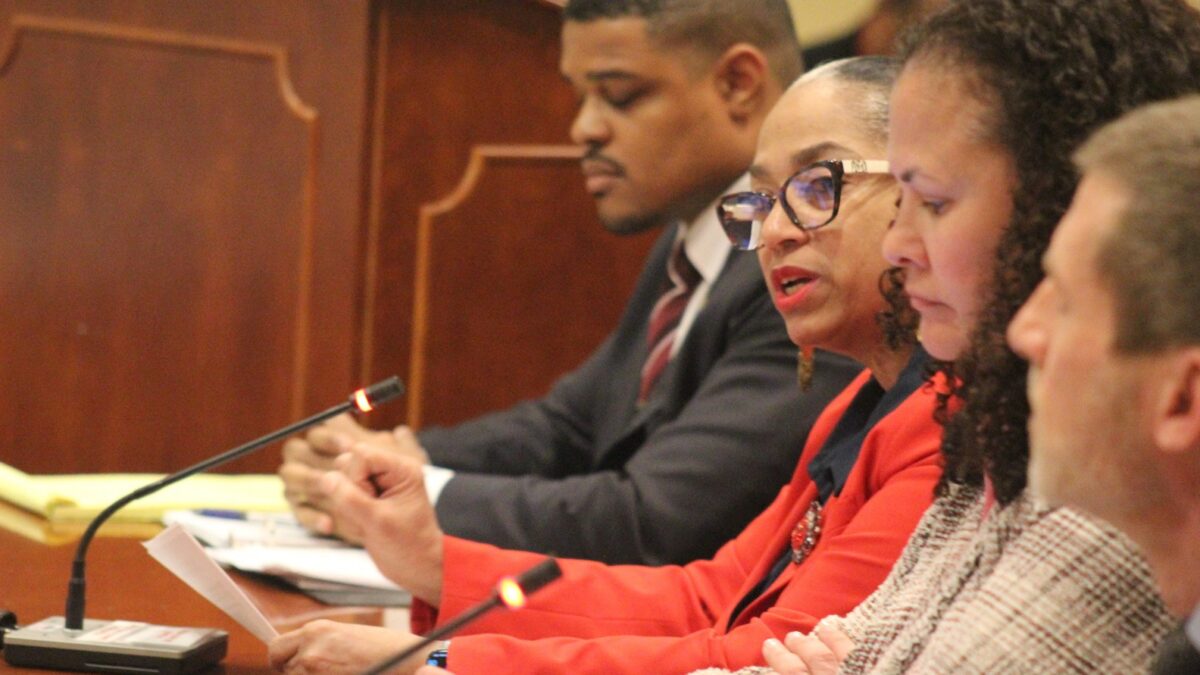
House Speaker Joseline Peña-Melnyk testifies in favor of the Utility RELIEF Act during a hearing of the Senate Education, Energy and the Environment Committee on March 25, 2026. (Hannah Gaskill/The Daily Record)
MD House speaker calls for permanent ban on forecast-based energy rate hikes


 Listen to this article
Key takeaways:
- House Speaker Joseline Peña-Melnyk advocates for a permanent ban on forecast-based utility rate increases.
- Potomac Electric Power Company withdrew its forecast-based rate hike proposal following the Utility RELIEF Act passage.
- The Utility RELIEF Act suspends the Maryland Public Service Commission‘s approval of forecast-based rate hikes for one year.
- Pepco‘s withdrawal could save Maryland ratepayers an estimated $8.6 million.
Maryland House Speaker Joseline Peña-Melnyk said Friday that a permanent ban should be placed on forecast-based energy bill increases after legislation prompted the Potomac Electric Power Company to stall the practice.
Last week, the utility company that serves Washington, D.C., and its Maryland suburbs informed the Maryland Public Service Commission that it was withdrawing a request to raise energy prices that would have been based on projected revenues, expenses and capital expenditures.
This month, the Maryland General Assembly passed the Utility Reducing Energy Load Inflation for Everyday Families, or RELIEF, Act, which suspends these rate increases based on projections, also known as fully forecasted test years, for one year.
The Office of the People’s Counsel, a consumer protection government body, estimates that Pepco’s action could save commercial and residential ratepayers a combined $8.6 million.
In a statement Friday morning, Peña-Melnyk, D-Anne Arundel and Prince George’s, said, “you do the math,” noting that the $8.6 million in cost reductions “is for just one utility.”
“There is no doubt in my mind that this ban on forecast testing should become permanent,” she said. “The conditions are ripe for us to ground our rate setting in historic trends rather than aggressive forecasting that leans on ratepayers to boost utility shareholder returns.”
In early March, Peña-Melnyk, Gov. Wes Moore and Senate President Bill Ferguson, both Democrats, announced the introduction of the multifaceted RELIEF Act, which combined the priorities of General Assembly leadership and policies from the governor’s Lower Bills and Local Energy Act, which was not voted out of committees in either chamber.
A spokesperson for Ferguson declined to comment upon the speaker’s position.
During the year-long pause on approving the test year rate hikes, the Public Service Commission is to conduct a study to determine if they’re in the best interest of utility customers.
In a letter to the Public Service Commission, Pepco pointed to the pending enactment of the Utility RELIEF Act as the impetus to withdraw their proposal based on forecast testing. The company has also submitted a plan to increase rates based on historic test-year data.
The legislation is expected to be signed by Moore, Ferguson and Peña-Melnyk at a ceremony in the coming weeks.
“The House has been very clear that we want to ban ratemaking based on forecasted test years because it is an important protection for ratepayers,” Peña-Melnyk said Friday. “Pepco just proved the point for us.”
This article has been updated with the decline to comment from Ferguson’s office.