Sign In
 Free Newsletter

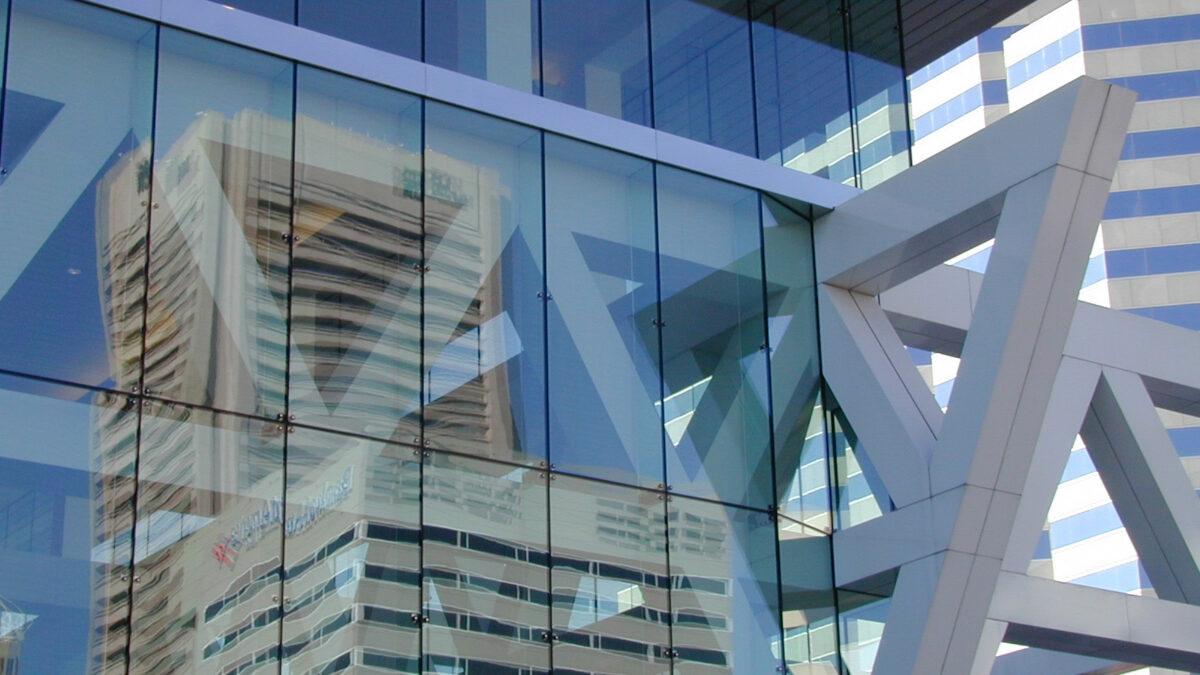
Buildings reflect in the glass of the Baltimore Convention Center in this file photo. (Maximilian Franz/The Daily Record)
MD tourism sees ‘uneven recovery’ amid convention center, downtown challenges


Key takeaways:
- Downtown Baltimore hotels are struggling.
- The Baltimore Convention Center needs upgrades to stay competitive.
- The Maryland Hotel & Lodging Association calls for more tourism funding.
- Maryland attracted 45.8 million visitors, generating $1.4 billion tax revenue, in 2024.
From the outside looking in, the tourism scene in greater Baltimore doesn’t look so good, with the days of Harborplace providing the vibrant pulse for the city more of a memory and the knowledge that the Baltimore Convention Center is too small to serve its market. Or that more hotel rooms have gone offline in the city than have come back onto the market in recent years.
Kireem Swinton, the just-appointed president and CEO of Visit Baltimore, acknowledged those issues but pointed out that downtown events — like Orioles or Ravens games, concerts, festivals, etc. ― still attract thousands upon thousands of visitors to Charm City.
Therefore, he said in so many words, there’s plenty to do in the city.
That’s important because the rest of the tourism industry feeds off any boosts that Baltimore City can provide.
‘Very active’ in ’26
Although the Baltimore Convention Center’s modernization is a huge project — “It needs some love,” Swinton said — he looked at the macro picture, pointing out that in 2025, 28.7 million people visited Baltimore and pumped $4.3 billion into the state economy.
“That’s 57% day travelers and 43% overnighters. We continue to surpass the numbers we set during the pandemic,” he said. And despite today’s uneven economy, “more and more people are traveling now, for regular vacations and ‘staycations.’”
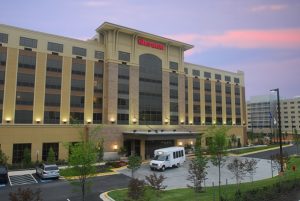
But city’s central business district has lost approximately 6.6% of its total hotel supply since March 2025, according to Visit Baltimore. The Sheraton Inner Harbor Hotel closed at the end of last year, and the Renaissance Baltimore Harborplace Hotel was auctioned off in March to the lender that foreclosed upon it.
MD commerce secretary talks Sphere, business in state
Swinton said hotel setbacks affect “how we set up room blocks for groups but hasn’t changed what we pursue. And we don’t decide where they stay.”
He said that despite the convention center’s size and infrastructure drawbacks, it books about 59 conventions per year, with between 1,000 to 15,000 visitors, noting that the annual goal is 36. However, those numbers include booking for future years, and the venue has events scheduled as far ahead as 2040.
“The larger the program, the further out conventions book,” Swinton said, adding the city’s downtown hotels can still offer up to 3,000 rooms on a given night. “We just had a killer first quarter with the Central Intercollegiate Athletic Association, the Association of Writers & Writing Programs and the National Society of Black Engineers, among other groups.
“So we’re optimistic,” Swinton said. “I think the market is stabilizing. There’s still so much going on in the city and the region. We support small businesses and have [residents and visitors] coming in for Baltimore AFRAM, Artscape, sporting events, concerts and this year, America250 in Baltimore, when we’ll be the only city in the county with a full air show.
“So we expect to be very active through the rest the year.”
0.9% ‘discrepancy’
That’s good to hear if you’re Amy Rohrer, president and CEO of the Annapolis-based Maryland Hotel & Lodging Association. She said that what happens in Baltimore “is very important to the state … as many people who visit Charm City wander from jurisdiction to jurisdiction, especially if they take to the skies,” with BWI Thurgood Marshall Airport in Anne Arundel County.
She pointed out that the state attracted more than 45.8 million visitors, who generated $1.4 billion in state tax revenue in 2024, per the Department of Commerce.
“The return on investment for tourism is there,” Rohrer said, noting that every “$100 spent generates $234 more in revenues for the local economy.”
A state program that boosted small businesses is getting booted
Then there are this year’s numbers. Last year, hotel guests in Maryland spent $10.6 billion, which generated $2.4 billion in tax revenue for the state, she said. That is projected to increase slightingly in 2026 to 0.8%; however, nationally, it’s slated to rise 1.7%.
“So we’re performing below the national average, and a contributing factors could be that our state tourism funding is significantly less than neighboring states,” Rohrer said.
And that’s significant “because when you’re talking about the billions of dollars the industry generates,” Rohrer said, “that 0.9% discrepancy represents a lot of money.”
“It’s concerning that Maryland has cut the budget for tourism marketing,” Rohrer said. “That should be looked as a growth area for the state. It strengthens the quality of life for residents and reinforces our competitiveness as a place to visit and do business.”
So concerning the scene in Baltimore, Rohrer said that when the city “has a convention that fills all of its hotel rooms and beyond,” Rohrer said, “the activity generates sales tax dollars that benefits the entire state.”
Marketing budget
As Rohrer noted, the marketing budget for the state Department of Tourism, which stands at $8.5 million for tourism, is much less than neighboring states. “That means we have to be creative,” said Kristen Pironis, CEO of Visit Annapolis & Anne Arundel County.
As for the state of the industry she, like Swinton, pointed to the balance between strengths and challenges.
“I think we are seeing an uneven recovery,” she said, “but nonetheless, a recovery. I travel across the state and in the past, the industry worked to attract visitors to jurisdictions, but today, those lines are much more invisible. Visitors don’t trip over county lines and often don’t know what county they’re in.”

And that, she said, is one reason she backed adding the new welcome center at BWI Thurgood Marshall Airport. “We plan to have it operating in the baggage claim by August where they can learn about our destination options across the state.”
Like Rohrer, she stressed that a strong Baltimore tourism scene translates statewide. “With many industry professionals, I helped assemble a task force to found the Meet in Maryland Initiative and the Maryland International Marketing Partnership, with the Maryland Office of Tourism.”
That creativity on those multi-jurisdiction partnerships occurred because tourism “brings in outside revenues without additional taxes on our residents,” said Pironis, “which is why it’s so important from an economic development standpoint.”
Tourism has a fast financial impact, too.
“There is long lead time in attracting new businesses, but we don’t need that runway time in tourism,” she said, adding, “Overall, I think things are looking positive. BWI Marshall has been busy, and Annapolis has been very busy, too.”
Task force
Mac Campbell, executive director of the Baltimore Convention Center, said he felt encouraged that state legislators created a task force two years ago to examine what other tourism professionals “are doing across the country, how we can align with the various approaches and sprinkle some Old Bay on it.”
The first year consisted of government recommendations, followed by “concerned reporting” on them, Campbell said, pointing out that Baltimore is one of only three independent American cities that doesn’t get funding from a larger county. (St. Louis and Carson City, Nevada, are the others.)
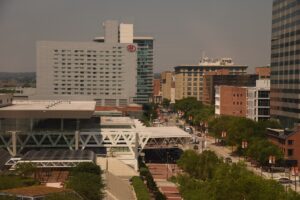
“Still, we have an additional complexity in that Baltimore City receives no sales tax that we can pull from to obtain funding,” he said.
The recommendations include employing a regional approach to obtaining incremental taxes via existing tax revenue streams (therefore, no new taxes) within 15 miles of the city. “Stakeholders that feel compression, such as the hotels in the BWI Business District, gain more from a convention in the city,” he said, “than a concert at Merriweather Post Pavilion, for example, as the concerts are mostly drivable for the region’s residents.
“That’s because the people that come here from out of state for conventions,” he said, “leave money in our community.”
Therefore, Campbell added that tourism officials “have to clearly understand how the BCC impacts every corner of the state,” he said, through job creation, economic impact and attraction and restaurant attendance.
“We are at an inflection point and have the potential to right this ship for the next 50 years,” he said. “During this transition period, I feel there is political alignment and statewide awareness of the need to have this building operating at the top level.”

Getting about
Swinton concurred. “(Baltimore has) more than 250 neighborhoods and they’re being revitalized,” he said. “We have the best crabcakes anywhere, and people can take a short Uber to do get to Fells Point and Canton, and they can walk to Harbor East and Federal Hill.”
In the end, Swinton agreed that today’s work is really about building the tourism industry for the state.
“I encourage people to come to the city, but we want to work with the other destination marketing organization CEOs, since we all have the same goal,” he said. “That’s because we know that 80% of the visitors who come to Baltimore spend money in the surrounding counties, too.”