Sign In
 Free Newsletter

Class clears ‘injury’ hurdle in suit over recalled child car seats


Key takeaways:
- Dorel Juvenile Group recalled 180,000 Safety 1st car seats
- Judge Leo T. Sorokin cited 1st Circuit’s Evenflo decision
- Express warranty claims dismissed as time barred
- Plaintiffs are from Maryland, California, and Illinois
BOSTON — A federal judge ruled purchasers of recalled Safety 1st car seats — including from Maryland — adequately alleged injury in fact based on an alleged loss of the benefit of their bargain.
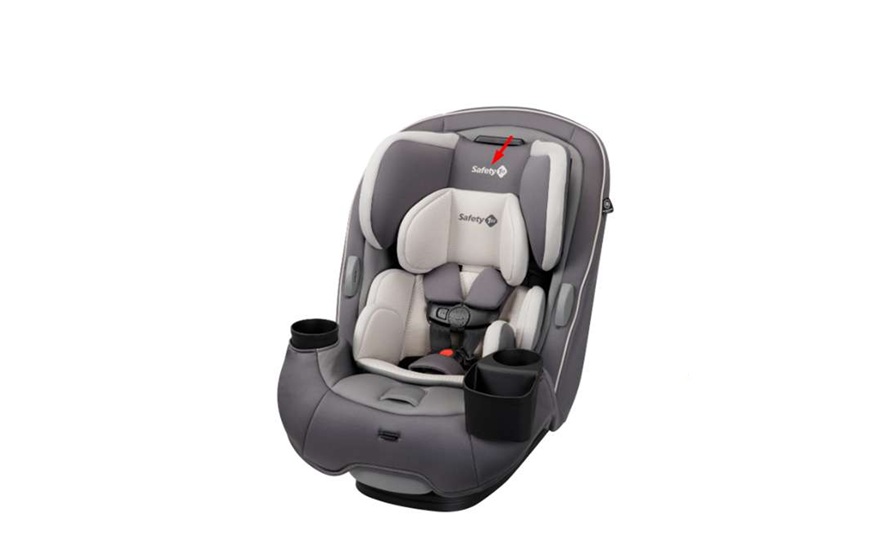
Dorel Juvenile Group recalled approximately 180,000 car seats over a choking hazard involving foam in the headrest.
The court relied on the 1st Circuit’s Evenflo decision recognizing alleged overpayment as a basis for economic injury and standing.
The judge dismissed the plaintiffs’ express warranty claims as time-barred but allowed an implied warranty claim to proceed while dismissing several other consumer protection claims. The named plaintiffs are from Maryland, California and Illinois.
Plaintiffs bringing a putative consumer class action over recalled child car seats adequately alleged “injury in fact” for purposes of standing based on a claim that they were denied the benefit of the bargain of their purchases, a U.S. District Court judge has held.
The plaintiffs purchased Safety 1st-brand child car seats that, in early 2025, were among 180,000 recalled by defendant Dorel Juvenile Group due to a choking hazard posed by foam in the headrest. The recall did not provide the buyers with monetary relief.
The plaintiffs filed a putative class action in May 2025 alleging the Massachusetts company made numerous misrepresentations about the safety of its product.
The defendant moved to dismiss on the ground that the plaintiffs could not show injury in fact for purposes of establishing standing under Article III of the U.S. Constitution, which limits the jurisdiction of federal courts to cases or controversies.
Specifically, the defendant argued that the plaintiffs lacked Article III standing because they alleged “abstract economic loss” rather than physical injury, an actual product malfunction, or the denial of remedies offered by the company.
But Judge Leo T. Sorokin concluded that the plaintiffs adequately alleged injury in fact for purposes of surviving a motion to dismiss. He found on point the 1st U.S. Circuit Court of Appeals’ 2022 decision in In Re: Evenflo Company, Inc., Marketing, Sales Practices and Products Liability Litigation.
In Evenflo, the court held that the purchasers of a children’s booster seat who claimed the manufacturer made false and misleading statements about the seat’s minimum weight requirement and side-impact testing could bring a class action against the manufacturer based solely on monetary harm.
“Plaintiffs plausibly contend that they did not get the benefit of their bargain: a car seat in which their children could safely ride,” Sorokin wrote. “The safety promised by a car seat is not only that it will protect the child in the event of a crash, but also that the child will stay safe while riding — that is, while the child is in the back seat, somewhat out of sight and reach of the car’s driver. Dorel advertised its Safety 1st car seats as ‘designed to provide protection’ and to ensure the ‘road ahead is comfortable and secure,’ giving the parent ‘comfort in knowing [their] child is riding safe.’ It invoked the dual purposes car seats promise to serve. Yet Dorel did not disclose that certain of its Safety 1st car seats had a design defect that presented a choking hazard — a disclosure one would expect to be made explicit on a children’s product, and the omission of which suggests the product did not pose a choking hazard.”
However, Sorokin determined that the plaintiffs’ claims for breach of express warranty were barred under Massachusetts’ one-year statute of limitations. In dismissing those claims, he found without merit the plaintiffs’ argument that the limitations period was tolled under the discovery rule, citing the fact that Dorel’s written warranty required the filing of claims within a year of the date of purchase.
The 28-page decision is Shore, et al. v. Dorel Juvenile Group, Lawyers Weekly No. 02-357-26.
Little ‘wiggle room’ for defense?
The plaintiffs are represented by New York City attorney Christina Xenides. Defense counsel is Jeffrey D. Skinner of Washington, D.C. They did not respond to requests for comment.
But Sharon products liability attorney Andrew D. Nebenzahl said Sorokin’s decision was “spot on.”
“The court rightly pointed out that, at the very least, for a period of time these plaintiffs had to stop using the car seats,” Nebenzahl said. “Car seats are required for kids. They provide safety for kids. And if there’s a defect that affects the safety of that required product, it has to be replaced, even if only temporarily. At the very least, there is the cost of replacing it and the loss of confidence in the product, which are real injuries and have been held to be real injuries, even by the United States Supreme Court.”
Alexander E. Terry, a products liability defense attorney, said he read the decision as demonstrating that the 1st Circuit’s ruling in Evenflo has left defendants with little “wiggle room” in challenging the standing of plaintiffs in such cases.
However, the Boston lawyer added that the decision in Shore was on a motion to dismiss and that challenges remain going forward for the plaintiffs in proving the “realities and details” of their individual purchase decisions.
“Evenflo certainly establishes a right of recovery for an alleged overpayment based on misrepresentations,” Terry said.
Terry expressed concern that decisions like Shore will have a chilling effect on manufacturers in implementing voluntary recalls.
“If the compensable injury is overpayment at the point of purchase, then the voluntary recall becomes evidence of that enticement to purchase,” Terry said. “If I’m advising clients, safety is their number one concern. You do what you have to do in order to ensure that you don’t have a product on the market that is in consumers’ homes that poses an ongoing risk of injury. But I do worry that, for certain manufacturers, this decision will have a chilling effect on their appetite for voluntary recalls, especially if it’s a close call. I do think it increases their exposure profile.”
Sorokin’s decision is a “careful application” of Evenflo that reinforces the fundamental principle of consumer protection law: that manufacturers should be accountable to their customers for the products they sell, according to Plymouth lawyer Walter Kelley.
“Parents purchase child restraints because they trust that the product has been properly designed, rigorously tested, and manufactured to protect their children in the moments that matter most,” Kelley wrote in an email. “When a manufacturer later recalls that product, the recall doesn’t create the consumer’s economic injury; it reveals it. The economic damages occurred the moment the consumer paid for a product that was worth less than represented because it contained an undisclosed safety defect.”
Voluntary recall
According to their amended complaint, each of the plaintiffs purchased Safety 1st Grow and Go Sprint Car Seats, which were later recalled by Dorel. The seats were bought at Walmart between 2023 and 2024 for approximately $100 to $140.
Certain models posed a choking hazard. Specifically, infants and children could remove the cover for the headrest, exposing foam padding. A child could then break off a piece of the foam and place it in their mouth.
Dorel allegedly received 13 reports of children placing headrest foam in their mouths. According to a public report from the National Highway Traffic Safety Administration, Dorel received notice of the first case of a child placing foam in their mouth in June 2023. The company received three additional reports in October 2023.
On April 18, 2025, Dorel issued a voluntary recall of approximately 180,000 Safety 1st Grow and Go seats manufactured between February and December 2023. Under a program instituted by Dorel in conjunction with the recall, the company offered free replacement headrest pads to purchasers who registered online.
The replacement headrests became available to ship in July 2025. Meanwhile, Dorel refused to offer a refund or other monetary compensation.
Shore, et al. v. Dorel Juvenile Group
THE ISSUE: Did plaintiffs bringing a putative consumer class action over child car seats that were recalled due to a choking hazard adequately allege “injury in fact” for purposes of Article III standing based on a claim that they were denied the benefit of the bargain of their purchases?
DECISION: Yes (U.S. District Court)
LAWYERS: Christina Xenides of Siri & Glimstad, New York City (plaintiff)
Jeffrey D. Skinner of ArentFox Schiff, Washington, D.C. (defense)
The plaintiffs brought their suit under the Class Action Fairness Act, seeking to represent a nationwide class defined as including “[a]ll persons who purchased [the Safety 1st Grow and Go seat] in the United States for personal or household use during the fullest period provided by law.”
In addition to a nationwide class, the plaintiffs sought to certify subclasses for those who purchased car seats in California, Maryland and Illinois. None of the named plaintiffs alleged that their children accessed the foam under the headrest cover. In that regard, the plaintiffs’ proposed classes were defined to exclude purchasers who “allege personal bodily injury resulting from use” of the car seat.
The plaintiffs asserted eight claims: breach of express warranty, breach of the implied warranty of merchantability, unjust enrichment, fraudulent concealment, violation of California’s Consumer Legal Remedies Act, violation of California’s unfair competition law, violation of California’s false advertising law, and violation of the Illinois Consumer Fraud and Deceptive Practices Act.
Plausible injury in fact
Pointing to the fact that there was a three-month gap between when Dorel announced its recall and when the company was able to make replacement headrests available, Sorokin found the plaintiffs’ allegations fell within the ambit of the “overpayment” injury recognized in Evenflo.
“[Plaintiff Joanna] Stewart alleges that she stopped using her car seat out of fear for her children’s safety,” Sorokin wrote. “Stewart must have somehow procured another car seat or otherwise altered her behavior by, for example, not driving with her child in the car. … The alternative — using the car seat despite its known defect — would have required at least increased vigilance, a burden Plaintiffs expected to mitigate or avoid as part of the benefit of their bargain. This response illustrates that Plaintiffs relied on Dorel’s representations that its Safety 1st car seat was ‘designed’ for safety. It also supports Plaintiffs’ allegations that they would not have purchased the car seat at all, or would have done so only at a lower price, had they known the claims of ‘safety’ that form the centerpiece of Dorel’s Safety 1st marketing were misrepresentations. This was not the safe product they thought they had purchased.”
Sorokin rejected the defendant’s argument that Evenflo was distinguishable because in that case the plaintiffs alleged they relied on the manufacturer’s misrepresentations while, according to Dorel, the plaintiffs in Shore asserted an “omission theory” based on the manufacturer’s alleged failure to disclose the defect.
“But Plaintiffs here do allege misrepresentations — that the product was safely designed for its typical use when it was not, and that (impliedly) it did not pose a choking hazard when it did — although they are less specific than the misrepresentations at issue in In re Evenflo,” Sorokin wrote. “Whether these alleged misrepresentations are actionable is a merits question whose resolution does not bear on standing.”
Sorokin acknowledged that, as the litigation progressed, the plaintiffs would need to prove their case, including that they have standing.
“For now, they have plausibly pleaded a cognizable injury in fact,” Sorokin wrote.
While Sorokin granted the defendant’s motion to dismiss the plaintiffs’ express warranty claim, he found that the plaintiffs plausibly alleged claims for breach of implied warranty, determining that the defendant failed to show those claims were time-barred.
However, Sorokin granted the defendant’s motion to dismiss the plaintiffs’ California consumer protection claims, concluding that plaintiff Crystal Shore did not plausibly allege that Dorel knew about the car seat defect before she made her purchase.
Likewise, he dismissed the plaintiffs’ Illinois consumer fraud claim on the basis that plaintiff Melissa Kimmel failed to state a plausible claim of misrepresentation.
Further, Sorokin concluded the plaintiffs failed to plausibly allege claims for unjust enrichment and fraudulent concealment.