Sign In
 Free Newsletter

Dixon maintains lead in troubled Baltimore mayoral primary


 Listen to this article
Former Baltimore Mayor Sheila Dixon is poised to get her old job back if an early, but substantial, lead in the Democratic primary holds up.
As of Wednesday afternoon the latest voter tallies from the Maryland Board of Elections showed Dixon, who had not declared victory by deadline, earned 30% of ballots in the mayor’s race, and held a nearly 4,600-vote lead over her closest opponent, City Council President Brandon Scott, who was not ready to concede.
“We have been looking at the returns all day and, based on our analysis, we believe Brandon Scott will be the winner after all of the missing votes have been accurately accounted for and counted,” a spokesman for Scott said in a statement.
Based on the number of registered Democrats in the city as of October 2018, the latest available figures, about 26% of potential votes were tallied.
In the 2016 Democratic primary, which Dixon narrowly lost to former Mayor Catherine Pugh, roughly 133,000 votes were cast in that contest.
The 2020 primary, however, was held amid the ongoing COVID-19 pandemic that required most voters to cast ballots by mail, and the number of votes cast was expected to drop.
Mary Miller, a former undersecretary of domestic finance in the Obama administration and a previous T. Rowe Price executive, won the third-highest number of votes with nearly 13,000 residents casting their ballot for her so far.
Recent polls showed Miller, who is white, essentially tied with Scott and Dixon, who are black, at the top of the contest in a city where the electorate is dominated by black women.
A leaked email from the founder of a political action committee supporting Miller’s candidacy, however, dogged her in the closing weeks of the campaign.
Opponents pounced on the fundraising appeal’s language that frankly discussed the Miller campaign’s need to win over more white voters, calling it emblematic of a campaign vying to serve white interests in a city deeply divided along racial lines.
Current Mayor Bernard C. “Jack” Young, running to hold onto the job he was appointed to just over a year ago, was earned the fifth highest number of votes. He trailed Thiru Vignarajah, a former deputy attorney general. T.J. Smith, a former spokesman for the Baltimore police, was behind Young by roughly 800 votes.
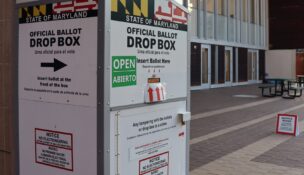
Voting in the city, which was done primarily by mail after the primary initially slated for April was delayed by the COVID-19 pandemic, was marred by problems, including errors on ballots in one City Council district.
Baltimore’s six in-person voting centers were plagued by long lines, and some voters who tried to cast their ballots in person were forced to file provisional votes because an error in poll books marked ballots not returned by June 1 as already being cast.
If Dixon indeed wins primary, the de facto election in a city where 78% of voters are registered Democrats, it would mark the culmination of a comeback story years in the making.
Dixon, the first woman to hold the job, resigned as mayor in 2010 as part of a plea deal related to an embezzlement conviction stemming from the theft of gift cards meant for poor city residents.
After her probation period ended Dixon’s attempted to regain the seat in 2016, and narrowly lost to Pugh in an election that involved loans to the Pugh campaign the state found violated campaign finance law and allegations of essentially paying residents for votes.
While the results are being hailed by Dixon’s loyalists, her return exposes the declining city, already pilloried for its struggles with education, crime and grime, to potential ridicule.
“Meanwhile, in Baltimore, the current front-runner to replace disgraced former Mayor Catherine Pugh is … disgraced former Mayor Sheila Dixon, who resigned 11 years ago after being convicted of embezzlement. This is going well,” Washington Post reporter Dave Weigel tweeted.
It also provides Maryland Republicans, looking to hold on to the governor’s office for an unprecedented third straight term in 2022, a tool to alienate white suburban moderates from Democratic candidates by using Dixon as a standard bearer for a party hurt by recent ethics scandals.
Dixon’s potential return follows a year after Pugh stepped down from the job in the midst of an ethics scandal surrounding sales of her self-published “Health Holly” children’s books. Pugh was sentenced to three years in jail for fraud and tax evasion in February.
If early voting totals hold up Dixon may find herself dealing with a number of new faces.
Comptroller Joan Pratt, who held the position unchallenged for nearly 25 years, criticized by the city’s inspector general and weakened by her association with Pugh via business deals, trailed challenger City Councilman Bill Henry by 2,400 votes.
Del. Nick Mosby, a former City Council member and the husband of State’s Attorney Marilyn Mosby, isn’t a new face in city politics. If his lead stands, however, he’ll be a new City Council president at a time that a third of the 14-member legislative body will be first-time office holders.