Sign In
 Free Newsletter

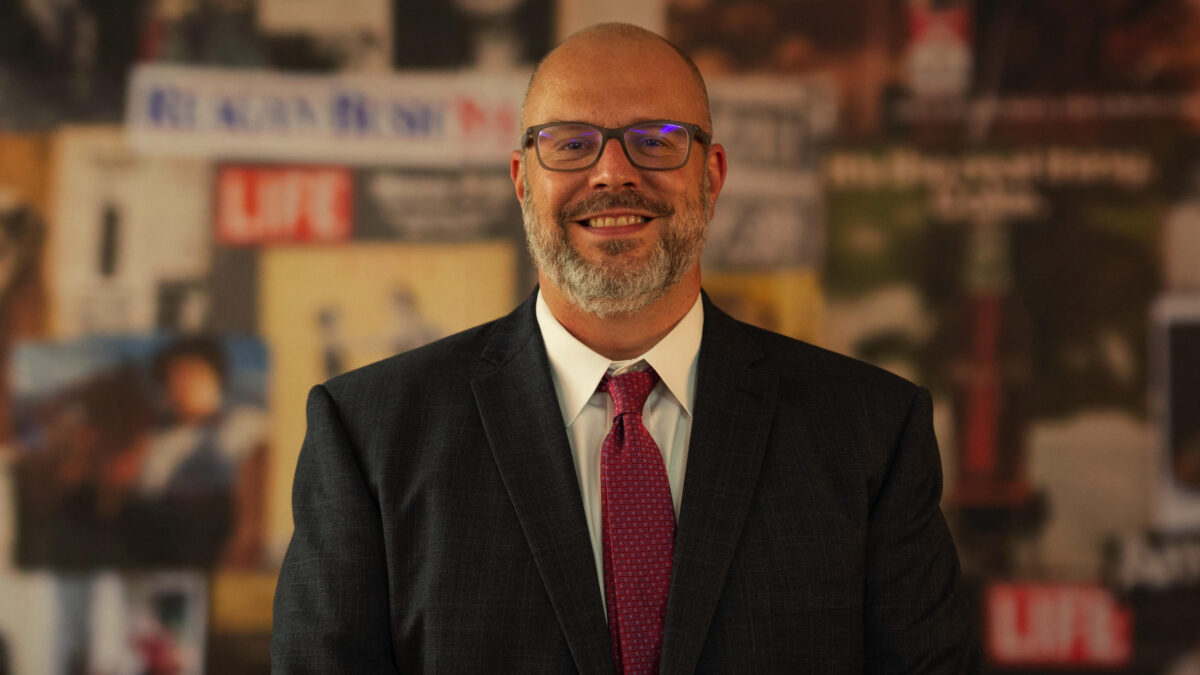
Mike Muempfer, director of the Maryland School Mental Health Response Program. (Submitted photo)
What’s MD doing for mental health in schools?


Last year, the nonprofit Mental Health America ranked U.S. states by prevalence of youth mental illness and access to care, factoring in the number of those aged 12 to 17 who’d experienced major depressive episodes, whether they’d received care, whether their insurance covered mental and emotional problems, and more. Maryland came in at No. 40, compared to 8th in the adult rankings.
Reasons for not getting mental health care included caring for other family members outside school hours, inflexible parental schedules and the stigma associated with mental health treatment, as well as constraints on transportation, funds and internet access.
Across Maryland school districts, school social workers, psychologists, counselors and other staff continue to reckon with the aftermath of the coronavirus pandemic on children, attempting to address the diverse mental health landscape and the difficulty for many to receive care. As the needs surpass available resources, public and private organizations are exploring ways to decrease gaps and provide more services, delivered more equitably across populations and locations.
RELATED: Mental health experts talk stigma, AI on panel
New programming
Maryland officials announced last year the distribution of $96 million to 108 programs across Maryland to better support youth mental health. These funds are being made available through the Maryland Consortium on Coordinated Community Supports, an offshoot of the Blueprint for Maryland’s Future education reform plan.
In Anne Arundel County, for example, organizations like Arundel Lodge and EveryMind will expand access to counseling, therapy, crisis intervention and substance use prevention, both in schools and through telehealth.
Funding in Harford County will support organizations like Care Solace, with 24/7 care coordination, and Change the Conversation, which helps adolescents identify and report child sexual abuse and sex trafficking.
In Howard County, providers such as TIME Organization and Sheppard Pratt will receive funding to offer individual and group therapy for students at school. And in more rural areas, partnerships like one with Mid Shore Behavioral Health will expand services to students in Dorchester, Kent, Queen Anne’s and Talbot counties.
Even with the consortium funding, some Maryland counties are still looking inside and outside their school systems and relying on private organizations for assistance and funding.
RELATED: Baltimore Police launch ‘neurodivergent individuals database.’ Advocates are wary.
For instance, Baltimore County Public Schools have a $15 million contract with Talkspace to give free, unlimited telehealth therapy to all BCPS high school students 13 and older. And the Rising Together mental health screening program is a BCPS program funded through outside donations; it’s a partnership between former NFL linebacker Ray Lewis’ Ray of Hope Foundation and Possibilities for Change, J&B Medical and the Stephen and Renee Bisciotti Foundation.
According to Gboyinde Onijala, a BCPS spokesperson, more than 1,500 students in grades five, seven and nine are currently receiving an initial mental health screening across 15 BCPS schools, using “research-based tool(s) to assess students’ academic, behavioral and social-emotional indicators and help educators identify concerns early and connect students with timely interventions. By implementing the screener across multiple schools, BCPS is taking a proactive approach to ensuring that students receive the support they need to thrive.”
RELATED: Mental healthcare gaps persist in MD rural, urban areas
What still needs to be done?
Mental health crises in today’s youth don’t always manifest with kids running down the hall ripping down posters or getting into fights.
Holly Flanagan, a school social worker of 36 years who works in the Howard County Public Schools and the chair of the Maryland chapter of the National Association of Social Workers’ Social Work in Schools Committee, sees that reality regularly.
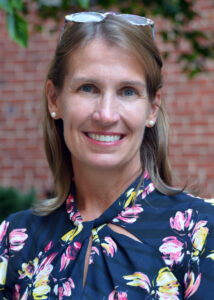
“It’s often the quiet students,” she said, “those who board the bus with their head down, who don’t talk to their friends or speak up in class, who might look disheveled and have declining grades, who are suffering.”
Identifying and treating students appropriately requires staff with specialized skills and ongoing training.
The Maryland School Mental Health Response Program was launched by the Maryland State Department of Education “to support, enrich and enhance the work of site-based student support services personnel,” explained Mike Muempfer, director of the program, “by providing consultation, professional learning and training and on-site crisis support to all 24 Maryland Local Education Agencies.” (LEAs are another name for public school districts.)
An ongoing memorandum of understanding between the state mental health program and the National Center for School Mental Health at the University of Maryland School of Medicine assists further by providing expanded training, resources and expertise, including monthly learning sessions to share experiences, goals and challenges related to mental health topics. The School Mental Health Response Program has responded to over 2,000 support and consultation requests and delivered over 200 trainings to nearly 10,000 participants.
To continue to build a sustainable workforce of mental health providers for Maryland youth, there is a focus in Maryland on pipelines connecting universities, including the University of Maryland and Morgan State University, with Maryland school systems.
RELATED: Full psychiatric hospitals challenge MD
As Dr. Nancy Lever, associate professor, University of Maryland School of Medicine and executive director of the National Center for School Mental Health, explained, “Our schools and our community partners are connected to our universities and our different programs across the state to make sure we’re building the workforce.”

However, Muempfer said, “Wait times for access to community supports continue to be a widespread concern for almost all of our LEAs, and some LEAs in our more rural communities have additional accessibility barriers, such as transportation and lack of local services.”
Lever emphasized that reducing staff turnover and building positive environments are two of the many ways to improve outcomes for students and families but added that other strategies integrating education, health and child welfare can help ensure a student has access to a unified approach to meeting their unique needs, while avoiding duplicating services across providers.
“When you build those pipelines and create those positive environments,” Lever added, “there’s less turnover. The staff do better, the students do better, and families are more connected.”