Sign In
 Free Newsletter

Audit: Md. health department failing to oversee contractor handling benefit payments


The Maryland Department of Health failed to properly oversee a company hired to pay mental health and substance abuse providers, failed to impose penalties for breaches of contract and skirted state procurement laws, according to a new report from the Office of Legislative Audits.
The report published Friday finds the state agency failed to monitor Optum and its Minnesota-based United Behavioral Health Inc. company as it handled claims for roughly 260,000 people receiving Medicaid benefits for mental health and substance abuse treatment. The lack of oversight has cost the state hundreds of millions of dollars in potential overpayments and denied or under-reimbursed claims from the Federal government, the audit concluded.
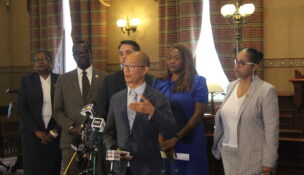
“This contract with Optum has been a massive debacle for the state from inception until today,” said Sen. Clarence Lam, Senate chairman of the Joint Audit and Evaluation Committee. “When incompetence and mismanagement cost the state hundreds of millions of dollars, someone at the Maryland Department of Health should be held responsible. The level of waste and ineptitude uncovered by this audit is disgusting and an indictment of the current broken leadership at the department.”
The findings of the auditor are expected to be part of an upcoming legislative hearing.
The department hired Optum in June 2019 for a five-year term that expires in 2024 plus one option to renew for two years at a total cost of $198.2 million.
Auditors reviewing payments made on behalf of the health department between Jan. 1, 2019, and June 30, 2022, found that Optum paid out nearly $1.1 billion to providers.
During that time, there appears to be little to no independent evaluation of subcontractors making those payments.
In the report, auditors found payments totaling nearly $224 million for services they said they could not verify had been provided. They said there has been no attempt to recover those payments.
No audits were conducted to ensure that services provided were medically necessary.
Additionally, auditors found nearly 300,000 claims for which the federal government denied or reimbursed at a lower rate, costing the state more than $106 million.
Auditors noted that the agency did not assess penalties against Optum for breach of contract totaling nearly $21 million.
The department could have assessed about $30,000 per day in penalties, according to a response provided by health department officials.
Finally, auditors reported that the health department appears to have circumvented state procurement rules in hiring a technology consultant. The agency entered into a $20 million contract without competitive bids.
Lam said the auditor’s findings should not have come as a surprise as auditors noted a lack of review in securing the initial contract.
In July 2019, Dennis Schrader, who was then the department’s chief operating officer, told the Board of Public Works that his agency “did a lot of due diligence on this.”
Schrader, now the health secretary, made the comments after Comptroller Peter Franchot raised concerns about the cost of the contract — 20% lower than the incumbent — and a lawsuit where a federal judge in California found the company implemented policies that discriminated “against patients with mental health and substance abuse disorders in order to save money.”
Franchot said the low bid and related issues “raised red flags.”
Schrader, in his comments at that meeting, said the agency had a lot of the same concerns but believed Optum would be a good provider.
“It’s an embarrassment for the department to have exercised such poor judgment in reviewing such a significant contract,” said Lam. “The fact that the department misled the Board of Public Works regarding their vetting of Optum is extremely troubling and is reminiscent of the administration’s procurement of nonfunctional COVID tests from South Korea and the questionable procurement of PPEs from politically connected companies like Blue Flame during the pandemic.”
Health department officials, in a response, largely agreed with the auditors findings and said they were working to correct the issues.
Those same officials, however, disagreed with the assessment of penalties, saying they “are not an effective way at ensuring the state receives a working product for a mission critical healthcare services system. In this instance, imposing liquidated damages on this vendor would have maximized the chances of litigation, adversarial working relationship, and further minimum performance by the vendor.”
Instead, the department has withheld roughly $6 million in various payments to Optum
The department told auditors it continues to work with the contractor to correct deficiencies.
“All appropriate penalties will continue to be applied for the duration of the contract,” the department wrote in its response.