Sign In
 Free Newsletter

Md. budgeting blunders leave a $236M Medicaid shortfall


 Listen to this article
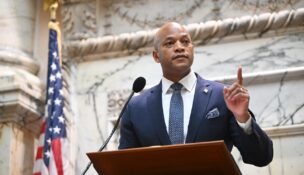
ANNAPOLIS — Technical errors and faulty projections in the administration of Gov. Wes Moore have resulted in a $236 million shortfall to cover Medicaid expenses in the state, further exacerbating an already tight state budget.
The shortfall may prompt the Department of Budget and Management to propose drawing from the state’s rainy day fund, and/or propose a supplemental budget, which could include moving cost savings or cutting from another government program.
The administration underestimated how much the state would have to spend for people eligible for both Medicaid and Medicare, Budget Secretary Helene Grady said to state senators during a hearing Tuesday.
“We had an inappropriate figure in a worksheet for dual-enrollment-eligible Medicaid recipients, as the analysts noted, for fiscal year ‘23,” Grady said. “Unfortunately, that number in a worksheet carried forward to fiscal ‘24 and fiscal ‘25.”
The error isn’t expected to affect the state’s federal Medicaid funding.
The state will have to make up $115 million for the current fiscal year and then cover a $150 million shortfall for fiscal year 2025, which begins July 1, though $29 million in budget savings is expected to lower amount needed.
Grady said that neither her department nor the Maryland Department of Health caught the error before Gov. Wes Moore submitted his budget proposal to the legislature.
“We were as disappointed as anyone to learn of these two oversights despite all of the collaborative work that had been done on the budget,” Grady said.
A recent analysis from the Department of Legislative Services, which also identified smaller shortfalls to pay for foster care and the state’s debt service, caught the miscalculation.
The amount needed to pay for Medicaid, foster care and the debt service between the current fiscal year and next fiscal year totals $244 million, according to the Department of Legislative Services.
News of the shortfalls comes halfway through the 90-day legislative session, as state senators work to finalize a state budget before forwarding their proposal to the House of Delegates in the coming weeks.
The two chambers have until April 1 to pass a budget for the governor to sign.
“We’re going to have to be even tighter than we thought because of some of the adjustments that have come in,” Senate President Bill Ferguson, a Baltimore City Democrat, said to reporters Tuesday. “It just makes it a little bit more difficult to backfill in certain areas.”
Heading into the session, the state’s $63 billion operating budget was projected to have a $760 million structural deficit ballooning to several billion dollars in the coming years.
Moore’s proposed spending plan — which is 2% smaller than this year’s budget and cuts spending in areas, including for private higher education, community colleges and the state lottery — would lower the structural deficit for next fiscal year to about $500 million, according to the governor’s office.
Moore’s proposed budget flips the state’s projected cash shortfall of $1.1 billion to a positive cash balance of about $100 million, according to the governor’s office.
Community college leaders and their supporters have rallied against what they called a “dramatic” decrease in funding in the governor’s proposal, and the administration has faced pushback for its plan to implement copays for a state-funded program that helps families pay child care costs.