Sign In
 Free Newsletter


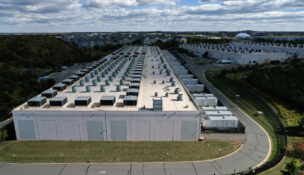
Maryland's mandates to move away from fossil fuels to more climate-friendly alternatives means an increase in demand on the region's electric grid. The question is how much of an increase will it be. (AP Photo/Susan Montoya Bryan, File)
Electrification will strain Maryland’s grid. The question is by how much.


 Listen to this article
Maryland’s push to electrify buildings and vehicles to reduce fossil fuel emissions will increase the load on the electric grid. By how much is a matter of contention.
A December 2023 report prepared for the Maryland Public Service Commission anticipates minor increases in load growth as the state works toward the goals of its Climate Solutions Now Act of 2022. But a study commissioned by Baltimore Gas and Electric Co., Maryland’s largest electricity provider, anticipates that electrification will significantly increase the average load growth rate.
Economist Anirban Basu, chairman and CEO of the Sage Policy Group in Baltimore and former chairman of the Maryland Economic Development Commission, attributes the divergent outlooks to a “misalignment between the people who are actually in the business of producing and distributing energy and those who regulate the production and distribution of energy.”
The move from fossil fuels – natural gas in particular – to widespread electrification will strain the power grid, which will be enormously expensive to upgrade, Basu said.
“The grid has to be massively improved, and those improvements will cost billions of dollars,” Basu said. “Somebody has to pay for that and it’s likely to be the ratepayer. This transition to or toward electrification is going to be extremely expensive at the household level and also for businesses, as well as for state government’s efforts to electrify lower-income households, which won’t in many instances be able to afford it.”
Differing outlooks

Modeling “high electrification” scenarios, the consultant’s report for the Public Service Commission anticipates that BGE’s peak load growth rate will increase by 0.2% to 0.8% per year through 2031, when the state aims to have reduced greenhouse gas emissions by 60% over the 2006 level.
However, Mark Case, vice president of regulatory policy and strategy at BGE, said the utility consultant’s study, modeling a “highest electrification” scenario, or pathway, projects an average growth rate of almost 5% annually through 2045 when Maryland is to reach net-zero emissions under the Climate Solutions Now Act.
Case said the figures in the Public Service Commission consultant’s report were unrealistic.
“I don’t know how anyone can say that with a straight face,” Case said. “I would say at a high level there are significant flaws in both the methodology and the assumptions that were utilized in the (PSC) working group’s study.”
One assumption was that Marylanders would widely adopt cold climate heat pumps, the gold standard technology to replace fossil fuel-powered heating and cooling systems in homes and buildings.
“I think we’re going to get there over time, but I would say that the study that was produced by the consultant was overly ambitious in terms of how fast that technology is going to become the dominant form of heating and, maybe more importantly, what (the consultant assumes) to be the peak load growth that results from heat pumps,” Case said.
BGE commissioned another study to help determine how much additional infrastructure would be needed to meet the highest-electrification scenario. The conclusion, Case said, was startling: BGE would need to double the number of substations and feeders in its network. Substations receive high-voltage electricity and reduce, or “step down,” the voltage for distribution through feeders, which extend into the company’s service territory.
Case criticized the study commissioned by the Public Service Commission for not focusing on cost.
“(It assumed) that we’re going to sort of ignore cost and we’re just going to do everything possible under the sun to get (to electrification). In our view that’s unrealistic and it’s unaffordable,” Case said. “We’re supportive of the state’s goals, but we don’t want to not be disclosive that this is going to be expensive no matter which pathway (is chosen). All the pathways are expensive.”
Tori Leonard, communications director at the Maryland Public Service Commission, said in an email that the commission was not aware of all the assumptions BGE used to develop its conclusions and could not comment on specifics.
‘Wrong side of history’
Basu acknowledged there is an “environmental imperative” to reduce the use of fossil fuels and said he knows he might be on the “wrong side of history.”
“We’re dealing with real issues, real economic ones, and so we might end up looking to future generations as being shortsighted,” he said. “We just don’t have the money. We don’t have the physical capital necessary to do this very, very quickly.”