Sign In
 Free Newsletter


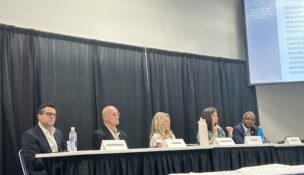
From left, State Treasurer Dereck Davis, Gov. Wes Moore and Comptroller Brooke Lierman listen to a speaker at a meeting of the Board of Public Works on March 13, 2024. (Sapna Bansil/Capital News Service)
MD to approve $100M engineering contract for Baltimore Red Line


The Maryland Board of Public Works is set to approve an engineering contract of up to $100 million to advance the east-west Red Line transit project in Baltimore at a meeting next week.
With approval next Wednesday from the Board of Public Works — comprising the governor, comptroller and treasurer — the state can move ahead with planning and engineering tasks for the Red Line.
The project is expected to take between six and 12 years to complete and will likely cost between $1.9 billion and $7.2 billion, depending on the mode of transportation, extent of tunneling and route on which officials decide, according to 2023 estimates from the Maryland Transit Administration.
It’s not clear how the state will pay for future stages of the project at a time when transportation officials and legislators are already facing a multibillion-dollar funding gap in their long-term capital transportation plan.
State Del. Courtney Watson, who chairs a House of Delegates subcommittee on transportation spending, said the state set aside money for the contract in a prior year’s budget, but she added that the governor’s decision to move the Red Line project forward indicates that he’ll come up with a funding stream for the project by next year.
“We expect him to announce a funding source for it,” Watson, a Howard County Democrat, said in a phone interview Wednesday. “The timing is really up to the governor.”
A spokesman for the governor declined to comment.
Top House Democrats pushed last session for tax and toll reforms to avoid cuts to transportation projects and to pay for new transit networks. While the legislature avoided cuts, the Moore administration and leading Senate Democrats weren’t on board with many of the House’s proposed taxes and tolls.
The discussions are expected to carry into the 2025 session.
The project’s engineering contractor, Gannett Fleming, will oversee planning and preliminary engineering tasks, and manage technical work completed by a separate general engineering consultant, for three projects — the Red Line, a Southern Maryland Rapid Transit system to save residents time on their commutes to Washington, D.C., and its suburbs, and a potential north-south corridor project in Baltimore.
Gannett Fleming, which has offices across the U.S., including in Baltimore and Owings Mills, and in Canada and Qatar, will also develop and monitor project budgets and schedules.
With approval from the Board of Public Works, Gannett Fleming will operate as an extension of the Maryland Transit Administration and be managed by state staff members, according to an MTA spokesperson.
Moore administration officials are expected to seek federal reimbursement for up to 80% of the contract amount.
The Red Line is expected to eventually run from the Centers for Medicare & Medicaid Services headquarters in Woodlawn through West Baltimore and into downtown Baltimore before ending in the Bayview area.
It remains to be seen whether the Red Line will be a light-rail system or a bus rapid transit network, the latter of which community organizers in Baltimore have rallied against.
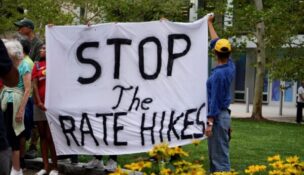
In February, members of the Baltimore Transit Equity Coalition, the immigrant rights’ group CASA, the Climate Communications Coalition and others held a rally in downtown Baltimore calling on the Moore administration to build a light-rail system and railing on the city’s unreliable existing bus network.
State officials, though, have said that people have had misconceptions about bus rapid transit and have drawn distinctions between that model and the city’s existing bus lanes.
The Federal Transit Administration defines bus rapid transit more than simply an expansion of a city bus network; it includes dedicated lanes, busways, traffic signal priority, off-board fare collection, elevated platforms and “enhanced” stops and stations.
Compared to a Red Line bus rapid transit network, a light-rail system is projected to have nearly double the ridership, including among households without a car, but it could cost billions of dollars more, take years longer to complete and cost the state about $20 million more annually in operation and maintenance expenses.
The light rail, though, would be a more cost-effective option, saving the state money in annual capital costs per trip compared to bus rapid transit.
An end-to-end trip would take about the same amount of time on light rail as it would on a bus.