Sign In
 Free Newsletter

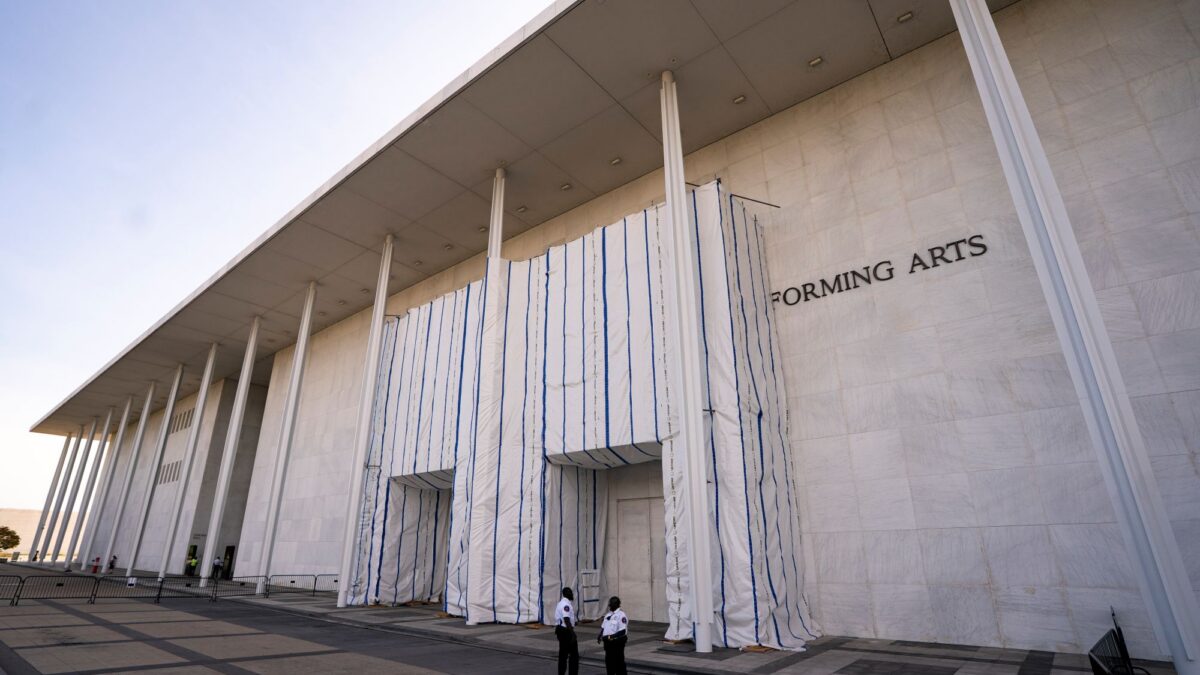
Scaffolding and tarps outside the Kennedy Center in Washington in June. (Al Drago/For The Washington Post)
Kennedy Center board reapproves Trump’s plan to close for renovations


Key takeaways:
- Kennedy Center board votes to close building for renovations
- Plan includes two-year closure with $250 million budget
- Federal judge halted closure in May over inadequate review
- Alternative staged renovation would cost $560 million and take four years
The Kennedy Center’s board of trustees on Thursday voted once more to close the performing arts venue for renovations, reapproving a plan announced by President Donald Trump earlier this year that had been paused by court order, according to two people familiar with the decision.
The decision clears a major hurdle for Trump’s plan to overhaul the Kennedy Center, but the closure still faces legal obstacles. A federal judge in May ordered the center to halt plans to shut down the building, ruling that trustees had not adequately considered the consequences of closing the institution. He left open the possibility that the board could reconsider the decision after conducting a more thorough review.
The board’s vote Thursday came after trustees received a 180-page package of reports detailing the condition of the building and the consequences of different approaches to the renovation.
They chose what was presented as the faster and less expensive of two options: to close the main building for about two years and allow crews to work throughout the complex without having to accommodate performances, audiences and other activities. The plan calls for the project to be completed by the summer of 2028, with a budget of about $250 million, according to a plan prepared by JLL, a real estate and investment management company.
The work would include repairing structural problems, and replacing aging heating and cooling systems, electrical equipment, plumbing, elevators and fire-safety systems. Crews would also make extensive repairs to the building’s exterior, and renovate public and performance spaces.
JLL said closing the building would allow workers to tackle the work more efficiently and avoid the added expense of working around performances and visitors. But the report also warned that the project faces significant risks because of the building’s age and the possibility of discovering problems that have not yet been identified.
The Kennedy Center would continue some activities during the shutdown. Programming at the Reach, the center’s education and community facility, could continue, while major events and performances could move to other venues.
The alternative would have allowed the Kennedy Center to remain partly open as construction proceeded in stages. But the consultants estimated that approach would take about four years and cost roughly $560 million – more than twice the $257 million Congress appropriated for repairs.
That option also would have left about one-third of the main building unavailable at any given time, consultants said, limiting performances and ticket sales.
The decision comes amid a turbulent period for the Kennedy Center. Trump took control of the institution last year, became chairman of its board and pushed through a controversial effort to add his name to the building. The May court decision also ordered the name removed.
The renovation has also drawn criticism from preservationists, who have argued that the center should undergo the same historic-preservation reviews required for many other major projects in Washington. The judge rejected their request to halt the renovation on those grounds, ruling they had not shown that the Kennedy Center was subject to those particular federal requirements.
Jonathan Edwards is an arts and government reporter covering how the Trump administration is influencing cultural institutions — including the Kennedy Center, the Smithsonian museums, the Library of Congress and the National Endowments for the Arts and Humanities — and how those shifts ripple through the arts, public life and national identity.