Sign In
 Free Newsletter


Jason Steinhardt, left, and Marot Williamson discuss how lawyers can authenticate social media and other electronically stored information on June 7, 2024, during the Maryland State Bar Association's Legal Summit. (Maximilian Franz/MSBA)
MSBA panel: How can lawyers authenticate digital evidence for trial? Prosecutors weigh in


 Listen to this article
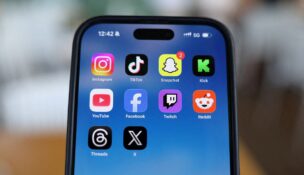
OCEAN CITY — Prosecutors on Friday discussed how lawyers can authenticate social media and other digital evidence for use at trial, particularly given how the legal standard for authentication has evolved over time.
Lawyers must first determine what evidence needs to be authenticated before proceeding to authenticate the digital content, said Jason Steinhardt, assistant state’s attorney for Anne Arundel County, during a panel on digital evidence authentication at the Maryland State Bar Association’s legal summit.
Steinhardt said the first case in Maryland to address authenticating social media determined in 2011 that because there was no direct evidence establishing that pages from a MySpace page was a criminal defendant’s girlfriend’s MySpace profile, the then-named Court of Appeals found the evidence was not properly authenticated.
But the dissenting opinion in the case argued the high court’s standard was too high and proposed the court adopt the “reasonable juror” standard, Steinhardt said. Since then, Maryland courts have evolved the standard for authenticating evidence, adopting a preponderance of the evidence standard.
RELATED: MD Bar Foundation presents awards, announces class of fellows
“In a period of nine years, we really went from a focus on direct evidence, which absolutely can be helpful but is not always going to [exist],” Steinhardt said. “Now, the courts are comfortably relying on Maryland Rule 5-901(b)(4) relating to circumstantial evidence.”
Marot Williamson, assistant state’s attorney for Anne Arundel County, said lawyers can find circumstantial evidence through a variety of methods, including identifying common friends of the parties, determining particular activities or interests that can be tied to the author of the digital evidence, or focusing on an event that only a few people would know about.
“This is not advanced legal theory at the end of the day,” Williamson said of some of the methods prosecutors use to connect a social media account to a particular defendant. “You do not need direct evidence whatsoever in linking the social media site to the alleged author if there is circumstantial evidence.”
RELATED: What do judges need to know about ethics? MD disciplinary commission weighs in
Williamson also cautioned that lawyers must still overcome the hurdle of hearsay once the digital evidence is authenticated.
“Just because it’s authenticated doesn’t mean you get over that hearsay rule,” Williamson said. “You have to decide if you’re offering it for the truth or for some other reason. Is there a hearsay exception?”
Authenticating social media and digital evidence has been a focus among the legal profession of late with the rise of artificial intelligence technology and the possibility for deepfakes to be presented as evidence. Steinhardt said this is particularly challenging now.
“I am sure if [the evidence] is damaging, everything’s going to be susceptible to the argument [that] this could be fake,” Steinhardt said.
RELATED: Using AI in law practice: Legal, legislative experts discuss considerations and concerns
But if a lawyer argues the evidence has been faked, Steinhardt said, then this lawyer has the burden to show it has been faked.
“If it’s more likely than not that the person who’s receiving the evidence can show… that it has been faked, then the burden switches back to the proponents to show that the probative value is not substantially outweighed by the danger of unfair prejudice,” Steinhardt said. “That is a work in progress — where that ends up, I have no idea.”