Sign In
 Free Newsletter

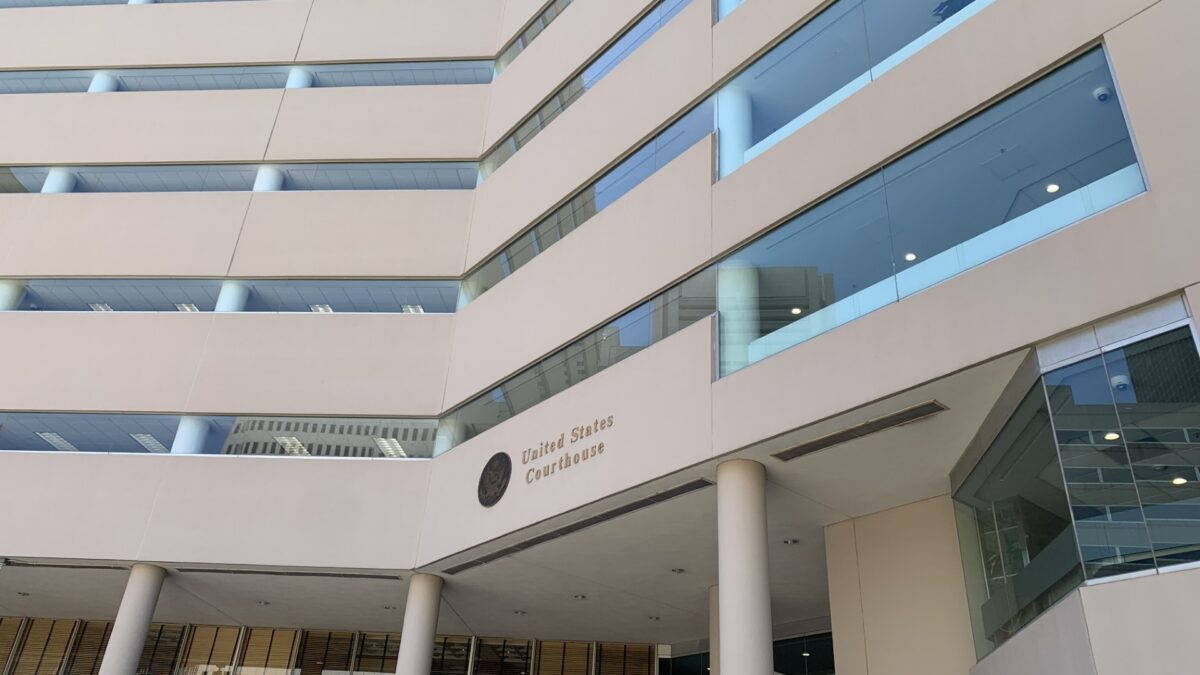
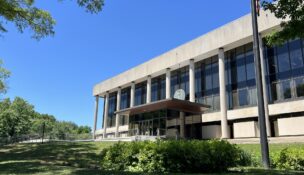
The Edward A. Garmatz United States District Courthouse in Baltimore. (Dan Belson/The Daily Record)
AI hallucinations lead judges to scold Severna Park lawyers
Fake citations, quotes generated by time-saving tools become heavy burden for judges


 Listen to this article
Key takeaways:
- Quinn Patton lawyers are accused of filing five briefs with fake, AI-generated case law quotes in U.S. District Court.
- U.S. District Judge Stephanie A. Gallagher ordered explanations for hallucinations.
- Donald Quinn and Katherine Patton say they stopped using AI tool after errors surfaced.
- Judge Rudolph Contreras warned Quinn of sanctions for prior AI citation errors.
Two partners at a Severna Park law firm were scolded by a federal Maryland judge after they filed briefs containing fake case law quotes generated by an artificial intelligence tool, only a few months after threats of sanctions for similar errors in Washington, D.C.
Both managing partners at Quinn Patton committed in subsequent filings last month that they’d stop using an AI tool to revise legal documents containing case citations. But by the time the firm agreed to change its practices, Donald Quinn and Katherine Patton had already filed at least five briefs that either their opposing counsel or the federal judges would later flag as containing bogus quotes, according to court records.
Three of those cases happened to be presided over by the same judge, U.S. District Court for Maryland Judge Stephanie A. Gallagher, who issued orders this March for both employment attorneys to explain how the “hallucinations” — when AI tools spit out false case citations, misquote the law or generate other nonexistent legal authorities — came to be filed.
Patton declined to comment to The Daily Record, noting that her civil cases were still in the midst of litigation. Quinn said in an email that attorneys at his office “have always manually drafted their own legal briefs,” but the firm had been using an AI system that was closed, meaning it did not share data outside the firm, to edit them.
“This closed system was supposed to only use the cases we had researched in Westlaw,” Quinn said, but “the AI tool made errors during the editing process which included turning standard citations into quotes.” He said that the firm discontinued using the tool for editing “once we became aware of the software’s editing issues.”
The string of false case law quotes was another test of the justice system’s ability to keep up with fabrications by generative AI products, several of which are marketed to law firms as time-saving and cost-cutting tools.
Most courts do not outright ban the use of generative AI to draft legal filings, but judges have had to grapple with the time-consuming affair of addressing hallucinations to move cases forward and often raise at least the threat of sanctions when fake citations are flagged.
In unrelated cases, federal judges at the U.S. District Court for the District of Maryland have threatened sanctions due to “frivolous” filings, mainly filed by self-represented litigants, that appeared to be generated by AI. But it’s increasingly common for attorneys to wind up filing legal documents without catching hallucinated citations or fake quotes left behind by AI tools.
“The reality is, this is only going to happen more and more,” said James Rubinowitz, a New York attorney who also lectures about the use of AI in courts at the Cardozo School of Law. “Unless the courts start leveling some real consequences against attorneys, there’s no incentive for the attorneys to slow down,” he said, pointing to a recent New York matter in which premier Wall Street law firm Sullivan & Cromwell apologized to a federal judge after filing a brief with inaccurate citations and other errors.
Rubinowitz said that five filings might sound “absolutely ridiculous” but aren’t surprising — attorneys are taking on more work because they or their superiors believe AI tools are freeing up time, but “then they’re left in these situations where they don’t have time anymore to go back and check what they’ve done.”
“It’s no excuse for lawyers who do this because it’s such a black eye on anybody who practices law,” Rubinowitz said.
Gallagher issued three separate orders for Quinn and Patton, who were both admitted to the bar in 2021, to explain the “bad citations” in their filings.
At one point, Gallagher wrote that her concerns “extend to counsel’s entire firm.” She also made clear that she would not consider a mostly corrected brief by Patton, writing that “attorneys are not entitled to a second bite at the apple” after filing briefs with hallucinated citations and quotations.
Quinn had already been given a stern warning for filing briefs that contained hallucinations just a few months before. Last October, U.S. District Judge Rudolph Contreras reserved part of a memorandum opinion to state that Quinn had “apparently violated” both federal civil procedure rules and the D.C. Bar’s rules of professional conduct by including hallucinations in an opposition brief.
Contreras wrote in his opinion that “further violations will not be tolerated and may result in sanctions and/or referral to a disciplinary committee.”
Less than a month after that opinion, Patton filed a motion in a Maryland discrimination case that she later conceded had multiple inaccurate quotations. Quinn filed a brief a month later in another Washington, D.C., district case that his opposing counsel would note in a reply “relies on case citations that do not exist.” About two weeks later, it happened again in a sexual harassment and retaliation case against the City of Cumberland.
One more would come in March, only two days before Gallagher started ordering the attorneys to explain what she described as “rampant citation issues” in their briefs.
“The reality is all of these [large-language models] were not intended to be operations of truth,” Rubinowitz said. “They’re not intended to find things that are real; they’re really intended to be machines that create plausible responses.”
He said that he’s keeping an eye out for changes to the federal rules of evidence targeting the use of AI in the next few years. Because citation issues are becoming so prevalent, “it’s costing so much time and resources from judges” who can no longer rely on citations being accurate and must verify attorneys’ work — but ultimately, clients are hurt the most by the AI movement in law, he said.
When attorneys find out their filings included fake citations, “it’s just like any other situation in law, even before AI,” Rubinowitz said. He said that attorneys should call an ethics attorney and notify their client that they violated ethics rules — essentially, “Fall on your own sword.”