Sign In
 Free Newsletter

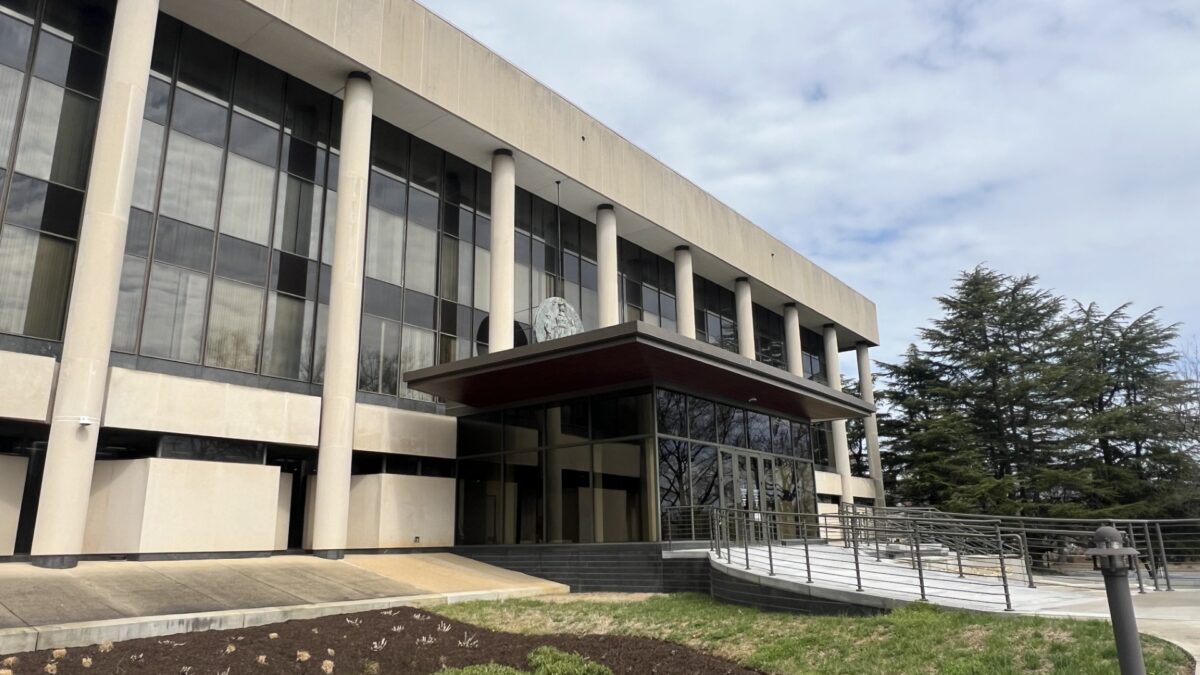
The Robert C. Murphy Courts of Appeal Building, which houses Maryland's two appellate courts, is seen on March 30. (Ian Round/The Daily Record)
MD Appellate Court orders release of inmate death video


 Listen to this article
The Appellate Court of Maryland last week ordered the release of the video of a prison homicide to the victim’s father.
The court on May 12 ordered the Maryland Department of Public Safety and Correctional Services to provide surveillance footage of the death of Terry Proctor Jr., as well as videos of investigative interviews with prison staffers, to Terry Proctor Sr.
The younger Proctor, 32, was stabbed to death by a fellow inmate at Dorsey Run Correctional Facility in Jessup in December 2020.
Nearly three years later, his father filed a request under the Maryland Public Information Act, which the public safety department denied. He later sued, and the Baltimore County Circuit Court ordered the department to disclose most of the records requested. The Appellate Court affirmed the ruling.
Proctor Sr. and his lawyer, Cary Hansel, of Hansel Law in Baltimore, already have access to the video, but they can’t publicize it due to a protective order. Proctor said publication of the video could lead to systemic reform to prevent violence in prisons.
“We want to be able to pull (lawmakers) aside in the halls of the General Assembly, and pull out our cell phone, and show them this video,” Hansel said in an interview.
“The goal here is to be able to do public interest work with that video and make the world a better, safer place,” he said. “At the end of the day, we want the same thing that DPSCS should want, which is to save lives, to protect the people in their care.”
Surveillance video showed DeAndre Allen entering Proctor’s cell while he was asleep and stabbing him repeatedly with a sharpened fan blade. Allen pleaded guilty to murder, but that plea was vacated. Last year, he was found guilty of voluntary manslaughter and weapons charges. He was sentenced in October to 23 years but has appealed.
Senior Appellate Judge Michele Hotten, who was specially assigned, wrote that the elder Proctor was entitled to the videos because he was a “person in interest,” as the personal representative of his son’s estate. He had to prove he was a person in interest because the footage was an “investigatory record,” making it easier for the government not to disclose it.
Hotten wrote DPSCS failed to show that disclosure of the video would cause a “specific harm.”
“The Department failed to meet this burden,” Hotten wrote. “Its concerns regarding interference with law enforcement were too generalized, and its privacy arguments were undermined by the fact that incarcerated individuals have a significantly diminished expectation of privacy in a high-security environment.”
DPSCS and the Maryland attorney general’s office declined to comment.
Hotten was joined by judges Stephen Kehoe and Stuart Berger. Although they agreed with the lower court about what records should and shouldn’t be released — they prevented the release of the full internal investigative report — they disagreed with the determination that the video interviews counted as personnel records.
Hotten stressed the Public Information Act’s goal of government transparency and accountability.
“Although the Department did not raise this argument, we nonetheless find that disclosure serves the public interest,” she wrote. “Given that prison staff remained unaware of a stabbing until alerted by the assailant, the record suggests a degree of negligence.
“Granting Appellee access to these videos facilitates a better understanding of the delayed response, which directly serves the public interest by informing potential legislative reforms and systemic improvements.”
This story has been updated with Hansel’s quotes.