Sign In
 Free Newsletter


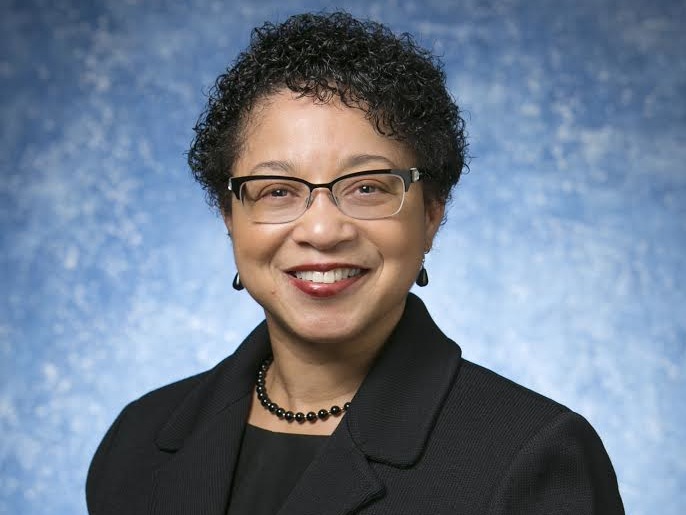
University of Baltimore, President Kurt Schmoke. (Submitted photo)
MD colleges defend DEI efforts amid Trump administration crackdown


 Listen to this article
With the Trump administration ramping up scrutiny of diversity, equity, and inclusion efforts, Maryland colleges and universities are standing their ground, defending inclusive policies even as they face potential federal fallout.
The University of Maryland, College Park, the state’s flagship university, is one of several institutions maintaining its stance.
“At the University of Maryland, our values and mission have not changed. We continue to value an inclusive learning and working environment where all students and employees can succeed and thrive,” a University of Maryland spokesperson said. “We are closely monitoring guidance from federal agencies and rulings from federal courts, and we will continue to comply with state and federal law.”
The federal pressure follows a January executive order issued by President Donald Trump aimed at curbing DEI-related programming across federally funded institutions. Legal challenges from Maryland quickly emerged, and a Maryland federal judge temporarily blocked portions of the order in March, citing constitutional concerns.
Still, some Maryland campuses are already experiencing the impact.
The University of Maryland, Baltimore reported losing $5.87 million in research funding after the order’s implementation, with another $11.6 million in potential cuts looming. In a separate statement, Alex Likowski, UMB’s associate vice president for communications and public affairs, emphasized the university’s dual commitment to its mission and the law.
“At UMB, we remain committed to UMB’s mission to improve the human condition and serve the public good of Maryland and society at-large,” Likowski said. “In connection with that mission, we aim to foster an environment in which teams are able [to] successfully tackle the challenges of our time, including access to health and human services and access to justice.”
Likowski added, “As a state university, we are guided by advice of the Maryland attorney general on matters of the law, and like many universities, we are reviewing our policies, processes, and programs. As we have done with regulatory or statutory changes implemented by prior administrations, we will comply with any changes to the law or to the regulatory frameworks applicable to our operations so that we can continue to focus on our mission.”
At the University of Baltimore, President Kurt Schmoke noted that while the school aligns its policies with the University System of Maryland, internal conversations have taken place around how to position DEI in name and practice.
“Regarding DEI, Ubalt policies align with those of the University System of Maryland. We do not engage in any activities that violate provisions of the U.S. Constitution or Title VI of the Civil Rights Act,” Schmoke said. “Our students, faculty, and staff have engaged in discussion about whether we should stop using the initials DEI even though we remain committed to the value of promoting equal opportunity in all aspects of university programs. However, we decided it is more important to debate values rather than letters, so we have made no changes in our use of the initials DEI.”
Johns Hopkins University has not released a new public statement in response to the Trump administration’s orders, but university leadership addressed the national climate in a March 4 message titled “Our Bond at a Moment of Challenge.”
In the message, Johns Hopkins President Ronald J. Daniels wrote, “We have long understood and affirmed that diversity and excellence are mutually reinforcing — that the success of our academic enterprise is strengthened when people from a broad array of backgrounds and experiences come together in common cause. We remain committed to that ideal.”
Daniels added that while the university would “continue to adhere to all applicable legal requirements,” its core principles would remain unchanged.
As institutions navigate legal uncertainty, many are leaning on longstanding frameworks already embedded in university systems. The University System of Maryland, which oversees 12 public institutions, states that it “is committed to fostering a diverse, inclusive, and equitable environment for students, faculty, and staff.” That commitment includes improving equity in outcomes, examining the teaching of social justice, and eliminating disparities across campuses.
Though the future of federal funding for DEI initiatives remains uncertain, Maryland’s colleges and universities continue to assess their programs and policies in light of evolving legal guidance. As one University of Maryland spokesperson noted: “Our values and mission have not changed.”