Sign In
 Free Newsletter

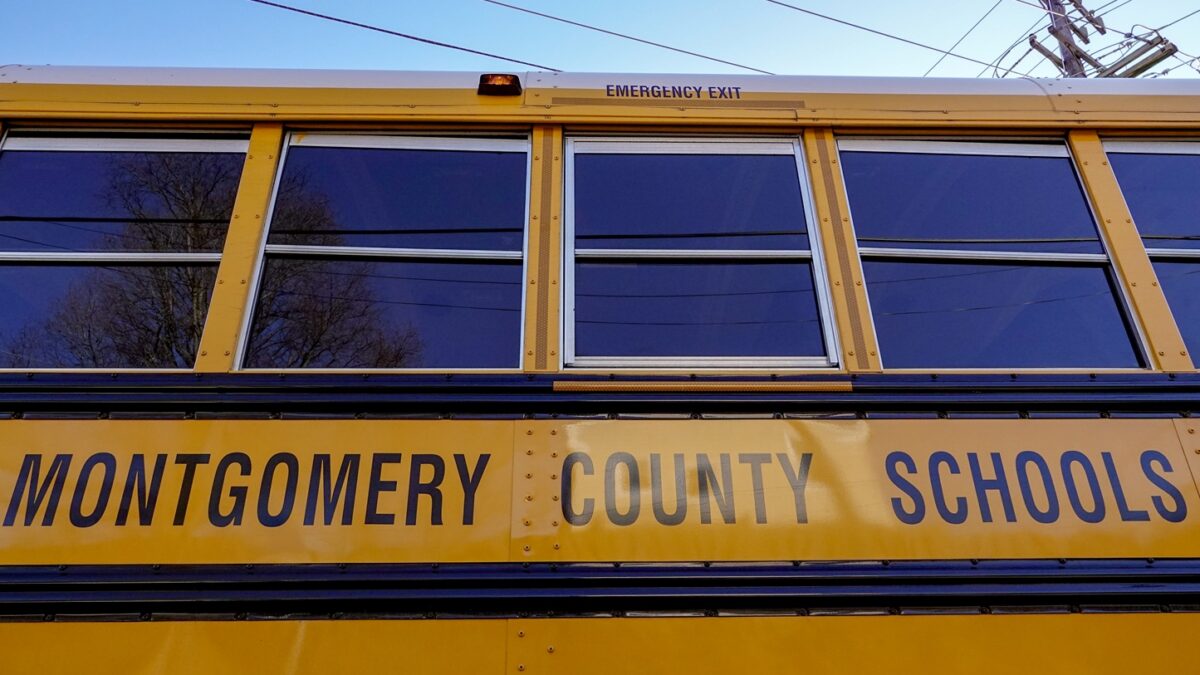
(Bonnie Jo Mount/The Washington Post)
Fearing censorship, student journalists sound alarm over Montgomery County policy


Key takeaways:
- Montgomery County memo mandates administrative review of student publications
- Student Press Law Center says memo conflicts with Maryland New Voices law
- More than 150 students and 30 faculty advisers oppose the memo
- Montgomery County Public Schools cites past inappropriate content concerns
Twenty student newspapers in Montgomery County are fighting a district memo that they’re concerned could lead to censorship of what they publish.
“Student journalists are often the only reporters covering what happens inside a school building,” the students wrote in a letter Friday to the county’s board of education and Superintendent Thomas Taylor.
“When our reporting is suppressed, the unbiased truth does not get told,” the students added in the letter, which they shared with The Washington Post. More than 150 students also signed the letter in their individual capacity.
The students are pushing back against a March 19 memo that Peter Moran, the county’s chief of schools, circulated to high school principals. The memo says administrators must review all content printed in school publications before deciding whether it can be published.
“While student editors and student publication advisers engage in the initial rounds of editing, a school administrator must review the final draft of any printed items (publications, clothing etc.) prior to printing or publication,” Moran wrote in the memo, which The Post obtained.
Maryland is one of 18 states with legislation protecting press freedom for students and student publications, according to the Student Press Law Center, which advised the students on the letter they sent to officials. Under Maryland’s New Voices law, which was enacted in 2016, schools are barred from exerting editorial control over student publications.
Jonathan Gaston-Falk, an attorney with the Student Press Law Center, said he believes that the memo “flies in the face of Maryland law.”
“The memo is legally problematic because it takes a blanket administrative review approach to student publications, while the New Voices law actually gives the student journalists primary control over school-sponsored media and permits prior restraint only in narrow circumstances,” Gaston-Falk said. “We need to make sure that this memo does not somehow constrain student speech beyond the purview of the state law.”
In a statement, spokesperson Liliana Lopez said Montgomery County Public Schools remains committed to the protections established under the New Voices law. The memo was intended to “remind school administrators of their responsibility to supervise students and student publications,” Lopez said.
“Nothing in the memorandum interferes with student journalism or imposes prior restraint. We remain so proud of our student journalists,” Lopez added.
Lopez said student journalists’ right to determine editorial content may be restricted under the law in select circumstances, such as when content is libelous or constitutes an unwarranted invasion of privacy.
Schools in the county have had cases where “inappropriate content” was printed, without being reviewed first, in yearbooks and other publications, according to Lopez. “Careful prior review could have prevented hurtful impacts to the school community,” she said.
Ian Chen, features editor at the Tide newspaper at Richard Montgomery High School in Rockville, said he helped coordinate the student letter because he worried that the memo would suppress students’ work.
“They want control over what we’re publishing,” said Chen, 16. “There’s a fear that our work will be censored, so it completely changes the topics we’re willing to pitch and report on.”
When Seva Gandhi first learned about the memo, she said, she felt confused – and then concerned. Gandhi, 15, is the co-editor in chief of the Black and White, Walt Whitman High School’s news site, in Bethesda.
“We have written a ton of stories in the past that, under this new policy, would most likely not be able to be published,” she said. For example, in February, a gay student wrote about the homophobia he experienced on a swim team. In 2022, the site published a story about allegations of systemic sexual assault at an annual school fundraiser.
Gandhi said she worried those kinds of articles, which don’t make the school look good, would be blocked under the memo.
“Our number one ask is to reverse the memo,” Gandhi said. “As student journalists, it’s our role to be whistleblowers for our school and to give brave sources the opportunity to come forward about their experiences.”
The Maryland law also blocks schools from retaliating against faculty advisers who refuse to censor their students. More than 30 Montgomery County faculty advisers sent a separate letter to the county’s board of education on Friday in support of the students.
Andrea Negri, a high school journalism teacher in the Houston area and a Journalism Education Association board member, said she thinks prior restraint also hinders students’ ability to learn how to do journalism.
“You take away their ability to potentially even delve into serious topics, like how do budget cuts affect your school’s community, if you’re too afraid to cover it because it might make the school look bad,” Negri said.
The Journalism Education Association, the Student Press Law Center and the Foundation for Individual Rights and Expression signed on to support the student letter.
Student journalists from different schools in Montgomery County told The Post that they weren’t sure what the impetus behind the memo was, saying they couldn’t think of any recent coverage that could have prompted the move.
After the memo was released in March, Montgomery County journalism teachers reached out to school officials to express concern, according to the student letter. “For two months now, they’ve been told repeatedly that we would receive a response from Dr. Moran. We continue to wait,” the student letter said.
Zoe Gorbachev, co-editor in chief of the Silver Chips print newspaper at Montgomery Blair High School, said administrators haven’t prevented the newspaper from publishing anything since the memo was distributed, but she still wants the memo to be rescinded in case administrators decide to enforce it in the future.
“The fact that they can exercise this however they want is ridiculous. They can’t do that. It’s against the law,” said Gorbachev, 17. “We want to stop it in its tracks.”
Liam Scott is a reporter on the Metro desk covering transportation and breaking news.