Sign In
 Free Newsletter


Gov. Wes Moore joined Daily Record government affairs reporter Hannah Gaskill for the 2026 Eye on Annapolis Summit on Jan. 14, 2026. (Maximillian Franz/The Daily Record)
Moore to introduce bill to ban ‘predatory’ dynamic pricing in MD stores


 Listen to this article
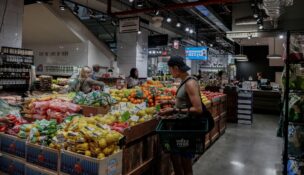
Gov. Wes Moore announced Tuesday that he plans to introduce legislation to end the practice of dynamic pricing in grocery stores in Maryland.
“Marylanders deserve to know that the price they see on the shelf is the price they will pay at the register,” Moore, a Democrat, said in a statement. “At a time when Marylanders are already stretched by the rising cost of groceries, housing, and everyday necessities, we must ensure that new technologies are not used to drive up the bill for working families.”
Moore’s administration is introducing the Protection from Predatory Pricing Act, which would ban the use of dynamic factors and surveillance data to set individualized pricing in grocery stores to protect residents from unpredictable spikes in their bills, and would require retailers to have fixed prices for the whole of one business day.
The bill would also prohibit the use of information obtained based on observations or inferences regarding a consumer’s behavior or characteristics in automated systems used to set prices.
Should the legislation pass, the law would be enforced by the consumer protections division of the attorney general’s office. Penalties for its violation would be a fine of up to $10,000 for a first offense and $25,000 for subsequent offenses.
The legislation comes in response to the increasingly prevalent use of electronic shelf labels, which allow grocery stores to instantly change the prices on their products, allowing the cost of certain goods to go up depending on the time of day, weather or granular consumer data. The practice provides the opportunity for retailers to maximize their profits while consumers are left with inconsistent bills.
In a statement Tuesday, Marceline White, the executive director of the Economic Action Maryland Fund, said that dynamic pricing allows grocery store chains to charge individuals different prices “for the same bag of groceries.”
“Dynamic pricing is predatory pricing and takes advantage of consumers at a time when many families are struggling to make ends meet,” said House Speaker Joseline Peña-Melnyk, D-Anne Arundel and Prince George’s. “Data used against consumers is a breach of public trust and we look forward to working together.”