Sign In
 Free Newsletter

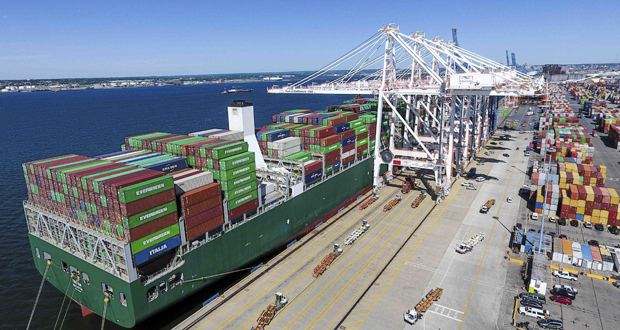
File photo of the Port of Baltimore (Port of Baltimore photo)
MD importers sue Trump administration for tariff refunds. Is it worth it?


Key takeaways:
- Maryland-based companies like Paul Reed Smith Guitars and Pompeian filed lawsuits for tariff refunds.
- The U.S. Supreme Court ruled Trump‘s IEEPA tariffs illegal in February 2024.
- U.S. Customs will open a portal for importers to submit refund claims starting Monday.
- Legal experts say lawsuits serve as insurance amid uncertainty over full tariff refunds.
Maryland’s Paul Reed Smith Guitars, Perdue AgriBusiness and olive oil manufacturer Pompeian are among the companies that have filed thousands of lawsuits seeking refunds after the U.S. Supreme Court struck down President Donald Trump’s “Liberation Day” tariffs.
The lawsuits might not ultimately be necessary — U.S. Customs and Border Protection said the agency intends to open a portal Monday for importers of record and customs brokers to submit claims for tariff refunds.
But attorneys were skeptical of whether the Trump administration would ultimately issue refunds on all of the estimated $166 billion and said going to court was a protective measure.
Perdue did not return a request for comment. Spokespeople for Baltimore-based Pompeian and Paul Reed Smith, of Timonium, declined to comment on their lawsuits in the U.S. Court of International Trade, where they are seeking refunds on duties paid under the tariffs imposed under the International Emergency Economic Powers Act. The Supreme Court ruled those tariffs illegal in February.
Other firms might also file lawsuits before the statute of limitations begins to pass next year.
Mercedes-Benz, which handles many of its imports at a large processing operation at the Port of Baltimore, could be one of them — earlier this month, North America CEO Jason Hoff told The Tennessean and Newsweek that the auto company was “considering” a lawsuit but hadn’t filed it yet.
A spokesperson said Thursday that the firm “is evaluating options necessary to preserve its legal rights related to the IEEPA refunds.” Another spokesperson said last month that “it is no secret” that fluctuating tariffs are financially burdening the company — last year, tariffs and adverse currency effects cost the firm about 1.1 percentage points in margin.
Although Baltimore’s has routinely been the top U.S. port for vehicles, fluctuating tariffs stymied auto imports there and at ports across the country. The Port of Baltimore lost its No. 1 spot to the Port of Brunswick in 2024, when the Francis Scott Key Bridge collapsed and blocked maritime traffic for months. Both ports had fewer autos last year, but Baltimore again fell behind Brunswick for 2025.
International trade lawyers had varying thoughts on whether the lawsuits will ultimately be necessary or not to recoup duties paid on illegal tariffs. But several said filing a case at least acted as insurance, given the unpredictability of the Trump administration in legal matters.
“They never actually promised that they would return” the money, said Stephen Tosini, who now runs a private practice firm in Washington after litigating trade cases at the Department of Justice for more than two decades.
Customs officials said in court that the Consolidated Administration and Processing of Entries portal will at first be limited to certain refunds, but the customs agency has said it will expand pursuant to a trade court order.
Filing a lawsuit serves as “kind of a squeaky wheel [gets the oil] thing,” said Tosini, adding that the Trump administration might “want to clear all the litigation first before it starts providing refunds to people who haven’t taken any action.”
Lee Smith, who leads Baker Donelson’s International Trade and National Security practice, noted that the Trump administration still has until early June to appeal Senior Court of International Trade Judge Richard K. Eaton’s ruling that ordered refunds.
“Based on what we’ve seen in their filings, we don’t think they’re willing to give refunds to everyone,” Smith said.
He said the Trump administration has signaled in court that it might try to dodge paying refunds to firms that have not filed a lawsuit, at least in the initial stages. Eaton’s March 4 ruling applies to “all importers of record” whose cargo was subject to IEEPA duties, rather than just litigants.
Lizbeth Levinson, co-chair of the International Trade Practice Group at Fox Rothschild, was more optimistic. She said that “it’s amazing that customs has done what it said it would do” by creating the refund system, but suing can still serve as a “preemptive approach” — “if things go south, and if this CAPE system doesn’t work, you are already in front of the court through your complaint, and you can ask the court for relief.”
Hundreds of thousands of importers paid an estimated $166 billion in IEEPA duties. The CAPE system will, at first, only be open for those duties if they haven’t been liquidated — or finalized — as well as entries that are less than 80 days past liquidation. The next steps remain unclear for others; firms have 180 days after liquidation to file a protest, though Levinson said she wants her clients to hold off “until we see what’s going to happen on April 20.”
Regardless, she said, the burden remains on importers to calculate what their refunds are and take action.
“If you don’t come forward … you’re not going to get a refund,” Levinson said. “CBP is not going to call you up and say, ‘Hey, you know, you paid these duties, we’d like to refund you.’ That’s not going to happen.”