Sign In
 Free Newsletter


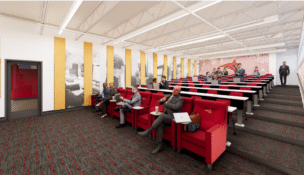
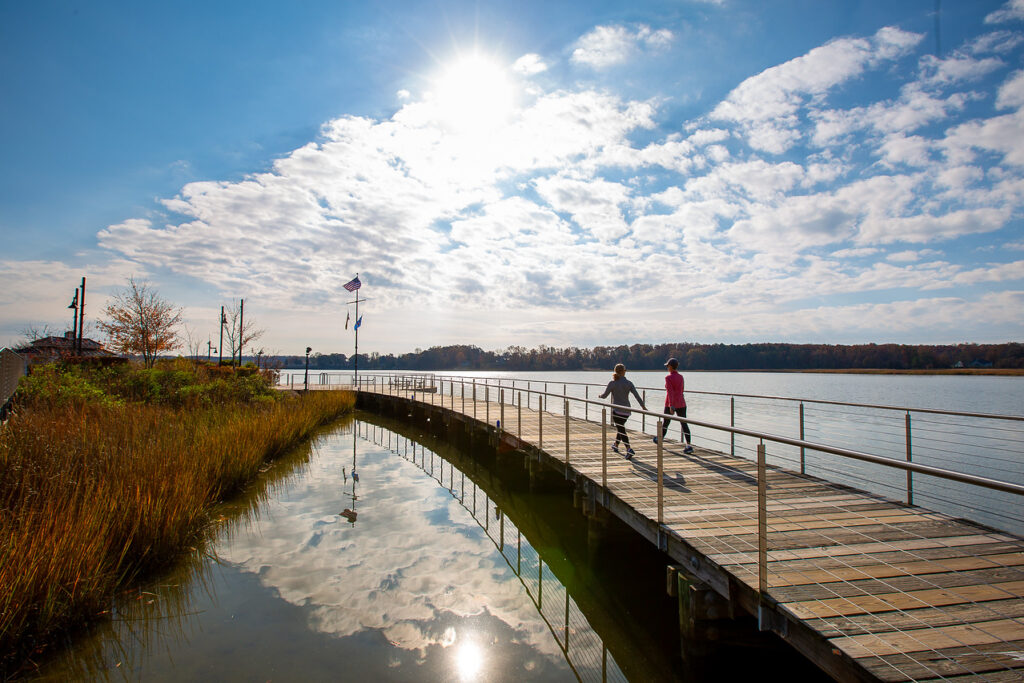
Teaching technical trades is a big part of economic development in the St. Mary’s County Innovation District. (St. Mary's County Department of Economic Development)
To the ’burbs and beyond: How can MD boost business outside cities?


 Listen to this article
Think for a moment about what it might take to attract, grow and retain a business in Maryland’s outer reaches.
Consider a trendy locale located on a major interstate on the Eastern Shore, like Easton; or Southern Maryland, a three-county region with several well-populated suburbs; or the growing small city of Hagerstown, in Western Maryland.
It can be tough to connect to these places from Washington, D.C., and Maryland’s corridor for reasons including distance, distance and distance. But they have their own strengths and attractions.
However, their approaches to economic development vary.
“Every jurisdiction is different,” said Cassandra Vanhooser, director of the Talbot County Economic Development and Tourism. “There isn’t a single roadmap for how rural counties stay competitive; what works in one place may fall flat in another because the assets and the goals are different.”
However, one usually successful approach is building an ecosystem that serves the local “strengths, needs and desires, and brings the voices together,” she said.
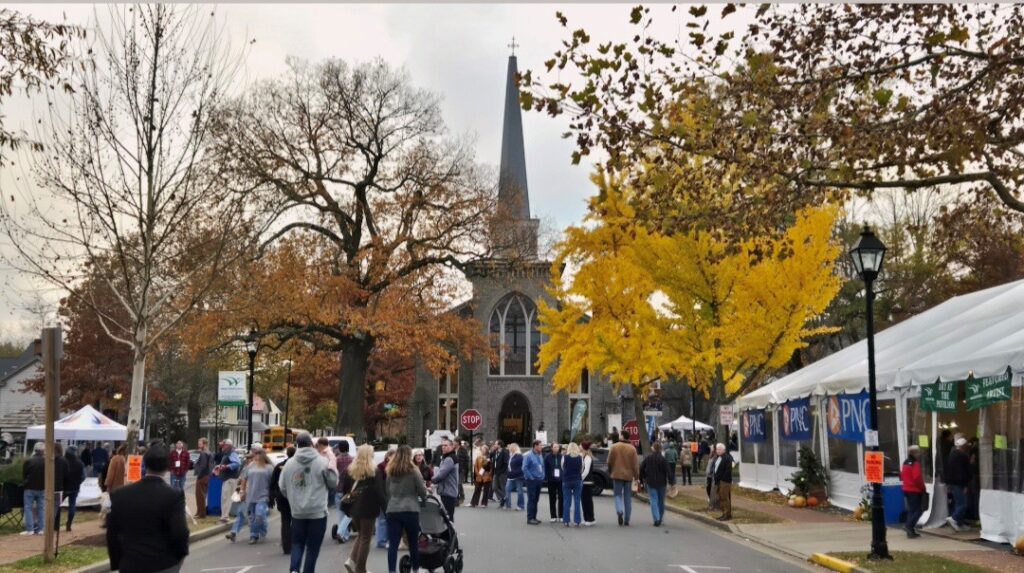
Talbot County
In Vanhooser’s case, that effort includes building a workforce pipeline with the Talbot County Public Schools “to align with opportunity,” she said, pointing to programs like the Talbot Works Business Academy, which provides free training to small businesses, and hosting community events with names like CEO and author Mark Perna.
The county is also addressing the long-term work on infrastructure. With the Connect Talbot program, “… we became the first county in Maryland to be fully funded so that every household has broadband access,” Vanhooser said.
A state program that boosted small businesses is getting booted
Then comes marketing what makes a community unique. In Talbot County, that means supporting the development of the 408,000-square-foot University of Maryland Shore Regional Medical Center, a rising structure on Route 50 that will serve five mid-shore counties.
“Those are the kinds of foundational investments that position a community to compete,” Vanhooser said.
Of course, the workers at the new medical center (1,500 of whom already work at the current University of Maryland Shore Medical Center at Easton) might need places to live. “Housing is part of the conversation everywhere,” Vanhooser said, “and rural communities are balancing growth with character and affordability. We’re seeing progress, but it will take time.”
Such requisites within suburban and exurban markets resulted last year in the Maryland Tech Council launching the Rural Technology Network. The network aims to strengthen strategic business development and offer companies enhanced access to networking, education and mentorship to expand the pipelines, plus other resources, such as access to MTCEdge, the tech council’s cost savings program.
“Rural and suburban Maryland have all the assets needed to be a top technology ecosystem: a deep pool of industry talent, low cost of doing business and strong research base,” said Kelly Schulz, CEO of the Rockville-based Maryland Tech Council.
“By forging deeper relationships between these markets and the innovation ecosystem across the state,” she said, “we’re going to see innovation and job growth at a faster pace, and everyone will benefit.”
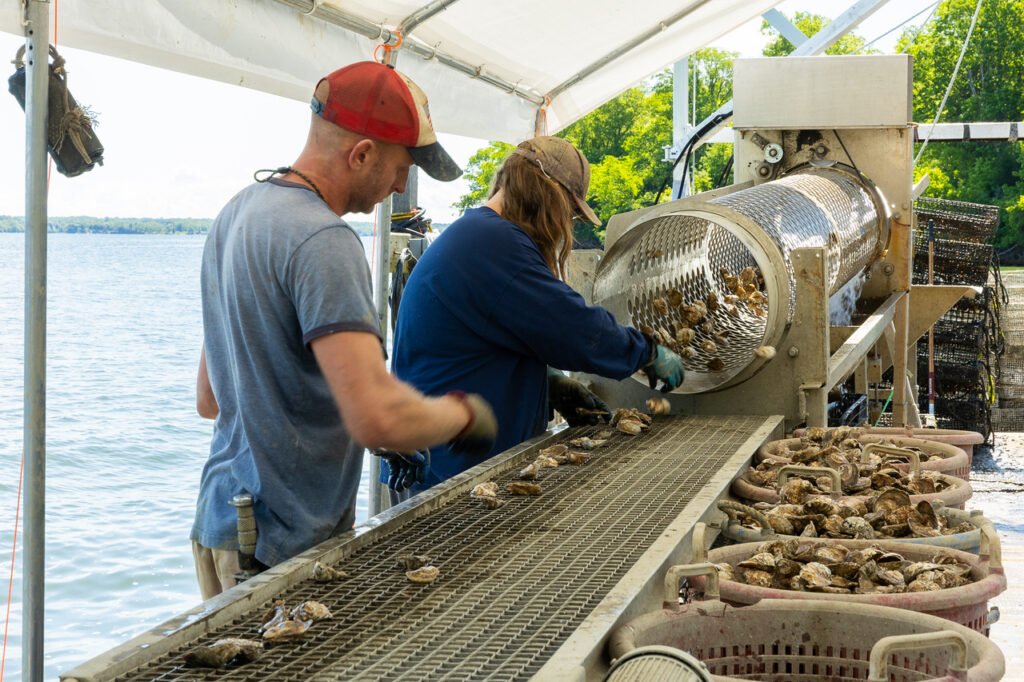
Southern Maryland
At the Tri-County Council for Southern Maryland, Executive Director John Hartline focused on the importance of transportation options to increase economic impact in the region.
“We operate above the county level at the invitation of the counties and offer regional outreach and projects, such as combined regional transportation priority letters,” he said.
Hartline noted the first project in 1965 that spurred the building of the Governor Thomas Johnson Bridge to connect Calvert and St. Mary’s counties, which was completed in 1976.
“That dramatically heightened access,” Hartline said, “as did the completion of the new Nice/Middleton Bridge in fall 2022,” which connected Charles with Virginia.
Next up could be a light rail line connecting Waldorf, via the Indian Head-White Plains Navy Rail (now the hiker/biker Indian Head Rail Trail) along Route 5, with several stops including Andrews Air Force Base, to the Washington Metro’s Green Line at Branch Avenue. Hartline said the second National Environmental Policy Act study is in the works.
Other efforts include running a workforce development board, which offers job training, handles barriers to employment and holds job fairs funded by various grants and the Hughesville-based council.
“For small businesses, we run programs and interface during training via Maryland Employment Advancement Right Now grants that finance incumbent worker training, frequently for small businesses,” Hartline said. “The theory is to train workers so they can be promoted, which opens jobs for new employees.
“The companies pay half, as do we,” Hartline said, “though we have less money to invest due to the budget crunch.”
St. Mary’s County
The approach is different yet again at the southernmost county in Southern Maryland ― St. Mary’s ― which is home to Naval Air Station Patuxent River and is marketed as a tech corridor.
“We’re not like a traditional rural economy,” said Cindy Greb, director of the St. Mary’s County Department of Economic Development. “Though there was a hard federal hit and less investment by the state this year, our innovation ecosystem is tremendous. We’re also home to St. Mary’s County Regional Airport, making us the only innovation district in the country with an airport. It all leads to economic development opportunities.”
Although opportunities are there, so are the challenges of tech corridors, notably in building an educated workforce. “So we’re trying to grow our own, from early childhood to career,” she said. “We want to create a holistic solution, so obtaining, training and retaining talent is job one. We have at least three prime programs to reach that goal.”
Greb said her office is “always conscious of living in this economy” and is in the midst of “updating our comprehensive plan to attract developers to fill our housing needs and get future-ready.”
She said St. Mary’s needs 4,097 houses to brace for sustaining economic growth, adding, “We have 2,700 in the pipeline, but we need to know how many of each kind we need.”
But St. Mary’s also embraces its roots. Greb pointed to the county’s 600 farms, with many in the Rural Legacy Land Preservation Program, funded by federal, state and local sources, “because the area’s rural character also makes it a special place.”
Washington County
Meanwhile, in Hagerstown, Jonathan Horowitz, director of business and economic development for Washington County, discussed how the jurisdiction has changed since 2019.
“We’ve really transitioned from a rural area to a suburb,” he said. “Today, many people in Allegany and Garrett counties don’t consider us rural anymore,” partially due to its population that has grown to approximately 44,000.
Businesses have noticed and what they seek before moving in “can change monthly, weekly and daily,” Horowitz said. “Right now, the key is speed-to-market. If a company wants to site-select, they’re looking to create a pipeline with existing workers, with educational options” for the workforces of today and tomorrow.
Site preparedness is also critical. “We do this on the backs of landowners and the developers, instead of citizens. We conduct an analysis and encourage landowners to invest in site preparation,” Horowitz said. “For instance, if a water pipe is too close to the property boundary, we have the landowner repair it because a new owner won’t want to pay $3,500 per foot to do so.”
Such efforts can also include working with the local permitting offices to more easily facilitate development.
“That makes us more competitive with less-regulated states,” he said.
In the end, spurring transactions can come down to Horowitz’s simple truth of economic development: “Investment goes where investment is welcome.”
Vanhooser concurred. “Economic development requires you to take the long view,” she said, “and the communities that stay competitive are those that are willing to do such work consistently.”