Sign In
 Free Newsletter

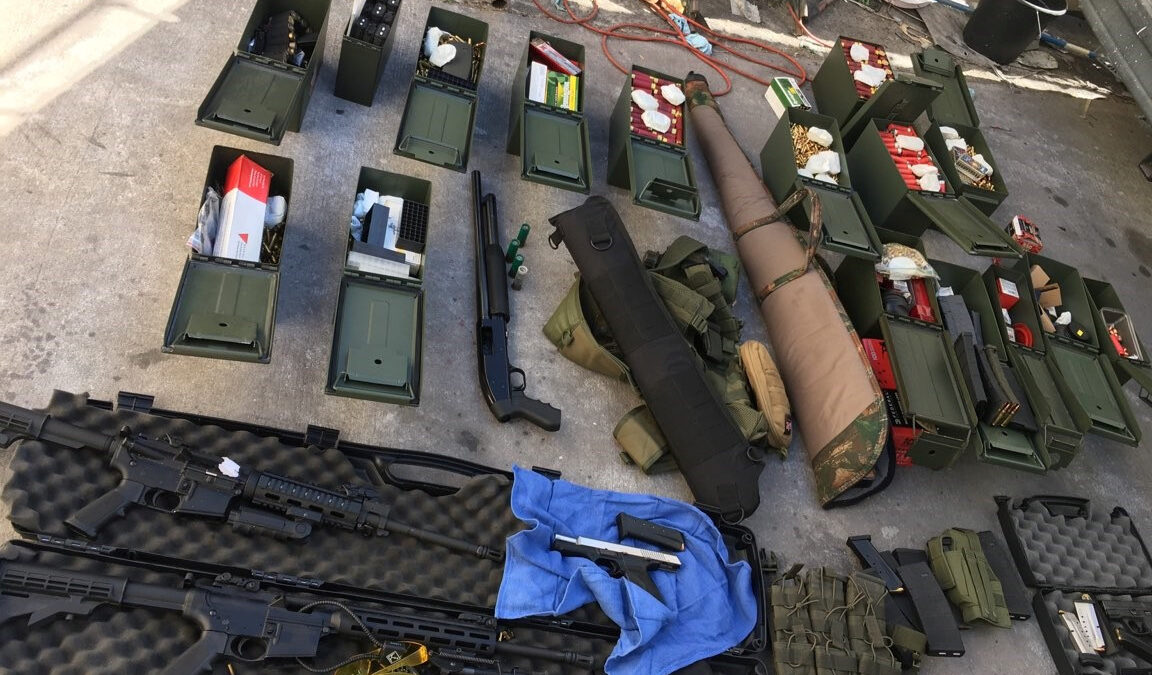
Illegal high-capacity magazines and an assault rifle along with multiple guns, ammunition are seen in this Long Beach Police Department photo in Long Beach, California, released on August 21, 2019. (Courtesy LBPD/Handout via REUTERS)
MD Supreme Court upholds but narrows Montgomery County gun laws


The Maryland Supreme Court affirmed Montgomery County‘s ability to regulate firearms but narrowed how it can do so and left a sweeping ban open to a challenge.
In a complicated, unanimous opinion published April 28, the court ruled that state law did not preempt the county from regulating guns but found that it had overstepped in multiple ways. It sent the case back down to Montgomery County Circuit Court for further litigation consistent with the ruling.
Both a county spokesperson and Mark Pennak, executive director of Maryland Shall Issue, a gun-rights group that sued, said they were “pleased” with the decision.
So who really won?
“Mostly, Montgomery County,” said Kathleen Hoke, a professor at the University of Maryland Carey School of Law with expertise in the balance of power between state and local governments.
The ruling was more about the relationship between state and local laws than about guns and affirmed that the county is not completely preempted, said Hoke and Karen Herren, executive director of Marylanders to Prevent Gun Violence.
“It isn’t really a Second Amendment case,” Herren said. “What we’re really learning from this is where the lines are.”
One of the laws at issue was a county ban on “ghost guns” — so called because they lack serial numbers and cannot be traced — within 100 yards of a “place of public assembly.”
Gun-rights advocates said that law conflicted with a state law requiring ghost guns to be serialized. Gun owners argued they should be able to travel freely with their guns from their home to a place such as Engage Armament — a Rockville gun seller that was the lead plaintiff against the county — to receive serial numbers.
But so many roads and highways pass within 100 yards of a “place of public assembly,” they argued, that they couldn’t follow both state and local law at the same time.
The state’s high court ruled that the 100-yard rule wasn’t a “local law” to the extent that it placed too much of a burden on drivers entering and leaving the county.
“That means that permit holders may carry in Montgomery County without regard to the County’s ordinance as long as they remain in compliance with State law,” Maryland Shall Issue wrote in a post on the social media platform X. “By any measure, we count that as a huge WIN!”
The court also ruled the county’s list of prohibited places was too long. The county could not include hospitals, childcare facilities, certain government buildings or public gatherings without regard to the location.
Although the law was technically invalidated, Hoke said, “I think that’s a very temporary outcome here.” The county can revise it to exclude drivers and shorten the list of prohibited places.
The court also declined to strike down a county law that broadly prohibits the use of firearms and requires that they be locked in cars. It allows people to carry guns if they are special police officers, hunters, members of the military or driving to or from a hunting trip or target practice. It also includes an exception for people on a “lawful mission” — for whom it is “necessary” to carry a gun.
A spokesperson for the county did not respond to a request to explain what “lawful mission” means and whether permit-holders are considered to be on such a “mission.”
But that law is still vulnerable to a challenge. The court did not rule on the merits of that ban; it ruled that the plaintiffs hadn’t properly challenged it in their complaint. Pennak said that under the U.S. Supreme Court’s 2022 decision in New York State Rifle & Pistol Assn., Inc. v. Bruen, permitholders should be considered to be on a “lawful mission.”
“We’re on a lawful mission,” Pennak said. “If the county tries to ban permit-holders from carrying, “then we’re going to have another lawsuit.”
Another law restricts minors’ access to ghost guns. The court struck down a provision that bans the possession, sale or transportation of ghost guns in the presence of a minor. It upheld provisions that ban the transfer of ghost guns to minors and say they cannot be left “in a location that the person knows or should know is accessible to a minor.”
Pennak said, “I hope the county understands that it is still subject to the Second Amendment, no matter how much it doesn’t like it.”