Sign In
 Free Newsletter

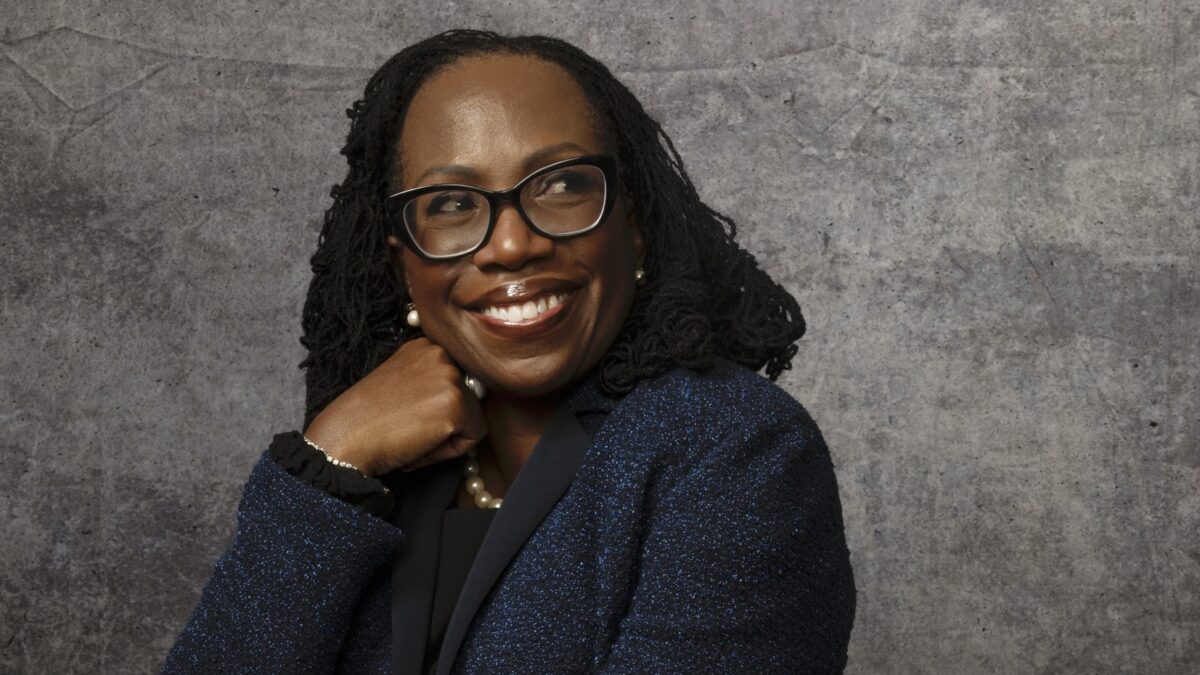
Supreme Court Justice Ketanji Brown Jackson criticized the high court in a talk Monday, saying its decision to expedite a ruling in a major voting rights case this month made it appear political. (Marvin Joseph/The Washington Post)
Justice Jackson criticizes Supreme Court’s handling of major voting case


 Listen to this article
Key takeaways:
- Supreme Court Justice Ketanji Brown Jackson objects to expedited Supreme Court ruling
- Court limited Section 2 of the Voting Rights Act
- Louisiana Republicans begin redrawing congressional district
- Justice Samuel A. Alito Jr. cites midterm elections in expedited decision
Supreme Court Justice Ketanji Brown Jackson criticized the high court in a talk Monday, saying its decision to expedite a ruling in a major voting rights case this month made it appear political.
Jackson told a gathering of lawyers in Washington that she disagreed with her fellow justices’ move to immediately release a decision that sharply limits a key section of the Voting Rights Act, forgoing a typical 32-day waiting period. She was the only justice to object to the move.
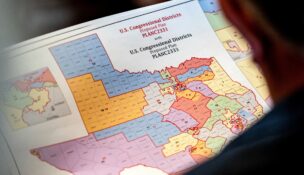
The shortened timeline paved the way for Republicans in Louisiana to quickly begin the process of carving up a congressional district in the state, currently held by a Democrat, ahead of November’s midterm election.
The court majority expedited the decision at the behest of plaintiffs in the case, who wanted the majority-minority congressional district redrawn because they felt it unlawfully advantaged Black voters in the state.
The move came over the objections of defendants who had hoped the Supreme Court would preserve the majority-minority district.
Jackson said the court’s reputation rests on appearing neutral in political disputes but speeding up the release of its ruling made it appear as if it were favoring one side. Jackson stopped short of accusing her fellow justices of being motivated by political considerations.
She said the court has expedited a decision over the objections of a party only two or three times in about 25 years.
“The parties who came to us said please alter your rules so that we can essentially have an advantage,” Jackson said. “That should not be something that we should do because it would look like we were doing something unusual.”
In the case, the Supreme Court’s conservative majority found Louisiana unlawfully discriminated by race when it created a second majority-Black congressional district to comply with the Voting Rights Act.
In the process, the court weakened Section 2 of the law that requires states to draw political maps that help minority communities elect candidates of their choice under certain circumstances.
The decision has set off a scramble by Republican-controlled states across the South to redraw districts largely held by Black Democrats.
The high court routinely waits 32 days before sending its mandate for lower courts to act on. That allows a losing party to seek a rehearing.
In this case, the court, in a brief order, approved the request to speed that timeline. The court noted the defendants had not “expressed any intent” to ask the court to reconsider its decision.
Justice Samuel A. Alito Jr. explained in a concurring opinion that the decision to expedite the ruling was based on the quickly approaching midterm elections. Alito authored the majority opinion curtailing Section 2 of the Voting Rights Act.
“The congressional districting map enacted by the legislature has been held to be unconstitutional, and the general election will be held in just six months,” Alito wrote.
Jackson, who joined Justices Elena Kagan and Sonia Sotomayor in dissenting in the Voting Rights Act case, issued a dissent on the question of whether to expedite that ruling.
“To avoid the appearance of partiality here, we could, as per usual, opt to stay on the sidelines and take no position by applying our default procedures. But, today, the Court chooses the opposite,” Jackson wrote.
In her appearance Monday, Jackson also leveled a critique she has aired before: The high court is handling too many cases on its emergency docket. She said the court’s regular docket affords more briefings, arguments and time for the justices to reach a considered opinion.
Justin Jouvenal covers the Supreme Court. He previously covered policing and the courts locally and nationally. He joined The Post in 2009.