Sign In
 Free Newsletter

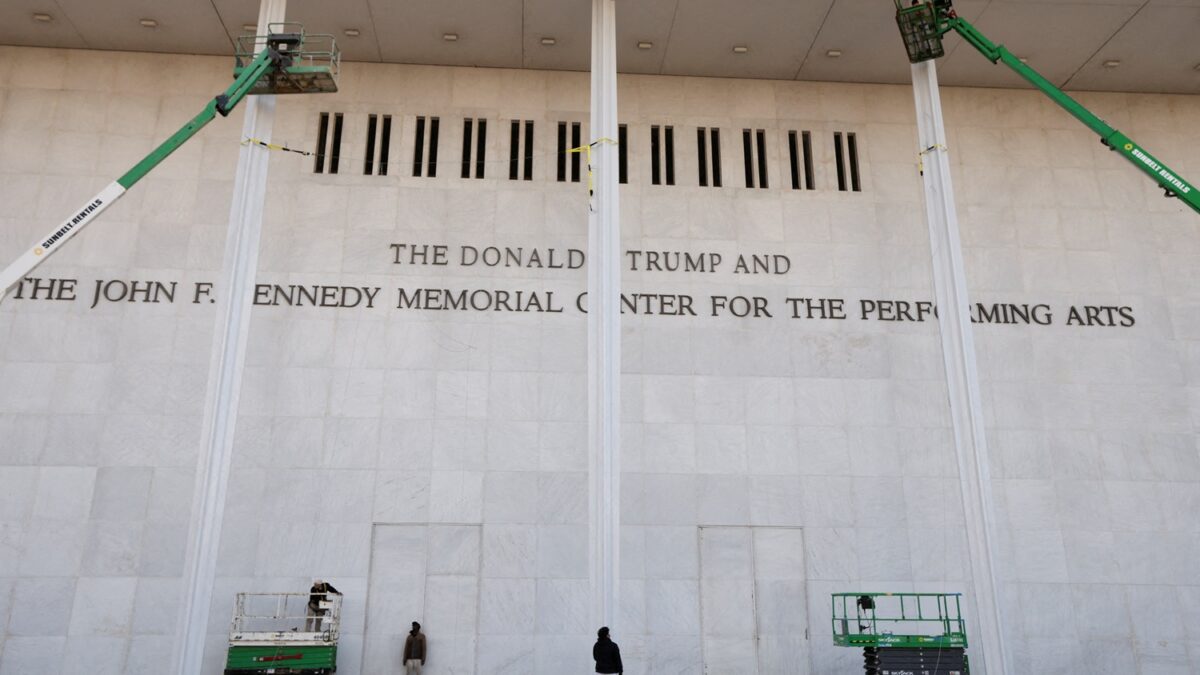
The newly added lettering for President Donald Trump's name is displayed at the facade of the John F. Kennedy Center for the Performing Arts, a day after its board announced it would rename the institution The Donald J. Trump and The John F. Kennedy Memorial Center for the Performing Arts, in Washington on Dec. 19, 2025. (REUTERS/Kevin Lamarque)
Kennedy Center loses suit against artist who canceled after Trump name change


 Listen to this article
Key takeaways:
- Judge Tanya Jones Bosier dismisses Kennedy Center lawsuit
- Chuck Redd withdrew performance, citing Trump name change
- Kennedy Center threatened $1 million damages for cancellation
- Federal judge has ordered removal of Trump name from center
A judge on Friday threw out the Kennedy Center’s breach-of-contract lawsuit against a jazz musician who withdrew from a performance after the venue’s board voted to rename the building after President Donald Trump.
D.C. Superior Court Judge Tanya Jones Bosier said center officials failed to show they had made a legally binding agreement with Chuck Redd to perform at the venue’s annual Christmas Eve concert, as he had in years past. Redd told the center he chose to bow out because of “the defiant and illegal name change happening to the Kennedy Center.”
“I could not find a valid breach-of-contract claim here,” Jones Bosier said Friday before dismissing the suit. “There’s no dispute that he did not sign the 2025 agreement.”
Friday’s legal defeat was another blow to an institution that faces an uncertain future: a planned two-year closure that a federal judge has blocked but not resolved, a budget crisis that has imperiled the National Symphony Orchestra’s season, and an unpredictable board chair in Trump, who said Friday that he intends to remain involved after suggesting he would cede control of the center.
A lawyer for Redd hailed the judge’s decision and denounced the center for what she described as a retaliatory effort to silence Redd.
“The Center sued Mr. Redd because he publicly and rightly objected to adding Donald Trump’s name to the Kennedy Center, a living memorial to former President John F. Kennedy,” attorney Lisa Banks said in a statement. “The lawsuit against Mr. Redd was political retribution, pure and simple, by the Trump Kennedy Center, and the Court correctly saw it as such in dismissing the case.”
The Kennedy Center did not respond to requests for comment. Lawyers representing the center had argued that, even though Redd never signed, he “agreed to a written contract” in late November obligating him to perform a one-hour concert on Christmas Eve for $6,500.
After Redd withdrew, Richard Grenell, then the Kennedy Center’s president, quickly threatened to sue. “This is your official notice that we will seek $1 million in damages from you for this political stunt,” Grenell told Redd in a December letter.
The center followed through with the lawsuit in early March, but days later offered to secretly settle, according to a court filing: The center would drop the suit if Redd paid it $7,500, played at this year’s Christmas Eve concert and made no “political commentary” about his reason for withdrawing last year.
The dismissal is the center’s second legal loss in a week. A federal judge last week ordered center officials to remove Trump’s name from official materials, ruling a Trump-led board of trustees had illegally added it to the performing arts venue in December. On Thursday, the center’s general counsel sent a memo telling employees to scrub all references to Trump, restoring the venue’s title to “The John F. Kennedy Center for the Performing Arts.”
The center’s future remains unclear. In the memo, the general counsel said it was “considering its options” to comply with U.S. District Judge Christopher Cooper’s other order to center officials: Halt plans to close the center for two years unless the board more thoroughly considers the possible harms such a closure might cause.
In the memo, the general counsel said Cooper’s order does not require the center to put on any performances, even if it technically remains open.
On Friday, Rep. Joyce Beatty (D-Ohio) – the ex officio board member and plaintiff in the federal case – argued that guidance risks flouting the judge’s order. The Kennedy Center’s memo, her lawyers wrote in a court filing, left her “deeply concerned that Defendants are attempting to effectuate their shutdown-which the Court enjoined-through inertia.”
Beatty asked the judge to press officials for their plans to restore performing arts programming after July 5, when the closure was set to take effect.
Justice Department lawyers responded that the center’s board plans to meet in the coming weeks to chart next steps. Until the trustees do, “it would be irrational and unreasonable” to try to book prospective performers.
Trump added to the confusion Friday afternoon, saying he plans to remain involved in the center in “the same way” as he has since being elected board chair last year in February. Those comments clashed with his earlier statements, in which he said he had directed his administration to transfer the institution to Congress, “giving them the responsibility for its Operation, Maintenance, and Management.”
Jonathan Edwards is an arts and government reporter covering how the Trump administration is influencing cultural institutions — including the Kennedy Center, the Smithsonian museums, the Library of Congress and the National Endowments for the Arts and Humanities — and how those shifts ripple through the arts, public life and national identity.