Sign In
 Free Newsletter

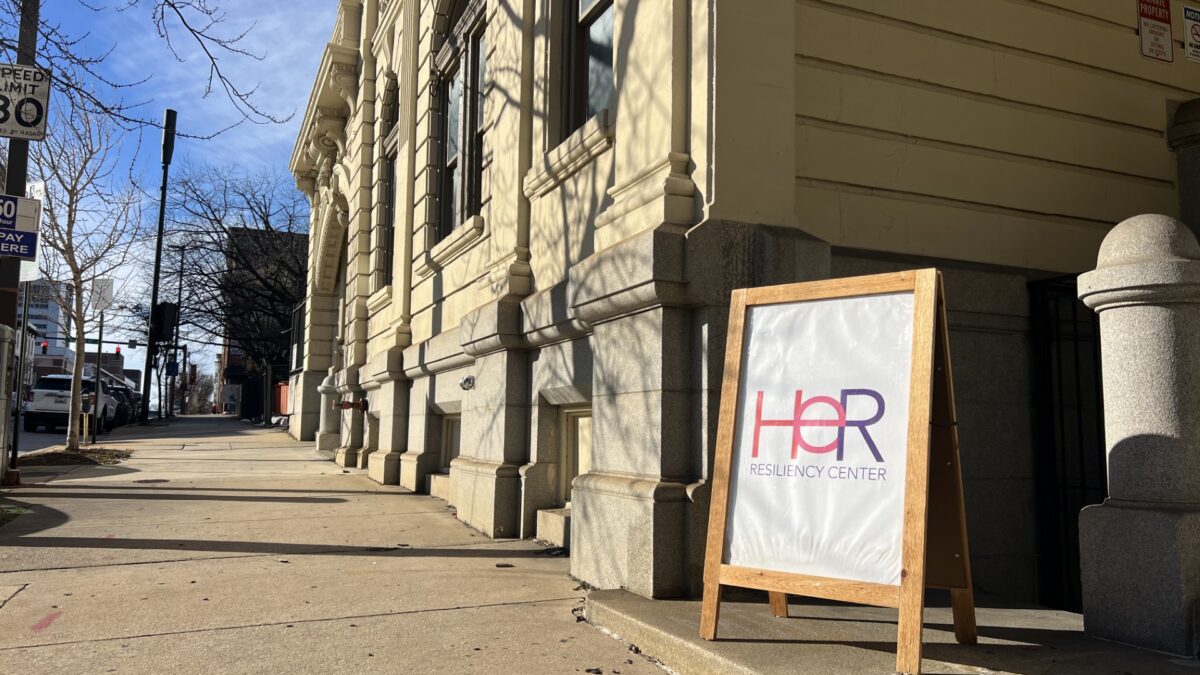
HER Resiliency Center is one of the grantees that expressed frustrations with the Governor's Office of Crime Prevention and Policy. (Ian Round/The Daily Record)
Slashing victims funding, Moore’s crime office ‘lost its way,’ grantees say


The first things the outreach workers bought were lollipops, leggings and cigarettes.
A woman from Baltimore‘s Park Heights neighborhood had asked HER Resiliency Center, an antitrafficking nonprofit, for help escaping an abusive relationship, founder Natasha Guynes said.
HER’s people picked the woman up, found shelter and enrolled her in an addiction recovery program. But first, they bought her some things to get through the next few hours. She had no clothes other than what she was wearing; the lollipops and cigarettes were to soften the impact of opioid withdrawal and to provide an oral fixation.
Guynes said HER then submitted a standard reimbursement request to the Governor’s Office of Crime Prevention and Policy — known as “go-cap,” the office largely serves as a pass-through entity for federal funds to nonprofits. Guynes didn’t include the cigarettes.
But the reimbursement was denied, Guynes told The Daily Record before she died last month. She said a GOCPP official told her, “That’s not what victims need.”
The Daily Record spoke with nine heads of nonprofits, including two former GOCPP staffers, that receive victims’ services funding from the crime office. They described worsening relationships with GOCPP, along with funding losses and clawbacks. Six of these leaders said their funding had been cut for fiscal year 2025 or 2026, though the money had been approved for the same uses in the past.
GOCPP had narrowed eligibility for victims services funding, arguing the change allowed it to better serve victims of crime with “immediate” needs. But the nonprofits and some experts say that definition of the law is too narrow and prioritizes only certain kinds of victims.
Widespread distrust
When describing GOCPP, the nonprofit leaders used words such as “schoolmarm,” “micromanage,” “bully” and “strict,” and say the office doesn’t see them as partners. Some lost hundreds of thousands of dollars in funding amid the cuts, creating huge budget holes.
All except for Guynes spoke on the condition of anonymity for fear of retribution.
HER Resiliency Center suspended services last fall due to funding difficulties and is on the brink of closure after GOCPP allegedly breached their contract, prompting a lawsuit in October. The office declined to comment on the suit.
Guynes said that under Democratic Gov. Wes. Moore — whose office did not respond to a request for comment — GOCPP has adopted a “punitive mindset” and is “finding ways not to pay us.”
Another nonprofit leader said GOCPP has “lost its way.”
“It’s focused on micromanaging and strict interpretations that are beyond what’s needed to ensure that there’s good fiscal responsibility,” the person said. “They need to get back to focusing on survivors and victims, and helping people recover and helping to support the programs, instead of taking them to task for changes that are necessary to provide services.”
GOCPP declined to comment on these broader accusations.
But the critiques appear to be widely shared, according to a survey of 52 nonprofits published in December 2024 by the Maryland Network Against Domestic Violence and the Maryland Coalition Against Sexual Assault.
“Some respondents felt that GOCPP’s processes were adversarial, with a focus on finding mistakes and withholding funding rather than fostering collaboration,” the survey stated. “This has led to distrust and a feeling that GOCPP does not see subgrantees as essential partners.”
‘Directly’ serving victims
At the heart of the funding conflict is a disagreement about who counts as a victim of crime — at least under federal law — and what services they deserve.
Ahead of fiscal year 2026, GOCPP changed its criteria for grantees under the federal Victims of Crime Act. The office adopted a narrower interpretation of the term “victim” than it had traditionally used.
GOCPP Executive Director Dorothy Lennig declined an interview request, but her spokesperson, Arinze Ifekauche, offered a statement saying the law is intended to provide immediate support to people with urgent needs and to support their recovery “after a violent criminal act.”
He added that “all VOCA funded services or treatment must be directly related to the immediate needs of the crime victim.”
VOCA is funded by fines and fees assessed in federal court. The federal government gives the money to the states, which have wide discretion over how to spend it. Matching state funds guarantee at least $60 million per year. For fiscal year 2025, Maryland organizations had to compete for VOCA grants for the first time in six years.
‘No wrong door to come in as a victim’
Grantees and experts describe the new definition of a victim as too narrow.
They say it is uncontroversial for people to receive VOCA-funded services even if they don’t seek those services immediately after becoming a victim, and even if they have been accused of illegal behavior such as sex work, drug use or even violent crime.
With its current definition, the office is citing outdated guidance from 1997, according to Kathrina Peterson, a former Department of Justice official who oversaw state VOCA programs. Peterson led rule changes during the Obama administration that clarified what spending was allowable under the law.
Now at Democracy Forward but speaking outside the context of that role, she said nothing in the law limits VOCA funding to “primary and secondary” victims, as GOCPP claimed in its statement to The Daily Record, and that funds can support victims of both violent and nonviolent crime.
“At best, that’s a really, really narrow interpretation,” she said. “I reject their definition of ‘victim’ and what direct services are under this program.”
She added in a follow-up email: “All of this is so outrageous, so misleading. I don’t know if it qualifies as illegal, but it’s definitely unethical to be representing the VOCA Victim Assistance program like this.”
Kristina Rose, who led the Justice Department’s Office for Victims of Crime under President Joe Biden, declined to weigh in on the dispute in Maryland but spoke generally about the importance of VOCA funding for legal services — even for victims accused of crimes.
She said that when she ran the federal office, states rarely narrowed victims’ eligibility.
“If a state wanted to change their definition of ‘victim,’ it was usually more likely that they would make it more inclusive,” Rose said.
Many victims, she noted, delay reporting or don’t seek services right away.
“My point of view is that if you’re a victim of crime, you’re a victim of crime,” she said. “Victims of crime with a past criminal history should be eligible for compensation, as should people who were perceived to be involved in criminal activity at the time of their victimization. Often, these perceptions turn out to be incorrect or were made through a biased lens.”
Peterson added, “There’s no wrong door to come in as a victim.”
From $317,000 to zero
One of the organizations that lost funding with the VOCA change is Baltimore-based FreeState Justice, which provides free civil legal services to the LGBTQ+ community.
FreeState “helps to remove barriers to security, stability, and self-sufficiency for primary and secondary LGBTQ+ victims of crime, and makes the LGBTQ+ community less vulnerable and susceptible to victimization,” states a GOCPP report from 2024.
GOCPP gave FreeState about $217,000 in fiscal year 2024 and about $317,000 in fiscal 2025, GOCPP data shows. But last year, the office decided that the nonprofit no longer qualified for VOCA funding and didn’t renew its grant for fiscal year 2026. The cut represented a quarter of the organization’s budget.
Deena Hausner, GOCPP’s director of policy and strategic initiatives, wrote in an email that FreeState “did not receive a true $100,000 increase” because the 2024 grant was for a nine-month period due to a revised start date for fiscal 2025. Hausner stated that the nonprofit “did not meet the threshold for funding” for fiscal year 2026, which was a “highly competitive funding cycle for VOCA.”
FreeState Executive Director Phillip Westry declined to comment.
Ifekauche said many organizations were denied funding because they didn’t adequately distinguish between the services they provided to people recently victimized as opposed to other clients.
“These organizations did not clearly demonstrate the difference between their victim services clients and their social or community service clients,” Ifekauche said. “In some cases, the organizations did distinguish between the crime victims they serve and their social service clients but the number of crime victims they served was so low that they were not competitive with other organizations requesting funding.”
Smaller budget issues
Even the nonprofits that didn’t lose funding complained that GOCPP is inflexible about minor budget adjustments.
For example, at one organization, a source said, staff were driving more than expected after serving more people in locations far from the office. When they billed for more mileage than they had budgeted, GOCPP didn’t reimburse them for the extra amount.
“You don’t know who’s going to be abused,” the source said. “GOCPP doesn’t provide flexibility where they could and should. You have to have the flexibility to actually administer your grants to provide human services.”
In addition, Guynes and two other grantees said GOCPP has tried to claw back funding for executive salaries.
“The way that they’re auditing, they’re bullying,” said one grantee that does not receive VOCA funds. “I don’t think they’re partners at all. You can’t piss them off.”

‘If this is not victimization, what is?’
Guynes sued the crime office in October as a last-ditch effort to keep HER Resiliency Center running. After her death, the future of the organization is even more uncertain.
GOCPP determined that more than half of the women served by the organization were not eligible for VOCA-funded services, the lawsuit alleges, and slashed the percentage of Guynes’ salary and other expenses it would reimburse. Guynes alleged that GOCPP changed reimbursement rates without notice, costing HER about $219,000 for fiscal 2025.
She also said the office violated her First Amendment rights by retaliating after she publicly criticized the Moore administration.
GOCPP removed the case to federal court; its motion to dismiss is pending. Timothy Sutton, of Nguyen Roche Sutton in Baltimore, who represents the plaintiffs, said the organization’s board of directors is discussing next steps. For Guynes’ individual claims to proceed, a personal representative would have to open an estate.
Before she died, Guynes canvassed neighborhoods, telling women she had to suspend the center’s services. She posted videos to Facebook in an effort to show the cost of the alleged breach of contract.
In one video, an unnamed woman said HER did an “amazing job” supporting her health, helping her get drinking water and more.
“I would tell Gov. Moore, we are out here struggling, and it is up to you to fix that,” she said. “I genuinely ask from the bottom of my heart that you help us with bringing them back.”
Another woman said, “I’ve been held at gunpoint. I’ve been kidnapped. I’ve been sexually assaulted by multiple men. Held hostage. Forced to do things.”
Guynes juxtaposed their statements with a quote from a GOCPP staffer saying not all of the women she served are victims.
“If this is not victimization,” Guynes wrote, “what is?”
This story has been updated.