Sign In
 Free Newsletter

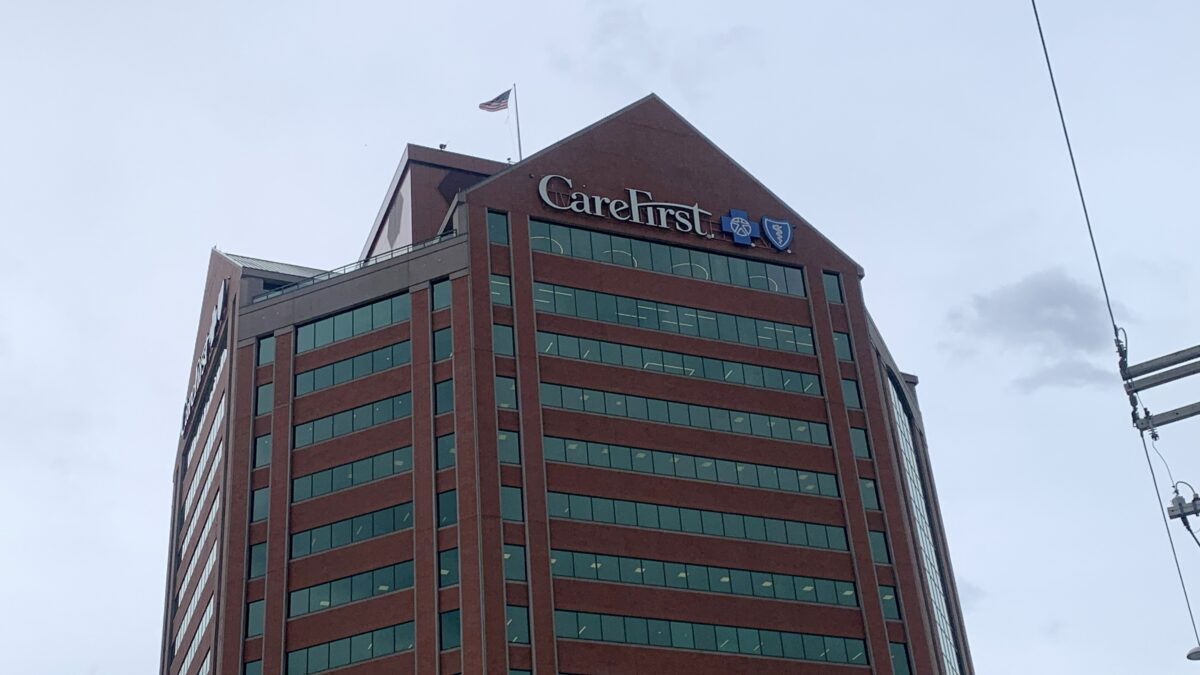
Health insurance provider CareFirst BlueCross BlueShield is headquartered at 1501 South Clinton Street in Southeast Baltimore. (Dan Belson/The Daily Record)
CareFirst sues ex-insurance brokers in MD civil racketeering case
RICO case follows middle Rappaport brother's bank fraud conviction


Key takeaways:
- CareFirst alleges $51 million in fraudulent claims
- Eliezer and Avraham Rappaport accused of falsifying Maryland residency
- Jacob Rappaport pleaded guilty to federal bank fraud
- Maryland Insurance Administration revoked and suspended licenses
Health insurer CareFirst sued two brothers whom it accused of coordinating an “international insurance-fraud machine” by falsifying out-of-state and overseas clients’ addresses in order to exploit benefits that the local healthcare organization only affords to Maryland residents.
The civil racketeering case alleges that Eliezer and Avraham Rappaport, former insurance brokers whose Maryland licenses have since been either revoked or suspended, submitted fake records claiming that their clients in other states and overseas were Maryland residents.
Eliezer and Avraham Rappaport are the older and younger brothers of Jacob Rappaport, a Towson real estate attorney who is scheduled to be sentenced next week after pleading guilty to a federal bank fraud charge. Prosecutors and Jacob Rappaport’s defense attorney have both requested a 15-month sentence.
The purportedly fraudulent insurance policy applications led to Baltimore-based CareFirst of Maryland paying out claims for high-end medical treatments that the brothers’ clients were ineligible to receive because they didn’t reside in the state. Overall, the insurer paid more than $51 million in fraudulent claims, according to CareFirst’s complaint.
The brothers did not return requests for comment. They did not have an attorney listed in federal court records.
The lawsuit in U.S. District Court for Maryland claims that the brothers used a network of property owners, service providers, charities and overseas referrers to create a pipeline for out-of-state and overseas individuals to get CareFirst to pay their claims for high-end medical treatment.
“The Rappaport conspiracy against CareFirst was successful,” the complaint, filed by attorneys from D.C.-based firm Stein Mitchell Beato & Missner LLP, says. “There can be no doubt about that.”
The lawsuit comes after the Maryland Insurance Administration revoked Avraham Rappaport’s broker license and suspended his youngest brother’s license. The investigations, which involved Maryland State Police conducting a forensic analysis of Avraham Rappaport’s laptop, came after the Maryland Health Benefits Exchange flagged suspicious enrollments by Eliezer Rappaport.
Later, CareFirst rescinded over 250 policies that the Rappaport brothers had sold to clients in other states and in Israel and filed its own complaint with insurance regulators. The insurance administration found that the eldest Rappaport concealed vital information by failing to submit over 100 documents containing “vital” information for their investigation. In addition to having his license revoked, he was fined $4,000.
After those sanctions, the Financial Industry Regulatory Authority determined that Eliezer Rappaport, who previously worked as an investment adviser for the Prudential and Cetera financial groups, was subject to disqualification. He’s since co-founded due5, a platform for commercial real estate professionals.
All three brothers and their father are ordained rabbis and together have a side-business as mohels, specialists who perform circumcisions as part of the Jewish ritual of brit milah.
CareFirst’s lawsuit claims that the brothers earned commissions on the fraudulently-procured policies “to the tune of hundreds of thousands of dollars.” It accuses them of violating the Racketeering and Corrupt Organizations Act, or RICO Act, as well as fraud, breach of contract and their fiduciary duties.
It says that CareFirst identified over 19,000 fraudulent claims from the Rappaports’ clients, many of them for “costly, high-end medical care.” After CareFirst approved the coverage, it alleges, the Rappaports “would arrange to fly them all over the country” to receive care.
“Once the procedures were complete, they would cancel their policies, cease making payments to CareFirst, and disappear back to wherever they actually resided outside of Maryland,” attorneys wrote in the complaint.
The complaint also named up to 20 unnamed defendants, describing them as the Rappaport brothers’ “as-yet unmasked co-conspirators.” It alleges that to obtain the benefits CareFirst offers to state residents, the brothers used Maryland addresses owned or controlled by the Rappaports family or their business associates.
Eliezer Rappaport “participated in both sides of the scheme,” either as a residence owner or as an insurance broker, and in “at least in one case, as both simultaneously.” He told state insurance regulators that an applicant from New Jersey had asked to use his broker’s address on an enrollment application, according to the agency’s order suspending him.
“I don’t, you know, I didn’t see, an issue with it so I told them yes and that was that,” he told the investigators, according to the order. “I see, now that that might not have been appropriate to do.”
The lawsuit alleges that as CareFirst started challenging the brothers’ clients’ addresses, Avraham Rappaport took steps to cover up. At one point, he held a meeting with a client who had received a letter asking for proof of residence; the client immediately purchased a template lease agreement online and sent CareFirst a fake lease based on it, according to the complaint and the MIA order.
Avraham Rappaport told MIA investigators that “many” of the clients whose policies were being probed “are coming from abroad,” chiefly from Israel, and that because he speaks Hebrew, his “name has been given as a resource by some organizations in Israel that support families that move abroad.”
“For those moving to Maryland, they put them in touch with me specifically for their health insurance needs,” he told the MIA. “I explain to them their options and what’s needed and apply for them as mentioned.”
CareFirst alleged in its lawsuit that many of the clients weren’t U.S. citizens but traveled from overseas “specifically at the Rappaports’ direction to before submitting fraudulent insurance claims to CareFirst.”
The lawsuit seeks actual damages of over $50 million as well as treble damages for the RICO counts and punitive damages for the count of fraud.