Sign In
 Free Newsletter

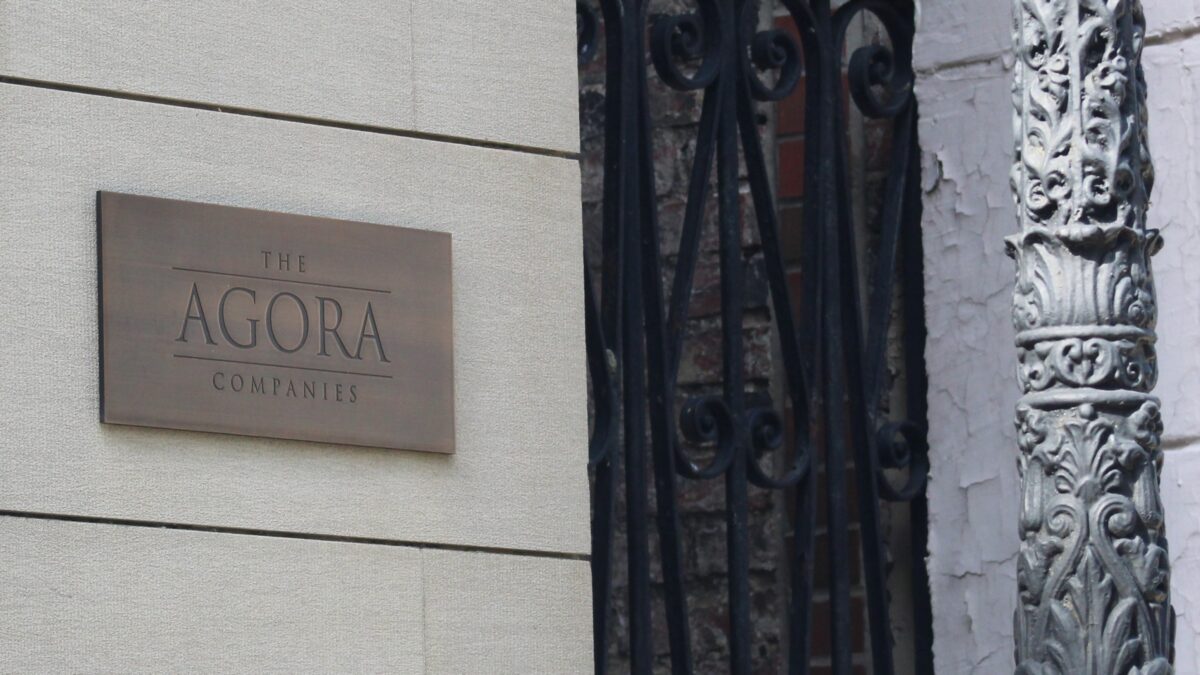
The Agora Cos. is headquartered in Baltimore's Mount Vernon neighborhood. (Dan Belson/The Daily Record)
Nicaragua bus crash tragedy, angry investors: Baltimore’s Agora in more legal hot water


After a deadly bus crash injured about 20 tourists from a Nicaraguan beach resort, whose developers were already facing a federal racketeering lawsuit, attorneys are probing the vacation spot’s ties to Baltimore‘s Agora Cos.
The city is suing the publishing network based in the Mount Vernon neighborhood, accusing it of hawking “snake oil” with misleading marketing. But now, the Rancho Santana beach development has put the Agora Cos. leadership in more hot water, between potential litigation related to the March 23 crash and separate scrutiny over how real estate there was promoted in its newsletters.
The resort is controlled by a web of entities spanning from Nicaragua to the British Virgin Islands, but current and prospective litigants say the development is indisputably associated with Agora’s Baltimore-based network of companies, which helped market the resort for American tourism.
“Rancho Santana is not just some remote resort in Nicaragua,” said Zachary Gorwitz, a lawyer for the family of Katherine “Kasey” Grelle, an American consulting firm executive who died in the crash. The resort vehicle overturned during an excursion, killing Grelle and leaving the roughly 20 tourists onboard with injuries.
Gorwitz, an associate at Florida-based litigation firm Podhurst Orseck, P.A., and his clients are “exploring all potential avenues of accountability and recovery” for the crash, including litigation, he said.
It’s not a secret that the development has connections to the Baltimore publisher: The resort’s ownership has described it as the brainchild of Agora founder William Bonner and a few publishing industry colleagues. But a power struggle between real estate investors and the developers who sold them oceanfront lots at Rancho Santana has spilled out into the federal racketeering lawsuit that claims Agora is at the center of an alleged conspiracy to mislead and defraud the buyers.
Founded by Bonner in 1978, Agora got its start by publishing “insider” financial newsletters. Its products have since expanded to an international audience, with other brands focusing on health and travel. Baltimore City’s consumer protection complaint last month alleges that the flashy online advertisements targeted older adults and bound them into unfair subscription terms.
Agora regularly marketed the Rancho Santana development in its newsletters, pitching Nicaragua’s Emerald Coast to readers of International Living as a retirement destination and The Oxford Club’s subscribers as an investment opportunity.
The racketeering lawsuit was filed by a Texas gastroenterologist and attorney who formed a company, Casa de Maravilla LLC, to buy an unimproved lot at Rancho Santana in 2013 after he read about the development in the Palm Beach Letter, one of Agora’s financial newsletters. Admitted to the Texas bar last October, Dr. Venodhar Julapalli filed the suit on behalf of his company in December in U.S. District Court for the Southern District of Texas.
Rancho Santana did not answer questions about the resort and the lawsuit by press time. Agora’s CEO, Erika Nolan, confirmed in a late Monday statement that the publishing firm and the Central American development “have a shared a backer” and that “some of our affiliates did advertise the development.”
“However, the resort is not a part of our business, it has a different operator, and we are not named in any matter involving the tragic vehicular accident,” Nolan said.
‘Like a trauma scene’
Nicaraguan authorities have provided little information about their investigation into the bus crash, during which a resort vehicle overturned while transporting several visiting families for a sand-boarding excursion.
What exactly caused the truck to overturn is unclear. But Gorwitz said guests who had taken the same trip the previous day reported a “rough ride” on steep, unpaved roads, while in a school bus-like vehicle that had no seatbelts, roof or windows and “was not equipped to handle the terrain.”
Dr. Summit Shah was on the bus with his wife and two daughters when the vehicle started tumbling into a ditch. His memory of what happened next is fuzzy, but when he came to, “it was like literally like a trauma scene from a horror movie,” he said. His 13-year-old daughter’s arm had been crushed and was later amputated. Shah’s head was wounded, and his other teenage daughter suffered a traumatic brain injury that required surgery.
Grelle, a 41-year-old former news reporter who founded and served as CEO of St. Louis marketing consulting firm Aux Insights, was on the truck with two of her children.
Having stayed at home with their youngest, Dave Grelle rushed to a local hospital that day after receiving a “very frantic phone call,” the family’s lawyer said. His wife had died in the crash, and their 11-year-old son, Julian, was in critical condition. Julian survived his injuries.
As his family recovers, Shah said the “most frustrating part about all of this” has been how little they’ve heard from the resort in the aftermath and “how unserious their response has been.” Knowing that it was an American-based company, the family felt that it would be safe, he said.
“It was presented to us as a group of friends that had invested in this property from Baltimore, and they had turned this into this gorgeous kind of like paradise for family vacations,” Shah said.
In the aftermath of the wreck, he said, his family’s priorities have been to get the resort’s owners to take responsibility and to make sure their experience doesn’t happen to other tourists going to the resort “under the facade of, ‘Hey, this is going to be like a super safe experience for your family,’ and the same thing happens to their kids.”
“This is something that shouldn’t happen in a five-star resort that is developed by and marketed to American citizens,” Gorwitz said. “People should have the peace of mind to know that when they spend big bucks to go on a luxury vacation like this … that they’re going to be able to come home safe and sound.”
Investors duped?
By the time the Grelle and Shah families embarked on their trips, a firestorm had already exploded among the development’s property owners, according to Julapalli’s company’s federal racketeering lawsuit.
In court filings, Julapalli accused the “syndicate” operating Rancho Santana of usurping control from property owners and turning it into a developer-run resort, after allegedly duping investors with promises of financial returns from vacation rentals and self-governance.
After Bonner and his colleagues bought the land in 1997, they began pitching lots at Rancho Santana to Oxford Club subscribers as a lucrative investment opportunity: They could break into the international real estate market and make rental income by buying oceanfront property “for a fraction of what you’d expect to pay,” the development’s website once read.
The investors rolled in, staking out their claim in what they were convinced would remain a private, gated residential community governed by a traditional homeowner’s association, according to the lawsuit. But the complaint says that by 2023, the reserve’s developers had transformed it into a resort destination and had caused outrage by instituting a new set of rules that cracked down on third-party vacation rentals.
The lawsuit claimed that the developers also admitted that there hadn’t been a homeowner’s association in years, despite landowners being charged skyrocketing annual “owner’s dues” that had to be wired to Baltimore for maintenance and utility services. The Nicaraguan government terminated the nonprofit entity associated with the HOA in 2022 for failure to file financial statements, it alleges.
In a motion to dismiss the lawsuit, the defendants argued that the matter should be heard by Nicaragua’s courts and that Julapalli’s company had failed to state a claim. They’ve also filed a motion alleging that Julapalli should be disqualified as counsel under the Texas Bar’s rules of professional conduct, which generally prohibit lawyers from acting as witnesses on behalf of their clients.
Those motions are still pending, but the presiding judge has scheduled the matter for trial in November 2027.
This story has been updated with Agora’s response.