Sign In
 Free Newsletter

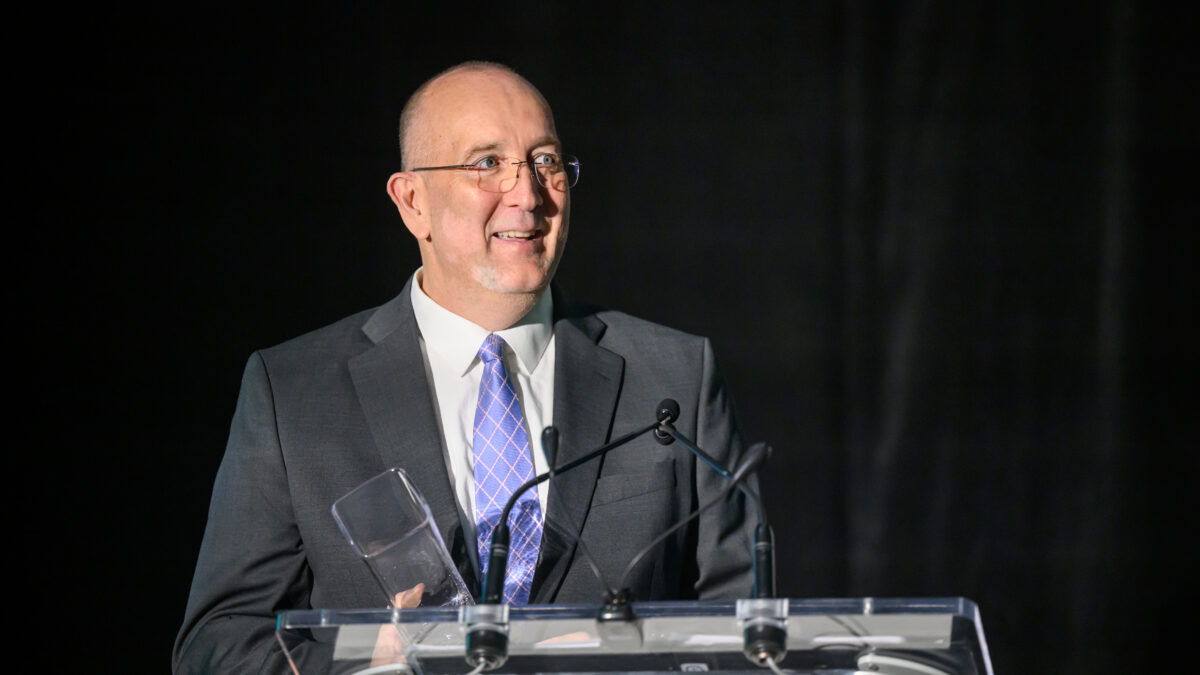
2026 Top Leadership in Law award winner, Kevin R. Hill. (Steve Ruark for The Daily Record)
Pilot program gives MD children a say in custody cases


Key takeaways:
- Child’s Voice Project served 55 children in 38 cases since May 2025
- Program has operated in St. Mary’s and Charles counties
- Attorneys trained in trauma-informed and child-centered practices
- Cases with CVP involvement settle faster and fewer go to trial, organization says
OCEAN CITY — A pilot program in two Southern Maryland counties provides free attorneys to children whose parents are going through contentious divorces, advocating for the kids’ interests in custody battles.
Since May 2025, the Child’s Voice Project nonprofit has paid for advocate attorneys for 55 children in 38 cases in St. Mary’s and Charles counties, using an approach it calls “child-centeredness.”
Attorneys are trained in relationship-building and communication, trauma-informed practices and the stages of childhood development, with the goal of understanding what the child wants.
“You have these litigants that don’t believe the child has a voice,” St. Mary’s County Family Law Magistrate Sue Ann Armitage said last week during a presentation about the program at the Maryland State Bar Association‘s annual conference in Ocean City.
St. Mary’s County Circuit Judge Kevin Hill said kids often “appease and please” to avoid conflict, telling each parent what they want to hear.
“Often, a child will tell the parents very different things,” Hill said. “I just kept thinking, ‘Can we get a lawyer in the room?’ ”
Connie Kratovil-Lavelle, senior legal adviser and policy counsel for the Child’s Voice Project, said “Judge Hill is the reason we have this project.”
Children as young as 9 are eligible in St. Mary’s, where the program began last year; the minimum age is 11 in Charles County, where it expanded in September. This month, Calvert County is joining.
Judges already have the power to appoint advocate attorneys who represent children like any other client. Although they are often used in cases of child welfare or the termination of parental rights, they are rarely appointed in divorce and custody cases, Kratovil-Lavelle said.
Advocate attorneys are distinct from best-interest attorneys, who act in what they believe are the child’s best interests — even if the child disagrees. They must express the child’s views to the court but are not required to advocate for those positions. If a Child’s Voice Project lawyer sees evidence that their client is being manipulated by one of their parents, the lawyer must ask the judge to convert them to a best-interest attorney.
The Child’s Voice Project has partnered with attorneys from Leonardtown-based Williams, McClernan & Stack; Chevy Chase-based Delaney Stafford; and La Plata-based Fanning Law.
The initiative is free for both the court and the family, whereas parents usually have to split the cost of their kid’s lawyer. Costs are reimbursed by the Child’s Voice Project, so, Executive Director Stef Sloan said, the lawyers are incentivized to spend time with the children.
The nonprofit is studying the project, and Sloan, who is also its chief scientific officer, said the early data is promising. They said the cases in which the Child’s Voice Project is involved are about five weeks shorter than cases without. Over 75% of the cases have settled or are approaching settlement, and only about 22% were likely to go to trial after six months.
Children without representation are able to speak with a judge, but the interview is relatively brief and on the record.
“The child’s attorney has spent an inordinate amount of time with this child building rapport,” Charles County Family Magistrate Andrea Khoury said. The appointed attorneys get “a more comprehensive view of the child than I have with my half hour on-the-record conversation.”