Sign In
 Free Newsletter

Md. immigration attorneys are heading to the border


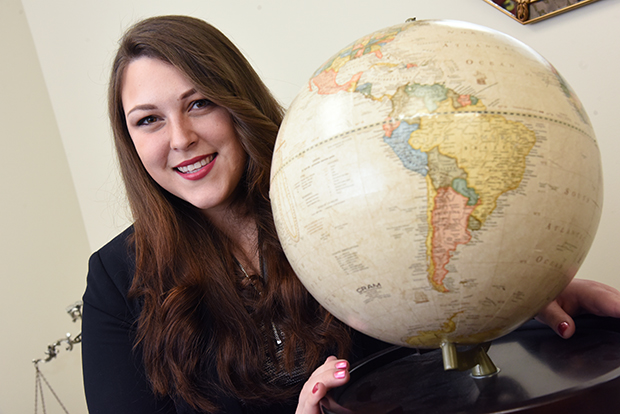
In 2015, immigration attorney Nicole Whitaker went to the Mexico border to help detained migrants with asylum claims.
“It was really a life-changing experience for me,” said Whitaker, a solo practitioner in Towson.
So when the Trump administration’s “zero-tolerance” policy to prosecute all adult migrants crossing the U.S.-Mexico border without documentation led to immigrant families being separated, Whitaker knew she could help.
In October, Whitaker is taking a paralegal and two legal assistants to the South Texas Family Residential Center in Dilley, Texas, one of the largest immigrant detention facilities in the country, which houses women and children, mostly from Central America. Whitaker and her team will be volunteering with the Dilley Pro Bono Project to help migrants with their asylum claims and to serve as advocates.
The Baltimore office of Kids In Need of Defense, a national organization that provides legal representation to unaccompanied minors, is sending attorneys to the border each week this month.
KIND typically provides legal assistance and mentors private practice attorneys to represent unaccompanied minors in Maryland, but assisting migrant children and families separated at the border is consistent with that mission, said Elisabeth Lopez, managing attorney in KIND’s Baltimore office.
“That’s why we have stepped forward to help in the best way that we can,” said Lopez, who is headed to the border next week. One attorney from the Baltimore office left for the border Monday afternoon.
KIND is working with the South Texas Pro Bono Representation Project based in Harlingen at the Port Isabel Detention Facility, serving migrant adults whose children were taken from them.
Their goal is to keep the children’s claims alive by getting parents to present their asylum claim, Lopez said.
“That is our best way to help protect the children,” she said.
‘Credible fear’
Whitaker described the facilities as “a bunch of individual trailers” in a fenced-off complex. One trailer is dedicated to pro bono legal representation, where women and children come in for legal assistance.
In the facility, pro bono attorneys represent women and children in court via video conference with immigration judges in other parts of the country. The attorneys also represent clients in a “credible fear” interview, a screening process used to determine if immigrants seeking asylum face fear of prosecution in their home countries that would give rise to a claim.
The applicant has the burden of proving he or she will be persecuted based on race, sex, political opinion or membership in a particular social group, Whitaker said.
Attorneys interviewing women and children find out what they’re story is, explain the asylum process and what they need to articulate to the asylum officer.
“Our job is to listen to their story, synthesize the information … and identify issues that can support their claim for asylum,” Whitaker said.
The attorneys have one-on-one meetings with their clients to do intakes, prepare their case and declarations to support their claim. If a woman is granted bond, the attorneys explain the payment process to family members who need to make the payment, Whitaker said.
The goal at the border is to get women out of the facility so they can seek more permanent legal representation in the area where they plan to live in the U.S., Whitaker said.
After the facility closes for the day, the attorneys’ work doesn’t end. They meet and talk about challenges related to their representation and feedback they hear from clients about the federal government’s detention practices and conditions at the facilities. This helps attorneys better advocate for the end of family detention, Whitaker said.
The attorneys work in very challenging environments, meeting hundreds of clients in a week and working 12 to 18 hour days.
Even for attorneys who regularly work with traumatized populations, the border is very different.
“We get them not when the trauma is so, so raw,” said Lopez about KIND’s work in Maryland.
Lopez and her team are preparing to work with parents whose kids were taken from them and are deeply distrustful of the U.S. government. That attitude can create a barrier when providing assistance, she said.
“Here, folks are looking for our assistance, are deeply appreciative of it,” she said.
KIND is working with a social services coordinator to prepare staffers for the trauma they will encounter at the border and for secondary trauma they may face from working with migrant families, Lopez said.
‘A disaster zone’
Jose Campos, an immigration attorney in Silver Spring, last year went to the same facility in Dilley, Texas, where Whitaker and her staff will volunteer in October.
“I felt like I was a doctor in a disaster zone,” Campos said.
Campos, who mostly does deportation defense, said working at the border for a week helped him better understand his clients.
“It gave me a broader understanding from beginning to end what they have gone through. When they come to my office, I know where they have been,” he said.
American Bar Association President Hilarie Bass was in the Rio Grande Valley last week to see how lawyers can help families who have been separated by immigration authorities as part of the Trump administration’s “zero tolerance” policy, the ABA Journal reported.
Bass identified a need for Spanish-speaking immigration attorneys.
“Because for the most part, these women are unrepresented,” she told the ABA Journal. “And they have no understanding of what their rights are, or when they need a lawyer in the process, or how to protect their own legal rights, or how to seek reunification with their children.”
There’s also a need for people who are well-versed in asylum law, because it’s difficult to do substantive legal research in that environment, Whitaker said.
Some organizations, such the Esperanza Center in Baltimore, are working with families locally who were separated at the border and are seeking to be reunited in Maryland, said director Val Twanmoh.
“(There) will family members in Maryland who need assistance and our attorneys to provide counsel and representation,” Twanmoh said in an emailed statement.
“We are encouraging volunteer attorneys who have the ability to provide service at the border to do so.”
The Associated Press contributed to this story.