Sign In
 Free Newsletter


A Coast Guard cutter passes a cargo ship that is stuck under the part of the structure of the Francis Scott Key Bridge after the ship hit the bridge Tuesday March 26, 2024, in Baltimore, Md. (AP Photo/Steve Helber)
Maryland’s path unclear for restarting Port of Baltimore, rebuilding Key Bridge


President Joe Biden has pledged to pay to rebuild the Francis Scott Key Bridge and restart the Port of Baltimore, but the catastrophic collapse of the bridge early Tuesday morning after being hit by a cargo ship may still require state funding and complicate decisions about how Maryland will fill shortfalls in its long-term transportation plans.
Federal and state officials said during interviews and press conferences Tuesday that they were focused on the six construction workers who remained missing and are presumed dead Tuesday, as local, state and federal law enforcement and emergency responders continued searching the dangerously cold Patapsco River into at least the evening.
The construction workers were part of an eight-person crew filling potholes on the bridge early Tuesday morning. Emergency responders rescued two of the workers, one of whom was taken to a hospital and discharged hours later, according to The Associated Press.
Officials and lawmakers also said that rebuilding the Francis Scott Key Bridge — which U.S. Transportation Secretary Pete Buttigieg said was “one of the cathedrals of American infrastructure” — is now the state’s top transportation priority, and its collapse will exacerbate funding shortfalls to pay for roads and bridges. The catastrophe may also play a role in budget negotiations in the legislature this week.
RELATED: Economy could lose $15M daily from ‘incomprehensible’ Baltimore bridge collapse
Officials, though, said that costs and timelines for reopening the Port of Baltimore and, beyond that, rebuilding the Francis Scott Key Bridge, weren’t clear as of Tuesday.
“This is going to be a long-term build,” Gov. Wes Moore said during a Tuesday morning press conference. “We are going to rebuild in a way that remembers the people who this tragedy has impacted, and also do it in a way that honors the community that it serves.”

Buttigieg said during a Tuesday afternoon press conference in Baltimore that the federal government will provide Maryland all the support it needs, “for as long as it takes,” and he said his department would approve the release of emergency response funding as soon as it receives a request.
“The path to normalcy will not be easy. It will not be quick. It will not be inexpensive,” Buttigieg said.
Maryland’s congressional delegation, several of whom were in Baltimore for press conferences Tuesday, are expected to make funding for the port and the bridge their top priorities in Washington, D.C.
Biden’s pledge to cover the entire cost of rebuilding the bridge will be contingent on approval from Congress, and it may not completely shield the state from having some financial burden.
Maryland is already facing a $3.15 billion shortfall to pay for road and bridge projects and maintenance, among other transportation costs, over the next six years.
Proposed cuts from the Moore administration to balance the budget would affect more than a dozen major road projects, some of which are up for construction funding in the next fiscal year, as well as six major bridge projects and maintenance on another dozen bridges.
Baltimore’s Key Bridge destroyed: Everything you need to know
Legislators and transportation professionals have been looking for ways to boost transportation revenue. Top Democratic lawmakers have pushed during the current General Assembly session to increase toll revenue for the state.
One state delegate said Tuesday’s tragedy may add new urgency to conversations about increasing tolls.
Unexpectedly losing the Francis Scott Key Bridge — which last year brought in $56 million in toll revenue, or 7.4% of the state’s total toll revenue, according to the state Department of Transportation — will only add to the uphill climb to pay for transportation.
“It amplifies the argument that we’ve been making that we need to shore up the (transportation trust fund),” state Del. Courtney Watson, who chairs a House transportation subcommittee, said in a phone interview.
The state Department of Transportation was seeking state funding to upgrade paint on the bridge, but otherwise funding for the Francis Scott Key Bridge — which officials have said was up to code — wasn’t a priority for state funding, even among the state’s 3,000 bridges, Watson said.
Maryland’s economy will also lose millions of dollars daily without the Port of Baltimore, which directly supports more than 15,000 jobs.
Federal officials said the economic impact of the temporarily shuttered port, through which more automobiles travel than any other port in the country, and the fallen bridge, across which more than 35,000 people traveled daily, will reverberate up and down the East Coast.
Beyond the Biden administration’s pledge of federal assistance, it remains to be seen how exactly the state will pay for any costs it may incur.
Federal and state officials said Tuesday that, following the conclusion of investigations into the crash and a search for the missing, actions to restart the port and rebuild the bridge will be swift.
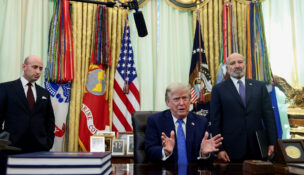
“As I told Gov. Moore, I’ve directed my team to move heaven and Earth to reopen the port and rebuild the bridge as soon as humanly possible,” Biden said during a press conference.
State lawmakers said Tuesday that they expected more clarity in the coming days about how the disaster might play a role in the final two weeks of the legislative session.
The state House and Senate are expected to resolve differences in their budget proposals this week before passing a final version by April 1, and the chambers have until April 8 to pass legislation to be signed by the governor.